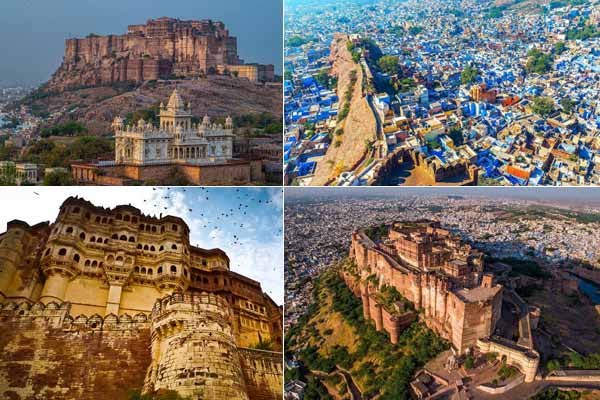
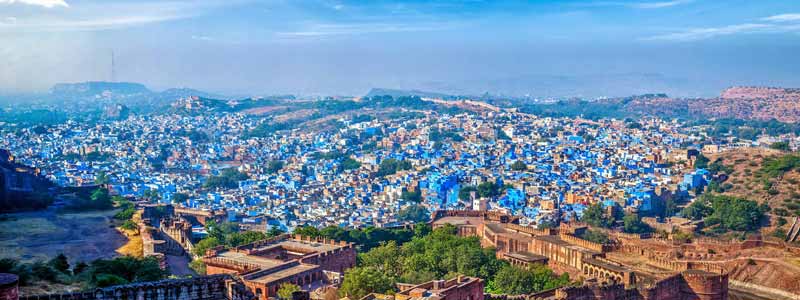
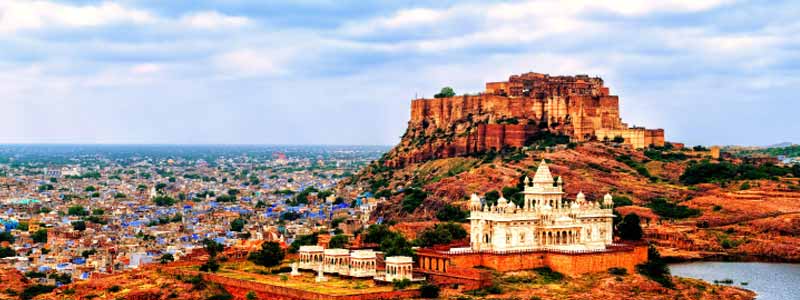
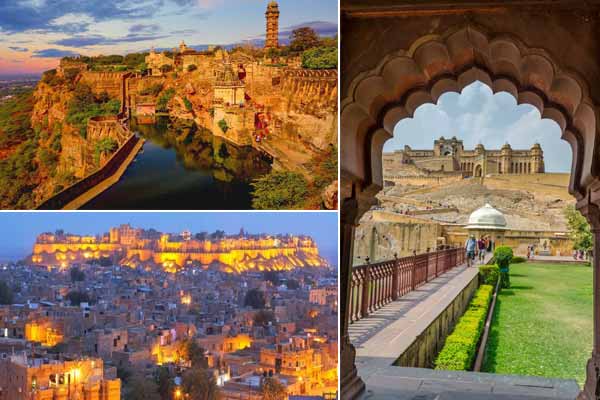
History of Jodhpur, famously known as the Blue City of Rajasthan, is a captivating blend of history, culture, and architectural grandeur. Founded in 1459 by Rao Jodha, this city is the second-largest in Rajasthan and lies on the edge of the Thar Desert. Its striking blue-painted houses around the old city create a surreal panorama, earning it its nickname and a unique charm that attracts photographers and travelers alike.
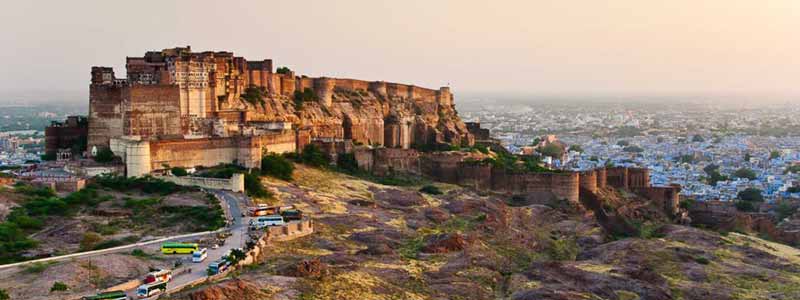
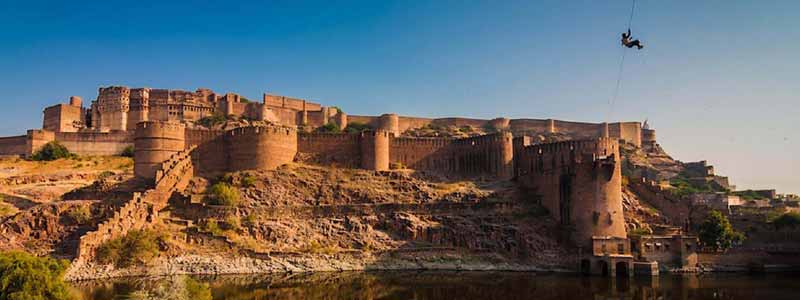
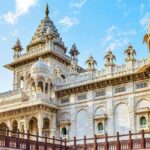
The crown jewel of Jodhpur is the imposing Mehrangarh Fort, perched on a 410-foot hill. This fort, with its massive walls, intricate carvings, and museum, showcases centuries of royal heritage. The nearby Jaswant Thada, a white marble cenotaph, and Umaid Bhawan Palace, part palace, part luxury hotel, further highlight the city’s regal past.
Jodhpur’s bustling markets, like Sardar Market near the clock tower, offer a kaleidoscope of colors, spices, handicrafts, and textiles, reflecting the vibrant Rajasthani culture. The city is also renowned for its cuisine, particularly mirchi vada, mawa kachori, and dal baati churma, which are must-tries for food lovers.
Beyond its heritage, Jodhpur serves as a gateway to the Thar Desert, making it a starting point for desert safaris and cultural experiences in nearby villages. With its blend of royal history, architectural marvels, lively markets, and desert adventures, Jodhpur remains one of Rajasthan’s most mesmerizing and photogenic destinations.
Rao Jodha, the 37th Rathore ruler of Marwar, founded Jodhpur after moving his capital from Mandore. The decision was strategic: Mandore was vulnerable to attacks due to its location on open plains. The rocky hill known as Bhakurcheeria offered natural fortification, making it ideal for defense. On this hill, Rao Jodha constructed Mehrangarh Fort, which remains a symbol of the city’s might and architectural brilliance. Around the fort, the city gradually developed, drawing merchants, artisans, and settlers.
The Rathore dynasty, under Rao Jodha’s leadership, laid the foundation for Marwar’s political and cultural identity. Jodhpur’s location on the trade route connecting Delhi to Gujarat further enhanced its importance. It became a hub for commerce, attracting traders dealing in textiles, spices, and precious metals.
Jodhpur, The Blue City
Mehrangarh Fort: The Heart of Jodhpur
The construction of Mehrangarh Fort began in 1459 and continued for several generations, with each ruler adding new palaces, gates, and temples. The fort is not only an architectural marvel but also a historical chronicle, housing artifacts, armory, and paintings that reflect the city’s royal past. Its massive walls, some rising 36 meters high, have withstood numerous battles and sieges.
Inside Mehrangarh, the palaces—Moti Mahal, Phool Mahal, Sheesh Mahal, and others—showcase intricate carvings, expansive courtyards, and opulent interiors. The fort also contains several temples, including Chamunda Mataji Temple and Moti Mahal’s private shrine, highlighting the interweaving of spirituality and royalty in Jodhpur’s history. Mehrangarh is a testament to the Rathores’ wealth, strategic acumen, and dedication to preserving art and culture.
After Rao Jodha, his successors continued to expand Jodhpur, both in infrastructure and influence. The city was divided into several parts, including the old city surrounding the fort and newer sections along trade routes. The blue-painted houses, for which Jodhpur is now famous, were originally painted by Brahmins to signify their residences. Over time, the practice spread, giving the city its distinctive “Blue City” appearance.
Jodhpur’s strategic location attracted not only traders but also artists, musicians, and scholars. The city became a melting pot of culture, blending Rajput traditions with influences from Mughal and Marwari traders. Markets such as Sardar Bazaar and Clock Tower area flourished, establishing Jodhpur as a prominent commercial center in western India.
History of Jodhpur
Marwar Kingdom and Rajput Valor
The Rathore rulers of Marwar were known for their martial prowess and adherence to Rajput codes of honor. Jodhpur played a pivotal role in the politics of Rajasthan, often engaging in alliances and conflicts with neighboring kingdoms like Jaipur, Bikaner, and Udaipur. The city’s strategic position also made it a target for Mughal and other invaders.
During the reign of Rao Maldeo (1532–1562), Jodhpur witnessed significant expansion and consolidation. Rao Maldeo successfully defended Marwar from external threats, expanded its territories, and strengthened the fortifications of Mehrangarh. His reign is considered the zenith of Jodhpur’s military and political influence, and he is remembered for his statesmanship and valor.
Cultural Flourishing under the Rathores
Jodhpur was not just a military hub; it was a center for art, music, and literature. The Rathore rulers patronized artisans, resulting in exquisite handicrafts, traditional textiles, and intricate jewelry that remain characteristic of the region. The city became renowned for its bandhani (tie-and-dye) fabrics, block-printed textiles, and lac jewelry, which were traded extensively across India and abroad.
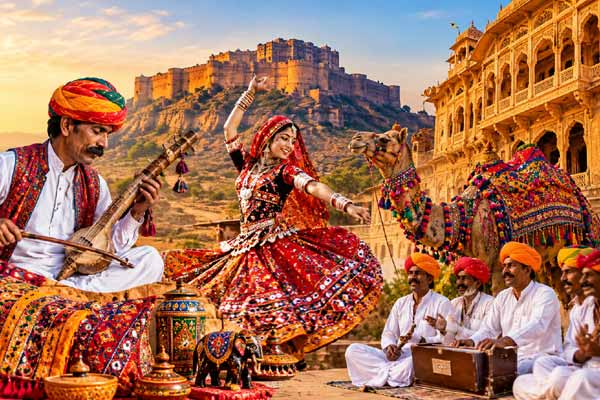
Music and dance were integral to Jodhpur’s royal culture. Folk traditions such as Maand singing flourished in the royal courts, celebrating heroic tales, love stories, and seasonal festivities. Temples and havelis (mansions) constructed during this era exhibit a blend of Rajput and Mughal architectural styles, showcasing intricate carvings, jharokhas (balconies), and frescoes that narrate historic events.
History of Jodhpur
Jodhpur During the Mughal Era
Jodhpur maintained a delicate balance of diplomacy and resistance during the Mughal era. While the Rathores recognized Mughal supremacy at times, they fiercely defended their autonomy. Several Rathore rulers served as military allies to the Mughals, which helped them retain control over Marwar while gaining prestige and wealth.
The city’s architecture from this period reflects this syncretism. Palaces, forts, and civic buildings feature Mughal-inspired arches, decorative motifs, and symmetrical layouts, while retaining distinct Rajput elements like massive walls and ornate courtyards. This period solidified Jodhpur’s reputation as a sophisticated urban center combining martial strength with refined culture.
Colonial Era and Modernization
In the 19th century, Jodhpur came under British influence, becoming a princely state within the Rajputana Agency. The British recognized the strategic and commercial importance of Jodhpur, and the Rathore rulers entered into treaties ensuring internal autonomy while accepting British oversight.
During this period, Jodhpur saw infrastructural modernization, including the development of roads, railways, and administrative buildings. Maharaja Umaid Singh, one of the most prominent rulers of Jodhpur in the 20th century, undertook large-scale projects to provide employment during famines and to modernize the city. The construction of Umaid Bhawan Palace, one of the world’s largest private residences, began in 1929 and stands today as an enduring symbol of royal ambition and architectural grandeur.
Post-Independence Era
After India gained independence in 1947, Jodhpur became part of the newly formed state of Rajasthan. The princely family of Jodhpur integrated into the democratic framework of India, while the city itself emerged as a significant cultural and tourist destination. Many royal properties were converted into museums, hotels, and cultural centers, preserving the heritage for future generations.
Today, Jodhpur’s historical forts, havelis, and temples coexist with bustling markets, educational institutions, and modern infrastructure. The city has become a symbol of Rajasthan’s enduring royal legacy, attracting tourists, historians, and art enthusiasts from around the world.
Key Landmarks Reflecting History
Apart from Mehrangarh Fort, Jodhpur is home to several historical landmarks that narrate its past:
Umaid Bhawan Palace – Built during the 20th century as a response to famine, this palace blends Indo-European architecture and serves partially as a museum.
Jaswant Thada – A white marble cenotaph built in 1899 to honor Maharaja Jaswant Singh II, known for its serene gardens and intricate carvings.
Ghanta Ghar (Clock Tower) – Built by Maharaja Sardar Singh, it remains a central hub of commerce and activity, surrounded by vibrant bazaars.
Mandore Gardens – The former capital of Marwar, Mandore houses cenotaphs and temples dedicated to the Rathore lineage.
Legacy and Cultural Significance
Jodhpur’s legacy is not limited to architecture or royal lineage; it is also a living testament to the resilience, valor, and creativity of the Rathore dynasty. The city’s blue houses, bustling markets, folk music, and culinary traditions reflect centuries of cultural evolution. Festivals like Marwar Festival celebrate traditional music, dance, and martial arts, keeping historical memories alive.
The city also serves as a center for education, trade, and tourism, bridging its glorious past with modern aspirations. Jodhpur’s history teaches lessons of strategic planning, diplomacy, artistic patronage, and community cohesion. Its ability to preserve heritage while embracing change is a model of historical continuity and urban resilience.