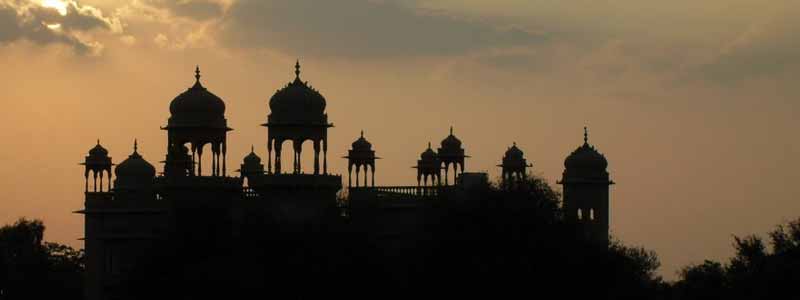
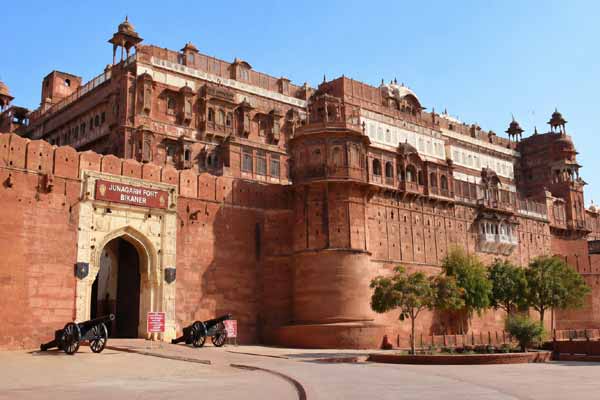
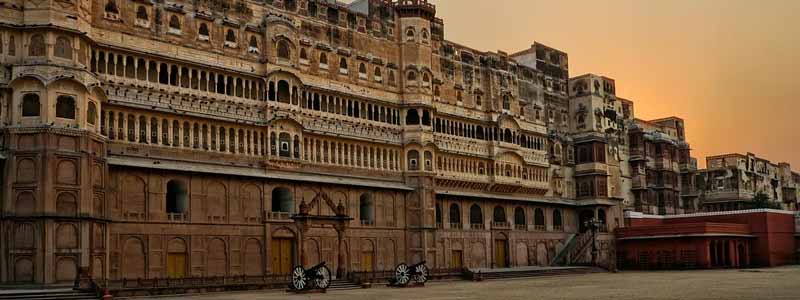
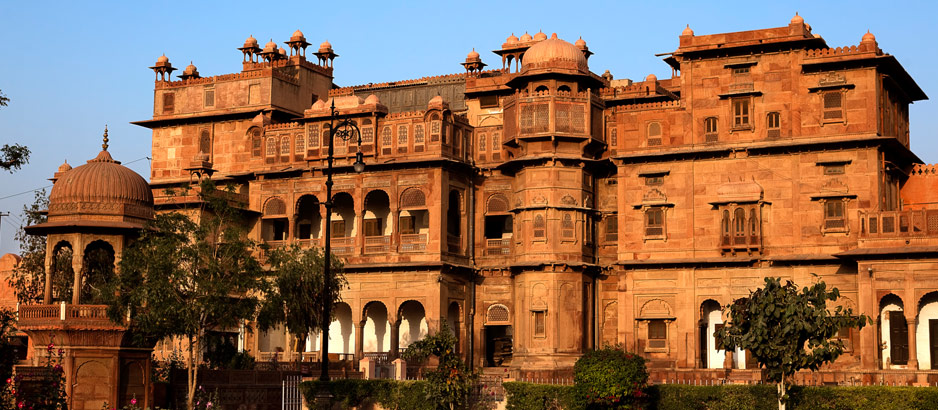
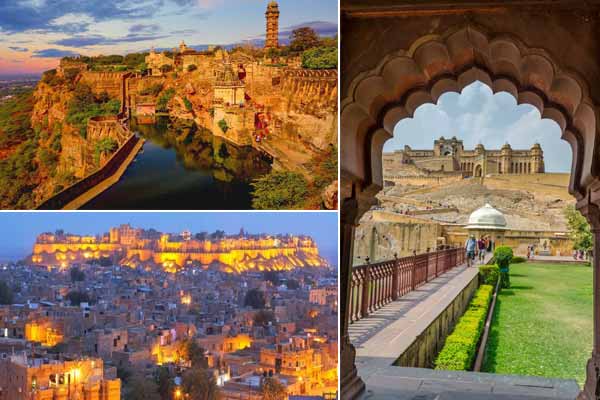
Discover the historic Junagarh Fort in Bikaner Located in the heart of Bikaner, Junagarh Fort is one of Rajasthan’s most remarkable architectural and historical landmarks. Built in 1589 by Raja Rai Singh, a distinguished general in the court of Emperor Akbar, the fort stands as a symbol of the region’s rich royal heritage. Unlike many forts in Rajasthan that are constructed on hilltops, Junagarh Fort was built on the plains, making it unique in both design and appearance.
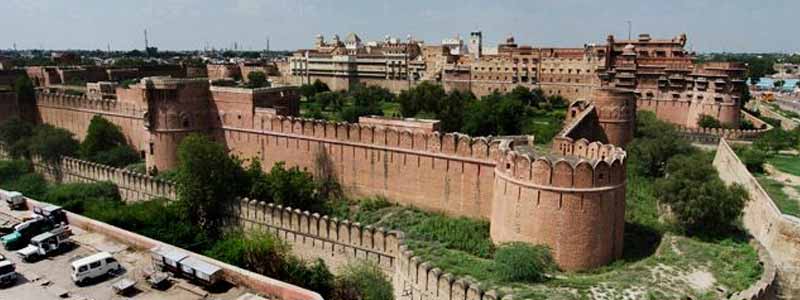
The fort is surrounded by strong walls, imposing bastions, and a defensive moat, reflecting its military importance during medieval times. As visitors enter through its grand gateways, they are welcomed into a world of royal splendor featuring magnificent palaces, courtyards, temples, and audience halls. The fort showcases a stunning blend of Rajput, Mughal, and Gujarati architectural styles, highlighted by intricate carvings, marble work, mirror decorations, and beautifully painted ceilings.
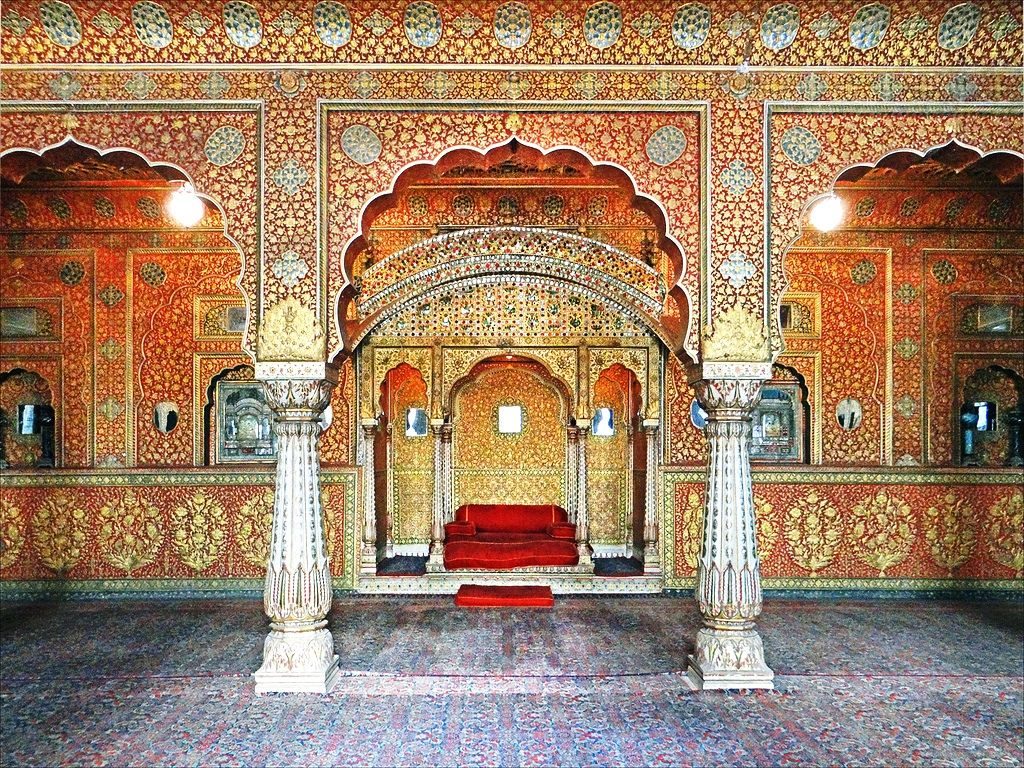
Among the fort’s most famous attractions are Anup Mahal, Karan Mahal, Phool Mahal, and Chandra Mahal. These royal chambers display exquisite craftsmanship, gold leaf artwork, colorful frescoes, and elegant interiors that provide a glimpse into the luxurious lifestyle of Bikaner’s rulers. Every section of the fort tells a story of power, culture, and artistic excellence.
Junagarh Fort also houses an impressive museum featuring royal costumes, ancient weapons, manuscripts, paintings, and artifacts from the Rathore dynasty. These exhibits help visitors understand the history and traditions of the kingdom that once flourished in the desert region of Rajasthan.
Today, Junagarh Fort remains one of the best-preserved forts in India and a must-visit destination for history lovers, photographers, and cultural travelers. Its majestic architecture, fascinating history, and rich heritage make it a highlight of any Rajasthan tour. A visit to this magnificent fort offers an unforgettable journey into the royal past of Bikaner and the timeless grandeur of Rajasthan.
100 years later, Raja Rai Singh became the sixth ruler of Bikaner. During the Mughal empire, he accepted the suzerainty of the Mughals and became an army general in the court of Emperor Akbar and then Emperor Jahangir. He earned many accolades for his work during the Mughal empire, which he used to build a fort away from the city of Bikaner as an alternate fort to the stone fort built by Rao Bika. This fort was called Chintamani Durg, which turned out to be the most important kila in Bikaner. The foundation of the fort was laid on plain land in 1589 and it was completed 5 years later in 1594. The fort was later renamed Junagarh Fort or Old Fort in the early 20th century. A special fact about Junagarh Fort is that despite being built at ground level, it could not be conquered by enemies.
Discover the historic Junagarh Fort in Bikaner
Architecture
The architecture of Junagarh Kila, Bikaner has a blend of Rajput, Gujarati, and Mughal styles. The fort is made of red sandstone brought from Jodhpur. There are carvings in red and gold sandstone, which are the highlighting feature of the fort.
Junagarh Fort is spread across 5.28 hectare and is studded with temples, palaces, and other structures. It has a 986-metre-long wall with 37 bastions. Junagarh Fort, Bikaner was originally surrounded by a moat for defence purposes, which is non-existent now.
Main Entrance and Gates
Visitors enter the fort through impressive gateways that highlight the military strength of the structure. The main entrance, known as Karan Pol, is one of the most significant gates and commemorates victories achieved by the rulers of Bikaner.
Another notable gate is Suraj Pol, constructed from yellow sandstone and decorated with beautiful carvings. The gateways feature iron spikes that were originally designed to prevent attacks by enemy elephants.
As visitors pass through these gates, they enter a world filled with royal splendor and historical charm.
Anup Mahal
Among the most celebrated attractions within Junagarh Fort is Anup Mahal. Built by Maharaja Anup Singh, this palace served as an administrative and ceremonial hall.
The interiors of Anup Mahal are breathtaking. Intricate gold leaf work adorns the walls and ceilings, while colorful frescoes depict scenes from mythology, royal life, and nature. Delicately carved wooden panels and exquisite mirror decorations further enhance its beauty.
Anup Mahal represents the artistic achievements of Bikaner’s craftsmen and remains one of the finest examples of Rajput palace architecture.
Karan Mahal
Karan Mahal was constructed by Maharaja Karan Singh to commemorate military victories. The palace reflects a blend of Rajput and Mughal architectural influences.
The grand hall contains elegant arches, finely carved pillars, and decorative motifs that celebrate royal achievements. The palace served as a reception area where rulers welcomed distinguished guests and conducted important ceremonies.
Today, visitors can admire its architectural beauty and imagine the grand celebrations that once took place within its walls.
Phool Mahal
Phool Mahal, meaning “Flower Palace,” is one of the most beautiful sections of Junagarh Fort. It was designed as a private residence and relaxation area for the royal family.
The palace features stunning floral patterns, intricate paintings, and decorative artwork that create a luxurious atmosphere. The richly adorned ceilings and walls demonstrate the sophisticated artistic tastes of Bikaner’s rulers.
The elegant design of Phool Mahal reflects the importance of beauty and refinement in royal life.
Gaj Mandir
Gaj Mandir is another remarkable palace within the fort complex. Built as a royal residence, it is known for its mirror work, colorful decorations, and charming interiors.
The walls are adorned with intricate paintings and detailed carvings that depict scenes from daily life, religious stories, and royal traditions. The palace showcases the creativity and craftsmanship that flourished under the patronage of Bikaner’s rulers.
Visitors often consider Gaj Mandir one of the most visually appealing areas of the fort.
Chandra Mahal
Chandra Mahal, or the Moon Palace, is among the most luxurious apartments in Junagarh Fort. It served as the personal residence of the Maharaja.
The palace features elegant marble work, ornate decorations, and finely crafted furniture. The rooms offer a glimpse into the lavish lifestyle enjoyed by the royal family.
Beautifully painted ceilings and decorative mirrors create a sense of grandeur that continues to captivate visitors.
Badal Mahal
Badal Mahal, meaning “Palace of Clouds,” is famous for its unique artistic theme. The interiors are decorated with paintings of clouds, rain, and lightning, symbolizing the monsoon season.
These imaginative decorations were especially meaningful in the arid desert environment of Bikaner, where rainfall was highly valued. The palace reflects the creativity and cultural sophistication of Rajasthan’s royal courts.
Discover the historic Junagarh Fort in Bikaner
Junagarh Fort: Entry Fee
The ticket price for visiting Junagarh Fort in Bikaner is Rs 50 per person for Indians and Rs 30 per person for Indian students. The entry fees would be Rs 300 per person for Foreigners and Rs 150 per person for foreigner students.
Junagarh Fort: Timings
The Junagarh Fort in Bikaner is open throughout the week from 10:00 am to 4:30 pm.
A visit to Junagarh Fort can be combined with several other attractions in Bikaner, including:
Lalgarh Palace
Karni Mata Temple
Rampuria Havelis
Gajner Palace
National Research Centre on Camel
These attractions complement the fort experience and provide a broader understanding of Bikaner’s history and culture.
Discover the historic Junagarh Fort in Bikaner
Best Time to Visit
The best time to visit any place is when you could feel fully comfortable exploring it without the impact of weather conditions. Junagarh Fort, Bikaner is located in the middle of the Thar Desert, where summers are hot. Therefore, it is recommended that the tourists visit Junagarh Fort during the cooler months from November to February.
Junagarh Kila, Bikaner is a wonderful destination for a fun-filled day outing in Bikaner. Owing to the importance and the appeal of the place, it is the main destination in all Bikaner tour packages. On a trip to the fort, remember to carry water, wear comfortable shoes, and apply sunscreen as you will have to walk a lot to explore the place.
Junagarh Fort: How to Reach
Becoming one of the most visited cities of Rajasthan due to its proximity to the Thar Desert and its innumerable historical attractions. One of the most popular sites to visit in the city is the Junagarh Fort, a massive construction located very close to the city centre.
Due to its proximity to the city centre, it is very comfortable to get to Junagarh Fort. The fort is located very close to the railway station, hence you can get here by auto-rickshaws, buses and private vehicles. It lies a little more than a kilometre away from the railway station, which can be covered within 10 minutes. There are autos and cabs available right outside the railway station. You can also take the bus from the railway station to get to the fort. But the bus service here is not very regular and at times there are huge time gaps between buses.