


Hidden Places to Visit in Delhi for a Unique Experience is often associated with crowded monuments and busy markets, but beyond the usual tourist trail lies a quieter, more intriguing side of the city. Exploring these hidden places can offer a unique and intimate experience of Delhi’s layered history and culture.
Agrasen ki Baoli, tucked between modern buildings near Connaught Place, is a hauntingly beautiful stepwell that feels frozen in time. Its symmetrical arches and deep stone steps are especially atmospheric in the early morning. Nearby, the Mehrauli Archaeological Park remains surprisingly under-visited despite housing centuries of ruins, tombs, and mosques spread across lush greenery.
For nature lovers, Sanjay Van provides a peaceful escape. This dense forest near Vasant Kunj is dotted with ancient structures and walking trails, making it ideal for quiet reflection. Another lesser-known gem is Bhuli Bhatiyari ka Mahal, a mysterious hunting lodge linked to folklore and legends.
Art and culture enthusiasts should visit the Kiran Nadar Museum of Art, which offers world-class contemporary Indian art without the crowds. Lastly, Majnu ka Tila, often known for its food, also hides tranquil monasteries and river views that feel far removed from the city’s chaos.
These hidden corners reveal a calmer, deeper Delhi, rewarding travelers who look beyond the obvious and discover stories that quietly shape its enduring, complex soul today.
Agrasen ki Baoli: A Stepwell Full of Mystique
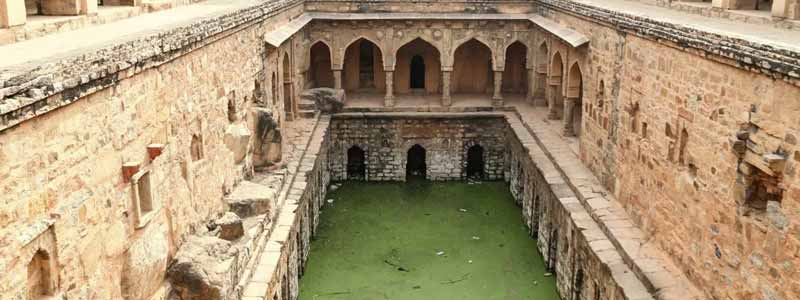
Located in the heart of New Delhi near Connaught Place, Agrasen ki Baoli is a magnificent 14th-century stepwell that serves as a quiet sanctuary amidst the city’s urban chaos. While its exact origins are shrouded in mystery, legend attributes its initial construction to the mythical Maharaja Agrasen during the Mahabharata era, with a later reconstruction by the Agrawal community during the Tughlaq or Lodi periods.
The structure is a masterclass in ancient engineering, measuring 60 meters long and 15 meters wide. It features 108 steep stone steps descending through three distinct levels, flanked by symmetrical arched niches and chambers that once provided a cool retreat for travelers and locals. Built primarily with rubble masonry and red sandstone, its vertical design creates a dramatic visual effect, making it a favorite for photographers and filmmakers (famously appearing in the movie PK).
Beyond its architecture, the Baoli is steeped in folklore. Tales of “black water” and supernatural whispers have earned it a reputation as one of Delhi’s most haunted spots, though most visitors today find only a peaceful atmosphere filled with the fluttering of pigeons and bats.
Tip: To enhance the tranquil experience, it is advised to arrive during early morning.
Bhuli Bhatiyari Ka Mahal: Delhi’s Haunted Ruins
Deep within the Central Ridge Reserve Forest near Jhandewalan, the ruins of Bhuli Bhatiyari Ka Mahal stand as one of Delhi’s most chilling historical enigmas. Built by Feroz Shah Tughlaq in 1354 as a royal hunting lodge, this 14th-century structure is now famously regarded as one of the city’s most haunted locations.
The “Palace of the Forgotten Innkeeper” is shrouded in dark folklore. One popular legend tells of a queen named Bhatiyari who was neglected or imprisoned by the king and died here; locals believe her restless spirit still wanders the forest. Another theory suggests the name is a distortion of a Sufi saint’s name, Bu Ali Bakhtiyari, who once resided in its quiet chambers.
The atmosphere is undeniably eerie, with thick stone walls, a massive rubble masonry gate, and overgrown courtyards. Visitors frequently report hearing inexplicable footsteps and whispers, especially as dusk falls. Due to its reputation and isolated forest location, entry is strictly prohibited after 5:00 PM, and police often barricade the entrance to keep thrill-seekers away after dark.
Note: For safety purposes, visiting during daytime is strongly advised as the area is off limits after dark.
Sanjay Van – A Forest in the City
Spanning over 783 acres in South Delhi, Sanjay Van is one of the city’s most vital “green lungs” and a haven for those seeking wilderness within the urban sprawl. Part of the ancient Aravalli Range, this dense forest is a thriving ecosystem, home to over 200 bird species, golden jackals, and Nilgai.
For history buffs, the forest conceals the 12th-century ruins of Lal Kot, Delhi’s first “Red Fort.” Visitors can hike up its massive stone ramparts to witness a panoramic view of the forest canopy with the Qutub Minar rising in the distance. The area is also dotted with centuries-old mazars (tombs) of Sufi saints, adding a spiritual layer to its rugged trails.
Like many of Delhi’s forest areas, Sanjay Van carries a reputation for being haunted. Local legends speak of a “woman in white” and mysterious whispers among the trees, making it a popular spot for thrill-seekers.
Best suited for: Morning jogs, bird spotting, serene walks, cycling, or basking in nature’s tranquillity.
Satpula Bridge – An Engineering Marvel from the Tughlaq Era
Believed to be constructed in the reign of Muhammad Bin Tughlaq, the Satpula Bridge in Saket boasts the title of one of the earliest water harvesting creations in the country. Perhaps the only structure of its kind standing tall in a calamitous state, the bridge once served the dual purpose of military and civilian activities. While relishing the medieval engineering marvel of the place, do not forget this gem among the many hidden gems of Delhi.
Pro tip: For stunning views of light falling through the arches, arrive at sunset.
Hijron Ka Khanqah – A Tranquil Sufi Shrine
Tucked into Mehrauli’s narrow passageways is a lesser-known tomb of Hijron Ka Khanqah, which dates to the 15th century and is dedicated to the eunuchs’ shrine. This calm shrine, marked by whites, reflects the serenity of Hijron Ka Khanqah while simultaneously revealing a previously unknown side of old Delhi. This shrine serves as a spot for meditation and inner peace, which remains untouched by modern-day tourism.
Bhalswa Horseshoe Lake – A Hidden Gem for Nature Lovers
There is a quiet and peaceful location that excels in nature and sightseeing, located northwest of Delhi, close to Jahangirpuri, called Bhalswa Horseshoe Lake. Furthermore, this site is ideal for recreational activities such as boating as well as bird-watching. Unlike the more popular Hauz Khas Lake, Bhalswa remains one of the most unexplored places in Delhi. The greenery around the lake, as well as the lake’s unique hoof shape, creates a relief from the smoke and traffic.
Best Time to Visit: Early morning or late afternoon is optimal for bird watching, and cool, gentle breezes.
Jamali Kamali Mosque and Tomb – A Mystic Experience
The Jamali Kamali Mosque and Tomb is located within the Mehrauli Archaeological Park and is as mysterious as it is spiritual. The tomb contains the remains of the Sufi saint Jamali along with his companion Kamali. A veritable treasure trove of history, this is one of the eeriest hidden gems in Delhi, well-known for claims of ghost sightings and whispers of supernatural activity.
Don’t Miss: The exquisite work done in red sandstone, including the ornate mihrab in the mosque.
Tughlaqabad Fort – A Forgotten Stronghold
Located 6 kilometres from the centre of New Delhi, Tughlaqabad Fort is a majestic ruin which, like a number of sights in the Delhi region, rarely gets the publicity it deserves. One of the most immense fort complexes in Delhi, it was built by Ghiyas-ud-din Tughlaq in the 14th century. This unexplored place in Delhi is perfect for most adventurers and photographers as it’s filled with wild vegetation infused with myth (including a curse placed by the Sufi saint Nizamuddin Auliya).
Explore: The vast fort complex’s intricate maze-like structures, underground chambers, and panoramic views from the top.
Adham Khan’s Tomb – The Neglected Wonder
This tomb is located beside Mehrauli Bus Terminal, and many people confuse it for a small fort. Adham Khan, the son of Akbar’s wet nurse Maham Anga, was laid to rest here after the emperor executed him. It deviates from the norm, as Mughal tombs are usually sorrowful, mourning the dead. The structure is octagonal and has a sombre atmosphere, which gives it a unique identity among Delhi’s architectural wonders.
Good to know: The site also offers stunning views of the Qutub complex in the distance.
Mirza Ghalib’s Haveli – Footsteps of Literature
Poetic history comes to life for literature lovers at Mirza Ghalib’s Haveli, which is situated in Ballimaran, Chandni Chowk. This humble haveli exhibits the life and works of the most beloved Urdu poet of Delhi. The museum contains an abundance of works about him with calligraphy and writings from Ghalib himself, as well as decor from his time, making it one of the more underrated places in Delhi for culturally inclined travellers.
Pair With: A food trail in Chandni Chowk to maximise the trip.
Majnu Ka Tilla – Tibetan Retreat in Bustling Delhi
Majnu Ka Tilla may be growing in popularity, but it still remains one of the hidden places in Delhi with the charm of being yet to be discovered! It is a Tibetan settlement around ISBT, which has deep cultural immersion with Buddhist monasteries, colourful markets, and good Tibetan food. It feels like you are entering a different universe when you stroll through its lanes.
Must Try: Local restaurants serving Laphing, Momos, and Tibetan Thukpa.