

Beyond the Taj Mahal: Hidden Gems to Discover in Agra crown jewel, but the city’s true richness lies beyond its iconic silhouette. Exploring Agra’s lesser-known attractions reveals layers of history, culture, and everyday life that many visitors overlook. Agra Fort, for instance, offers more than grand halls; its quiet corners like the Muthamman Burj tell moving stories of Emperor Shah Jahan’s final years.
Another understated marvel is Itimad-ud-Daulah, the graceful “Baby Taj.” With its intricate marble inlay and peaceful riverside gardens, it provides an intimate glimpse into Mughal artistry without the crowds. Across the Yamuna River, Mehtab Bagh offers a tranquil setting and one of the most beautiful sunset views of the Taj Mahal.
Beyond monuments, Agra’s vibrant bazaars bring the city to life. Kinari Bazaar immerses visitors in colorful lanes filled with textiles, jewelry, and local crafts, while Sadar Bazaar is perfect for sampling street food and the famous petha sweet. Together, these hidden gems transform Agra from a brief sightseeing stop into a destination rich with stories, flavors, and unforgettable experiences.
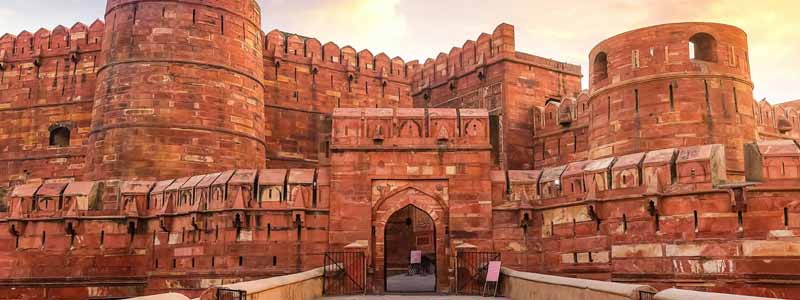
Agra Fort: Stories Beyond the Main Halls
Agra Fort is often considered the Taj Mahal’s architectural companion, yet many visitors treat it as a secondary attraction. While its grand halls and massive red sandstone walls are well known, the fort holds many quieter corners that remain overlooked.
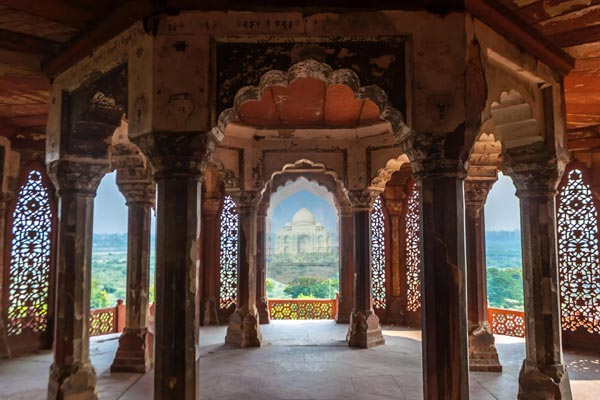
One of the most poignant spots is Muthamman Burj, an octagonal marble tower overlooking the Yamuna River. It was here that Emperor Shah Jahan spent his final years under house arrest, imprisoned by his son Aurangzeb. From this balcony, he could see the Taj Mahal in the distance—his final connection to Mumtaz Mahal. Standing in this space evokes a deep emotional resonance that guidebook highlights often fail to capture.
The Anguri Bagh, a charbagh-style garden within the fort, is another underrated gem. Designed with geometric precision, it once served as a private leisure space for the royal women. Away from the main tourist routes, it offers a rare moment of calm and imagination—what life inside a Mughal palace may truly have felt like.
Hidden corridors, lesser-visited courtyards, and smaller residential chambers throughout the fort reveal Agra Fort not just as a military stronghold, but as a thriving imperial city within walls.
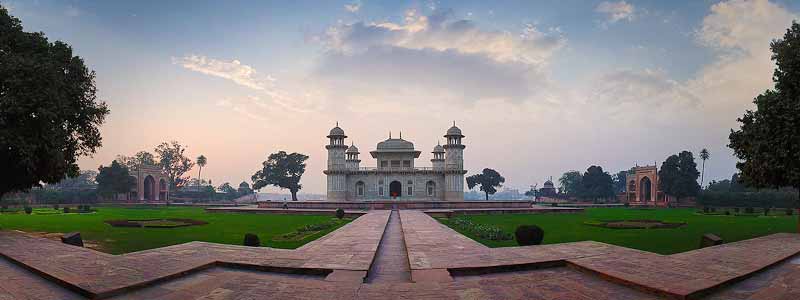
Itimad-ud-Daulah: The Elegant “Baby Taj”
Often overshadowed by its more famous successor, Itimad-ud-Daulah’s Tomb is one of Agra’s most refined monuments. Known as the “Baby Taj,” it predates the Taj Mahal and is widely regarded as its architectural inspiration.
Built entirely of white marble and adorned with delicate pietra dura inlay, the tomb is a masterpiece of subtle beauty. Semi-precious stones form floral patterns, while lattice screens allow soft light to filter into the interior. Unlike the Taj Mahal, which overwhelms with grandeur, Itimad-ud-Daulah charms with intimacy and detail.
Situated along the Yamuna River and surrounded by a Persian-style garden, the monument remains relatively quiet throughout the day. Visitors can linger, observe craftsmanship up close, and enjoy peaceful river views—an experience that feels deeply personal and reflective.
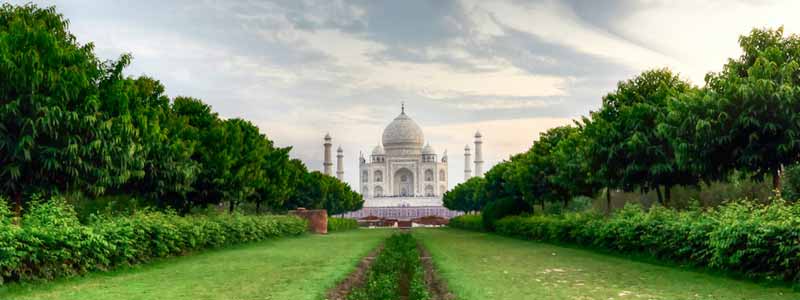
Mehtab Bagh: A Garden with a Perfect View
Directly across the river from the Taj Mahal lies Mehtab Bagh, a Mughal garden that offers one of the most spectacular yet underappreciated views in Agra. Originally designed as part of a larger riverside complex, it was intended to perfectly align with the Taj Mahal.
Today, Mehtab Bagh is a sanctuary from crowds. As sunset approaches, the Taj glows in changing hues, reflected gently in the Yamuna. Without the rush of tour groups, visitors can absorb the scene in silence, watching day fade into night.
The garden itself is beautifully symmetrical, with walking paths, flowering plants, and shaded spots ideal for quiet contemplation or photography. For many travelers, this serene perspective becomes their most cherished Taj Mahal memory.
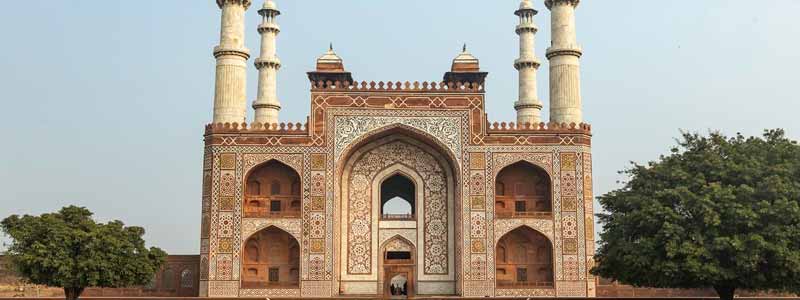
Akbar’s Tomb at Sikandra: An Emperor’s Philosophy in Stone
A short drive from central Agra leads to Sikandra, home to the grand tomb of Emperor Akbar. Despite Akbar’s immense historical importance, his mausoleum receives far fewer visitors than it deserves.
Akbar’s Tomb is architecturally unique, blending Islamic, Hindu, Jain, and Buddhist elements—reflecting the emperor’s belief in religious harmony. The structure rises in tiers, combining red sandstone and white marble, and is surrounded by a vast garden complex.
Peacocks roam freely across the grounds, enhancing the sense of timeless tranquility. Unlike the Taj Mahal, which celebrates romantic devotion, Akbar’s Tomb represents imperial power, tolerance, and intellectual curiosity. Walking through Sikandra provides insight into Mughal ideology at its most progressive.
Mariam-uz-Zamani’s Tomb: Honoring a Forgotten Queen
Near Sikandra lies another overlooked monument: Mariam-uz-Zamani’s Tomb. Mariam-uz-Zamani, also known as Harka Bai or Jodha Bai, was Akbar’s Rajput wife and the mother of Emperor Jahangir.
Her tomb reflects her unique position within the Mughal court. Built primarily from red sandstone, it incorporates Hindu architectural elements such as chhatris alongside Islamic design features. The result is a harmonious blend of cultures, mirroring her life and influence.
Quiet and rarely crowded, the site invites reflection on the powerful women of Mughal history, whose stories are often eclipsed by those of emperors and warriors.
Jama Masjid: Agra’s Spiritual Heart
While the Taj Mahal is a mausoleum, Jama Masjid represents Agra’s living spiritual tradition. Built by Jahanara Begum, Shah Jahan’s daughter, the mosque stands opposite Agra Fort and remains an active place of worship.
Constructed from red sandstone with white marble accents, Jama Masjid is an architectural marvel in its own right. Its vast courtyard offers panoramic views of the old city, while its prayer halls convey an atmosphere of dignity and calm.
Visiting during prayer times allows travelers to witness local religious life, providing a deeper cultural understanding beyond sightseeing.
Kinari Bazaar: The Pulse of Old Agra
To experience Agra beyond monuments, one must explore its markets. Kinari Bazaar, near Jama Masjid, is a vibrant labyrinth of narrow lanes filled with textiles, jewelry, wedding decorations, spices, and everyday goods.
The bazaar is loud, colorful, and chaotic—but also deeply authentic. Shopkeepers call out their wares, artisans work in tiny workshops, and locals bargain passionately. Walking through Kinari Bazaar is a sensory immersion that reveals the rhythm of daily life in Agra.
It is also a place to find traditional crafts, from embroidered fabrics to handcrafted accessories, many of which are made using techniques passed down through generations.
Sadar Bazaar: Food, Shopping, and Evening Life
For a more relaxed market experience, Sadar Bazaar offers a blend of shopping and street food. Known for leather goods, handicrafts, and souvenirs, it is a popular spot for both locals and visitors.
Sadar Bazaar is also one of the best places to sample Agra’s culinary specialties. Petha, the city’s iconic sweet made from ash gourd, comes in dozens of flavors. Savory treats like chaat, kachori, and spicy curries reflect Agra’s Mughlai heritage.
In the evenings, the bazaar comes alive with lights, aromas, and conversations, offering a glimpse into the city’s social life.
Fatehpur Sikri: The Abandoned Mughal Capital
Though located about 40 kilometers from Agra, Fatehpur Sikri is an essential extension of the city’s hidden heritage. Once the capital of the Mughal Empire, it was abandoned due to water shortages, leaving behind an extraordinarily preserved architectural complex.
Built entirely from red sandstone, Fatehpur Sikri includes palaces, courtyards, mosques, and administrative buildings. The Buland Darwaza, one of the tallest gateways in the world, dominates the skyline, while the Tomb of Salim Chishti draws pilgrims seeking blessings.
Walking through Fatehpur Sikri feels like stepping into a city frozen in time—grand yet eerily quiet. Despite its historical significance, it is often less crowded than Agra’s main attractions, making it ideal for thoughtful exploration.