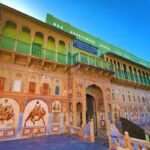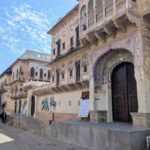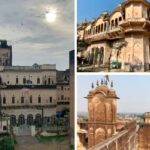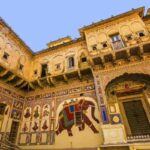

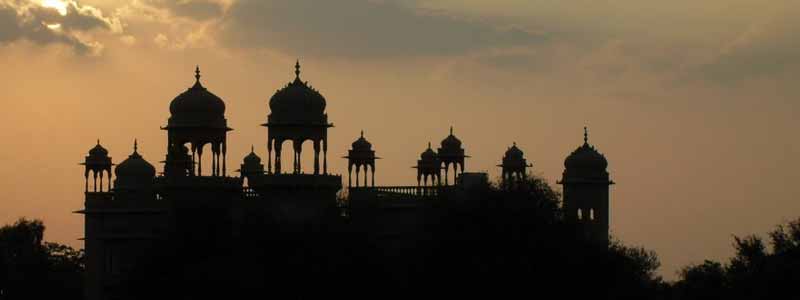


Nawalgarh Fort, locally known as Bala Kila, is the historic cornerstone of Nawalgarh in Rajasthan’s Shekhawati region. Founded in 1737 by Thakur Nawal Singh, the younger son of the legendary Shardul Singh, the fort served as the defensive nucleus around which the “Golden City” flourished. Strategically positioned on the trade route between Delhi and Jaipur, it attracted wealthy Marwari merchants who eventually transformed the town into an “open-air art gallery.”
While the fort’s outer structures have faced the rigors of time—with portions now housing government offices and banks—its architectural soul remains intact within the Sheesh Mahal (Palace of Mirrors). This circular room on the second floor is a masterpiece of Rajput craftsmanship, featuring thousands of tiny mirrors, intricate gilding, and vibrant frescoes. Notably, the ceiling of the Sheesh Mahal displays an ancient map of Jaipur and Nawalgarh, offering a rare glimpse into 18th-century urban planning.
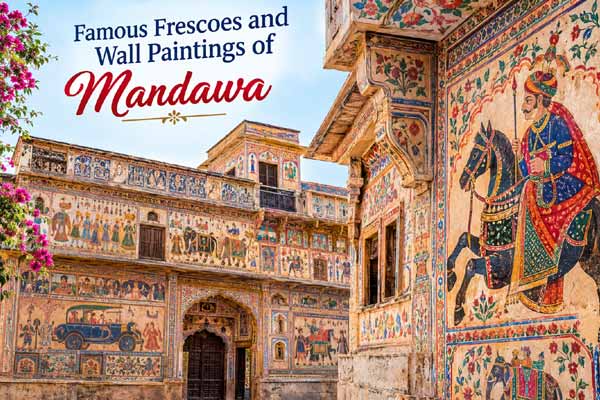
The fort originally boasted a massive iron gate and was surrounded by a walled city with four distinct entrances: Agoona, Bawadi, Mandi, and Nansa. Today, it serves as a gateway to the nearby Poddar and Morarka havelis, renowned for their world-class mural art depicting everything from Hindu mythology to early British-era steam engines. As a symbol of Shekhawati’s transition from a military outpost to a commercial hub, Nawalgarh Fort remains a vital pilgrimage for those seeking the authentic colors and history of rural Rajasthan.
History of Nawalgarh Fort
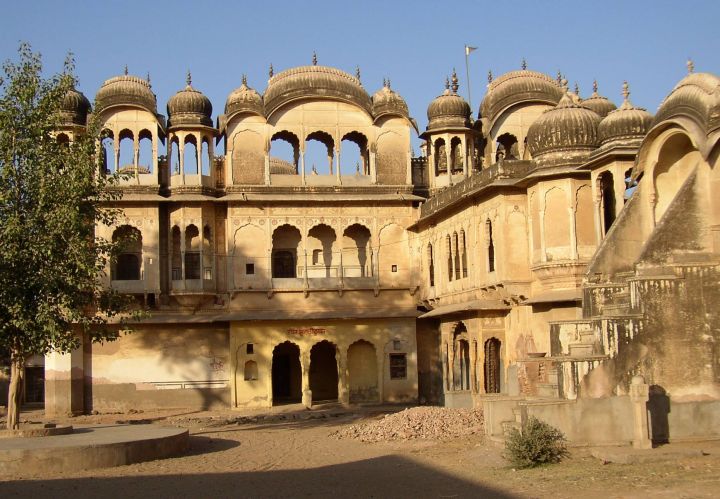
Nawalgarh Fort, also known as Bala Qila, has a rich historical background connected to the growth of the Shekhawati region of Rajasthan. The fort was built in 1737 by Thakur Nawal Singh, a Rajput ruler of the Shekhawat clan. He founded the town of Nawalgarh, which was named after him, and the fort became the center of administration and defense for the area.
During the 18th century, the Shekhawati region was an important trade route linking Rajasthan with Delhi and other northern regions. Nawalgarh Fort played a key role in protecting traders, local people, and the ruling family from invasions and attacks. Its strong walls, strategic location, and watchtowers helped maintain security and stability in the region.
As time passed, Nawalgarh grew into a prosperous town due to trade and the patronage of wealthy merchants. This prosperity influenced the fort’s development, leading to the addition of artistic elements such as fresco paintings, temples, and decorative gateways. These features reflect a blend of military strength and cultural refinement.
Under British rule, the political importance of the fort declined, but it remained a symbol of Rajput pride and heritage. Today, Nawalgarh Fort stands as an important historical monument, representing the legacy, culture, and history of the Shekhawati region.
Places To Visit Near Nawalgarh Fort
Nawalgarh, known as the “Heritage Heart of Shekhawati,” offers a treasure trove of artistic landmarks just a short walk or drive from the central fort. Here are the top places to visit nearby:
1. Podar Haveli Museum
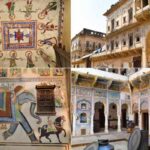
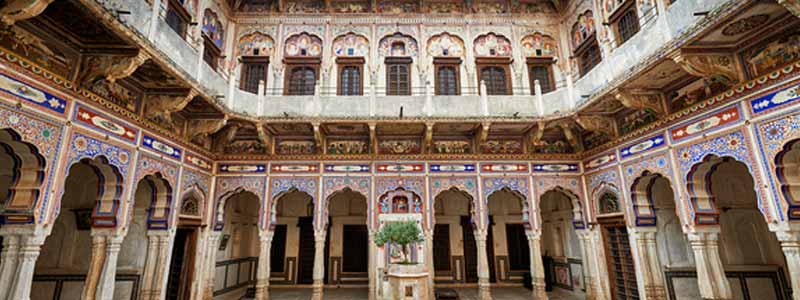
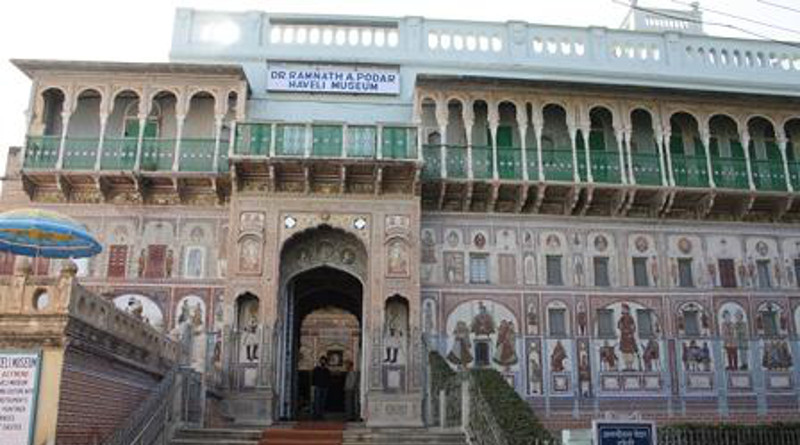
Located just 500 meters from the fort, this is the most beautifully restored haveli in town. Built in 1902, it now serves as a museum featuring over 750 vibrant frescoes. The murals are unique for their blend of traditional mythology and “modern” 20th-century inventions, depicting steam engines, hot air balloons, and even the Wright brothers’ first flight.
2. Morarka Haveli Museum
Directly opposite the Podar Haveli, the Morarka Haveli is famous for its original, un-restored artwork. It offers a more rustic and authentic atmosphere. Highlights include the intricate “Sita’s Swayamvar” mural and a rare fresco of Jesus Christ, showcasing the eclectic influences on local artists during the British era.
3. Aath Haveli Complex
Situated to the west of the fort, this “Complex of Eight Havelis” belonged to a single wealthy merchant family. These mansions are renowned for their massive panoramic murals. While some have faded, the sheer scale of the elephants, camels, and horses painted on the exterior walls remains a breathtaking sight.
4. Roop Niwas Palace
About one kilometer from the fort, this former residence of the Thakurs of Nawalgarh is now a heritage hotel. It is a stunning blend of European and Rajput architecture. The palace is surrounded by lush gardens and fountains, offering a serene escape from the bustling market lanes of the town.
5. Bhagton ki Choti Haveli
A short walk from the main market, this haveli is famous for its distinct color palette of golden yellow, turquoise, and indigo. The frescoes here are particularly detailed, featuring scenes of local folklore and the romantic legend of Dhola-Maru.
Best Time To Visit Nawalgarh Fort
The best time to visit Nawalgarh Fort is during the winter months, from October to March. During this period, the weather is pleasantly cool, with temperatures ranging from 10°C to 27°C, making it ideal for exploring the fort’s expansive courtyards and the nearby havelis on foot.
For photography, early mornings (8:00 AM – 10:00 AM) are best to capture the intricate frescoes in soft, natural light before the crowds arrive. Alternatively, the “golden hour” just before sunset provides a stunning glow to the Rajput architecture.
Avoid the summer (April to June), as temperatures can soar above 42°C, making outdoor sightseeing exhausting. The monsoon (July to September) offers a lush, green landscape but can bring high humidity.
How To Reach Nawalgarh Fort
Nawalgarh Fort is well-connected to major Indian cities through a combination of air, rail, and road networks. Here is how you can reach it:
By Air: The nearest airport is Jaipur International Airport (JAI), located approximately 150 km away. From the airport, you can hire a private taxi (a 3-hour drive) or take a bus from the Jaipur Sindhi Camp bus stand. Indira Gandhi International Airport (DEL) in Delhi is another option, located about 270 km away.
By Rail: Nawalgarh has its own railway station (NWH), which is part of the Delhi-Loharu-Jaipur line. Direct trains like the Sainik Express run daily from Delhi and Jaipur. The station is just 1.5 km from the fort.
By Road: Nawalgarh is easily accessible via a network of well-maintained highways. Frequent RSRTC and private buses connect the town to Jaipur (3 hours), Delhi (6–7 hours), and Bikaner. Local transport like auto-rickshaws is readily available to take you from the bus stand or station directly to the fort entrance.