Bikaner Fort – A Historical and Architectural Journey
rtp123
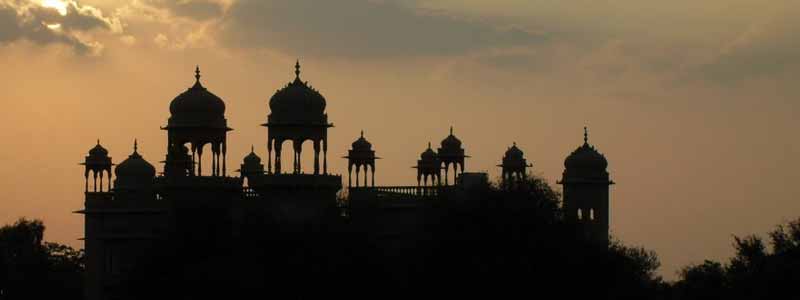
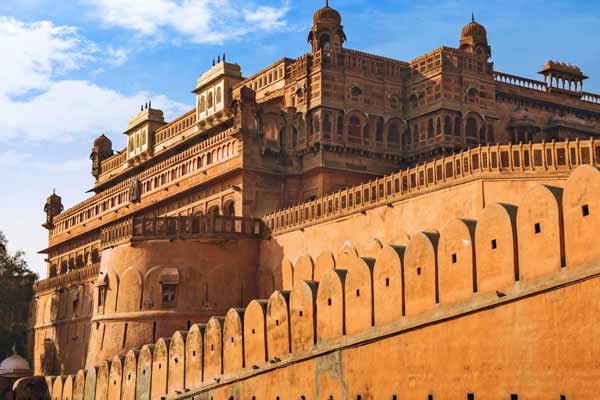
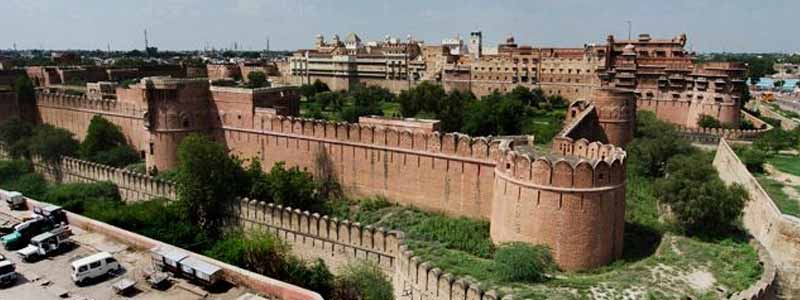
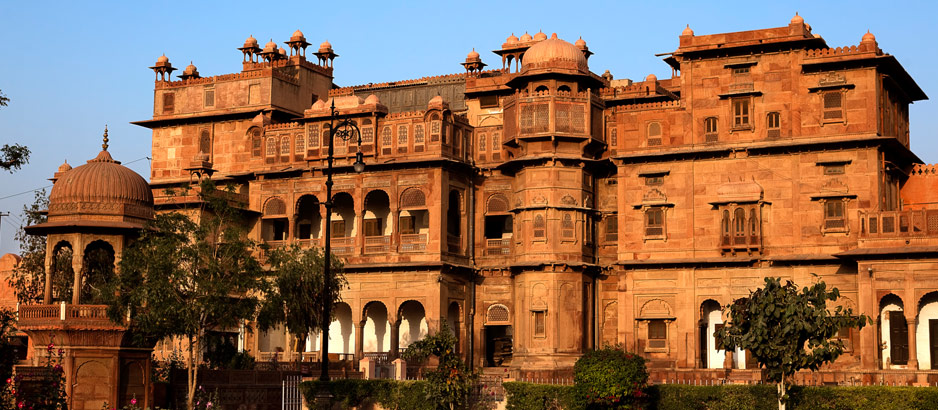
Bikaner Fort, also known as Junagarh Fort, stands as one of Rajasthan’s most magnificent and unconquered forts. Built in 1594 by Raja Rai Singh, this architectural marvel reflects a blend of Mughal, Gujarati, and Rajput styles. Its massive red sandstone walls, intricate carvings, and beautifully detailed courtyards narrate the royal history of the Bikaner kingdom. Unlike most forts in Rajasthan, Junagarh was constructed on the plains rather than on a hill, making its defensive planning even more impressive.
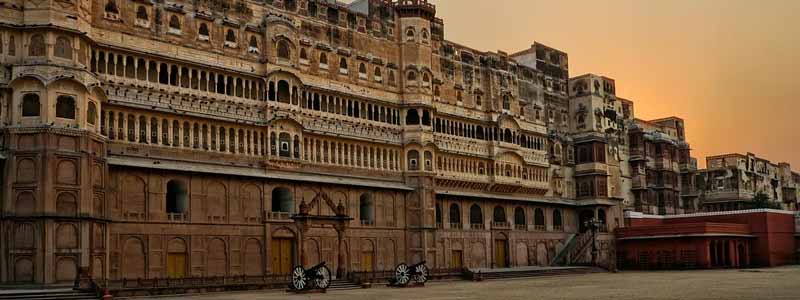
Inside the fort, visitors can explore stunning palaces such as Anup Mahal, Phool Mahal, Karan Mahal, and Badal Mahal, each adorned with gold leaf work, mirror decorations, and exquisite murals. The fort museum displays royal costumes, weaponry, manuscripts, jewellery, and ancient artefacts that offer a glimpse into Bikaner’s glorious past. The fort’s bastions and richly decorated gates highlight its artistic brilliance and strategic importance.
Junagarh Fort represents the courage, culture, and craftsmanship of Bikaner’s rulers. Its timeless beauty, preserved heritage, and grand architecture make it one of the finest heritage attractions in Rajasthan.
Bikaner Fort, popularly known as Junagarh Fort, has a remarkable history that reflects the bravery and royalty of the Bikaner kingdom. The foundation of the fort was laid in 1589 by Raja Rai Singh, the sixth ruler of Bikaner and a trusted general in the Mughal court of Emperor Akbar. Completed in 1594, the fort was built using red sandstone and marble, showcasing a fusion of Rajput, Mughal, and Gujarati architectural styles.
Unlike other Rajasthani forts built on hilltops, Junagarh Fort stands proudly on the plains, yet it remained unconquered throughout centuries. Several battles were fought around it, but no enemy was able to breach its strong defence walls and strategic layout.
Over time, successive rulers added beautiful palaces, temples, courtyards, and halls, turning the fort into a luxurious royal complex. The fort houses magnificent structures like Anup Mahal, Phool Mahal, Karan Mahal, Chandra Mahal, and Badal Mahal, each reflecting the artistic excellence of different eras.
Junagarh Fort today stands as a testament to Bikaner’s glorious heritage, military strength, and architectural brilliance.
Junagarh Fort Bikaner
Architecture of Bikaner Fort
Bikaner Fort, also known as Junagarh Fort, is a masterpiece of Rajputana architecture enriched with strong Mughal and Gujarati influences. Built with deep red sandstone and marble, the fort’s structure showcases exceptional craftsmanship, artistic detailing, and strategic design.
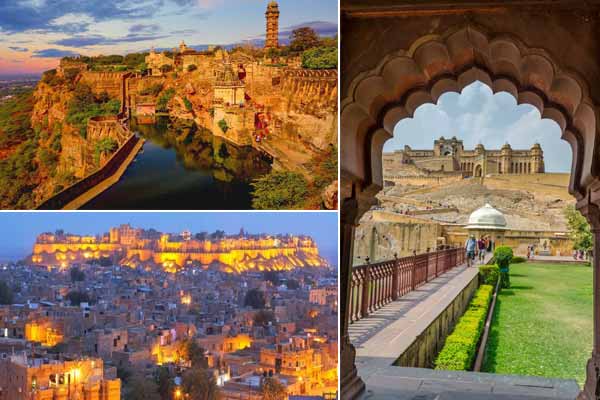
The fort is surrounded by high defensive walls, massive bastions, and intricately carved gates like Karan Pol and Suraj Pol. Its layout features a network of courtyards, palaces, temples, and pavilions arranged in an organic yet harmonious flow. Each structure within the fort was built by different rulers, resulting in a beautiful blend of architectural styles.
Inside, the royal palaces such as Anup Mahal, Phool Mahal, Chandra Mahal, Karan Mahal, and Badal Mahal are decorated with elaborate mirror work, gold leaf designs, stucco art, lacquered surfaces, and vibrant frescoes. The delicate lattice windows (jharokhas), ornate balconies, carved columns, and marble flooring showcase the finesse of Rajasthani artisans.
The fort also includes stunning temples, audience halls, royal bedrooms, and museums, displaying both functional planning and luxurious aesthetic appeal. The combination of strength, beauty, and artistic excellence makes the architecture of Bikaner Fort truly exceptional.
Beyond the formidable walls of Bikaner Fort, Bikaner offers a rich tapestry of historical, cultural, and unique attractions.
Lalgarh Palace: A short drive away, this majestic red sandstone palace, built in the Indo-Saracenic style, now houses a heritage hotel and museum, reflecting the opulence of the royal family.
Rampuria Havelis: A stunning cluster of 15th-century mansions in the old city, famous for their exquisite red sandstone architecture and intricate jharokhas (balconies), offering a captivating glimpse into the lives of Bikaner’s wealthy merchants.
Bhandasar Jain Temple: An ancient 15th-century temple renowned for its unique gold-leaf paintings, vibrant frescoes, and intricate mirror-work, dedicated to the 5th Tirthankara, Sumatinath.
National Research Centre on Camel: Located on the city’s outskirts, this one-of-a-kind center allows visitors to see different camel breeds and even sample camel milk products.
Karni Mata Temple (Deshnok): Located about 30 km away, this globally famous “Rat Temple” is dedicated to Karni Mata, where thousands of rats are revered as holy.
These sites offer diverse experiences, from regal history and unique architecture to local culture and wildlife research, perfectly complementing a visit to the fort.
Best Time to Visit Bikaner Fort
The best time to visit Bikaner Fort is in winter, between November and February. The cooler temperatures and enjoyable weather make this the ideal time for travelers to roam around the fort, palaces, and bazaars at leisure.
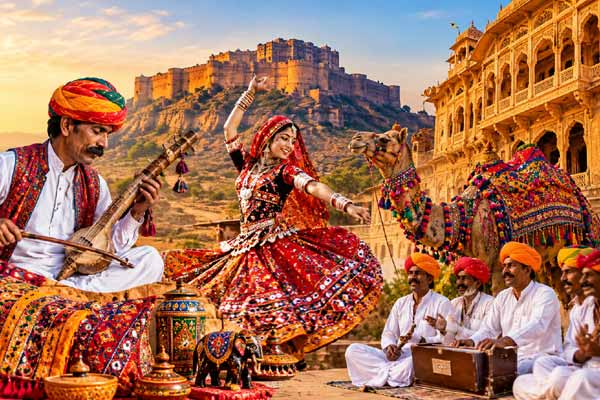
The winter season also coincides with some of the famous festivals and events in Bikaner, such as the Camel Festival, the Kolayat Fair, and the Gangaur Festival. These festivals showcase the colorful and vibrant culture of Rajasthan and offer a lot of fun and excitement for visitors.
How to Reach Bikaner Fort
Reaching Junagarh Fort is quite easy as it is centrally located in Bikaner city. Getting to Bikaner itself can be done by rail, road, or air:
By Train (Recommended): The Bikaner Junction (BKN) railway station is the closest and most convenient, located only about 1.5 to 2 km from the fort. It is well-connected to major cities like Delhi, Jaipur, Jodhpur, and Kolkata. From the station, you can take a quick auto-rickshaw or taxi.
By Road: Bikaner is linked by National Highways (NH 11, 15, 89) to cities like Jaipur, Delhi, and Jodhpur. Government and private buses run regular services, and hiring a private taxi is also an excellent option.
By Air: The nearest major airport is Jodhpur Airport (JDH), approximately 250 km away. Bikaner does have a small domestic airport (Nal Airport – BKB), but flights are often limited. From Jodhpur, you would need to hire a taxi or take a train/bus to Bikaner.
Once in Bikaner, local transport like auto-rickshaws, e-rickshaws, and taxis are readily available to drop you directly at the fort entrance.