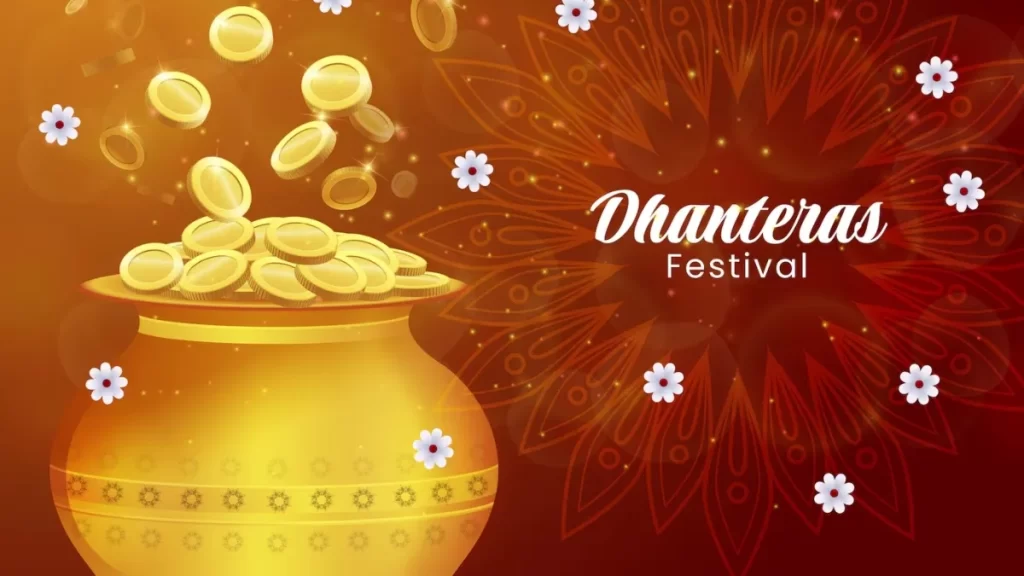
Guide to Celebrating Dhanteras in Rajasthan, also known as Dhanatrayodashi, marks the auspicious beginning of the five-day Diwali festival and holds special significance in Rajasthan, a land famed for its royal heritage, vibrant culture, and deep-rooted traditions. Celebrated on the 13th lunar day (Trayodashi) of the Hindu month of Ashwin, Dhanteras is dedicated to Lord Dhanvantari, the divine physician and god of health, and Goddess Lakshmi, the goddess of wealth and prosperity.
In Rajasthan, the celebration of Dhanteras is more than just a religious observance; it’s an elaborate cultural event that blends devotion, community bonding, commerce, and traditional artistry. From meticulous preparations to ritualistic worship and lively folk performances, Dhanteras in Rajasthan showcases the spirit of prosperity and wellbeing embraced by the people.
Guide to Celebrating Dhanteras in Rajasthan
Historical and Cultural Significance
Dhanteras marks the advent of Diwali and is traditionally associated with wealth and health. It is believed that worshipping Lord Dhanvantari on this day grants good health and protection from diseases, while seeking blessings from Goddess Lakshmi ensures financial prosperity. Rajasthan’s historical affinity to royalty and wealth makes this day particularly meaningful, as families emphasize buying precious metals and utensils symbolizing prosperity.
Legends and stories behind Dhanteras
Several fascinating legends explain why Dhanteras is celebrated. The most popular ones are:
The Legend of King Hima and Yamadeepdaan
✔️According to Hindu tales, King Hima’s 16-year-old son was fated to die from a snake bite on the fourth day after his marriage.
✔️His wife, determined to save him, placed her ornaments and gold coins at the entrance and lit rows of lamps (diyas). She kept him awake all night with stories and songs.
✔️When Lord Yama (God of Death) arrived in the form of a serpent, the dazzling glow of the diyas and jewelry blinded him, preventing him from entering.
✔️This miracle gave rise to the ritual of Yamadeepdaan—lighting lamps on Dhanteras night to ward off untimely death and bring longevity.
Guide to Celebrating Dhanteras in Rajasthan
The Legend of Samudra Manthan (Churning of the Ocean)
According to this story, when the gods and demons churned the ocean for Amrut or nectar, Dhanavantri, the physician of the gods and an incarnation of Vishnu emerged carrying a jar of the elixir (Amrit).
✔️During the Samudra Manthan (Churning of the Ocean), the cosmic churning of the ocean, several divine treasures emerged.
✔️On this auspicious day, Goddess Lakshmi, symbol of wealth, and Lord Dhanvantari, the divine physician, appeared.
✔️Lord Dhanvantari carried a pot of Amrit (nectar), signifying health and immortality.
✔️For this reason, Dhanteras is also observed as Dhanvantari Jayanti, honoring Ayurveda and the importance of good health.
Guide to Celebrating Dhanteras in Rajasthan
Preparations for Dhanteras in Rajasthan
Home Cleaning and Decoration
In Rajasthan, preparation for Dhanteras begins well in advance. Homes and workplaces are thoroughly cleaned and polished, symbolizing the removal of negativity and inviting positive energy. This practice is based on the belief that Goddess Lakshmi visits only clean and well-maintained homes.
The entryways and courtyards are decorated with rangoli — beautiful, intricate patterns made using colored powders, flower petals, and sometimes rice grains. Rajasthan’s famous geometric and floral rangoli designs add a distinct aesthetic charm to the festival.
Doorways are further adorned with torans—decorative garlands made of fresh mango leaves and bright marigold flowers, which are believed to ward off evil spirits and welcome divine blessings.
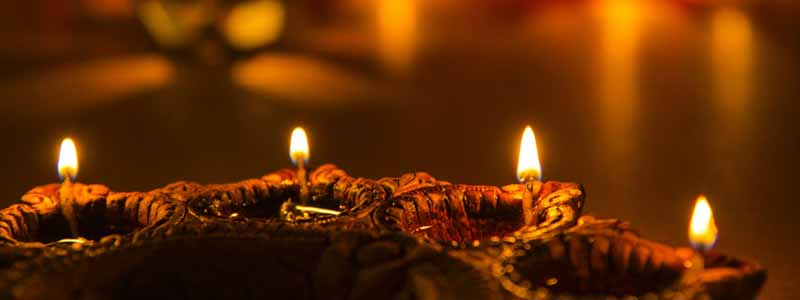
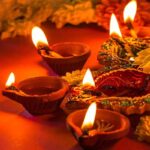
Oil lamps or diyas are placed around the house, especially near entrances and windows. As dusk falls, these lamps create a magical glow that illuminates the home and symbolizes the triumph of light over darkness.
Shopping for Wealth and Prosperity
One of the most cherished customs of Dhanteras in Rajasthan is the purchase of gold, silver, and new utensils. Jewelers’ shops in cities like Jaipur, Udaipur, Jodhpur, and Bikaner bustle with activity as people buy coins, jewelry, and silverware. This tradition is rooted in the belief that buying precious metals on Dhanteras brings good fortune and financial stability.
In Rajasthan, known for its exquisite jewelry craftsmanship, families often commission or purchase traditional silver and gold ornaments. The designs are typically elaborate, showcasing the state’s royal and artistic heritage, such as Kundan work, Meenakari, and intricate silver filigree.
Additionally, buying new utensils and household items is seen as inviting prosperity into the home. It is common to purchase brass or silver vessels, which are considered auspicious for everyday use and religious ceremonies.
Rituals and Worship on Dhanteras
Morning Puja
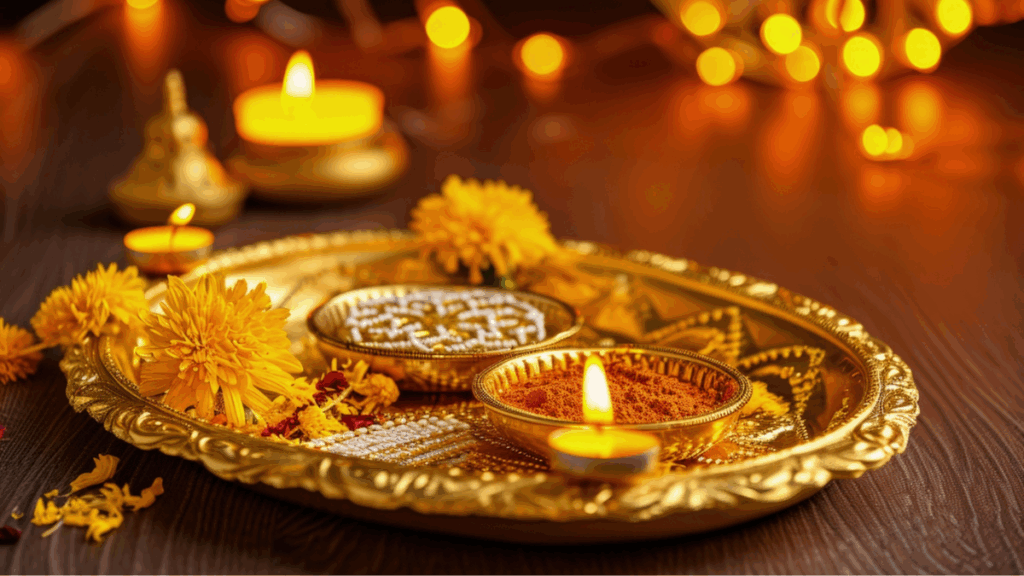
On Dhanteras morning, families wake up early to perform the Dhanteras Puja. The worship space is prepared with idols or pictures of Lord Dhanvantari and Goddess Lakshmi. An altar is decorated with fresh flowers, rice grains, kumkum (vermilion), turmeric, and fruits.
The puja begins by lighting oil lamps and incense sticks. Devotees chant mantras invoking the blessings of health, wealth, and prosperity. Silver coins and utensils are often placed near the deity as offerings, symbolizing abundance.
The worship involves reciting hymns dedicated to Lord Dhanvantari, who symbolizes healing and longevity, and Goddess Lakshmi, who embodies wealth and fortune.
Ayurvedic Traditions and Health Focus
Since Lord Dhanvantari is associated with Ayurveda, the festival also emphasizes health and well-being. In Rajasthan, many families observe this day by consulting Ayurvedic practitioners, renewing their herbal medicine stocks, or beginning health regimens in honor of the divine healer.
Some households conduct a symbolic cleansing ritual using herbal powders and natural oils, reflecting the Ayurvedic tradition of purification and balance.
Cultural Festivities Across Rajasthan
Vibrant Markets and Fairs
Dhanteras in Rajasthan is not only a spiritual occasion but also a time of joyous community gatherings. Local markets and fairs open across cities and towns, offering a wide range of goods—from jewelry and textiles to handicrafts and traditional sweets.
These fairs are bustling hubs of activity where Rajasthani artisans display their crafts, including embroidered fabrics, pottery, jewelry, and puppets. The festive atmosphere is enhanced by music, dance, and street food vendors, making it a sensory feast for locals and tourists alike.
Folk Dance and Music
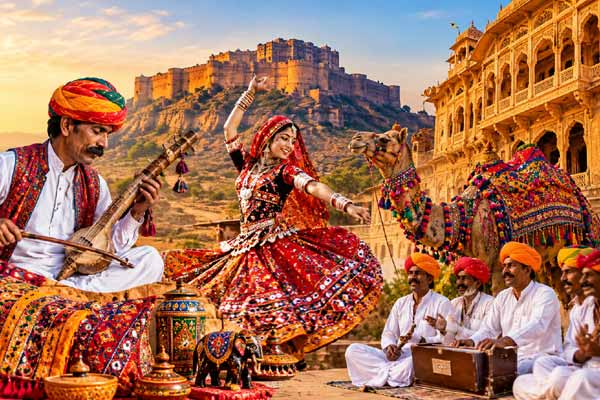
Rajasthan’s folk culture adds an enchanting dimension to Dhanteras celebrations. Traditional dance forms such as Ghoomar, Kalbeliya, and Bhavai are performed in community spaces, attracting large audiences.
Women dressed in brightly colored lehengas adorned with mirror work and silver jewelry perform rhythmic dances, while men accompany with the beats of the dholak, nagada, and tunes from instruments like the sarangi and ektara.
These performances not only entertain but also reinforce cultural identity and communal harmony, making Dhanteras a joyous social event.
Festive Cuisine and Sweets
No Rajasthani festival is complete without its special cuisine. During Dhanteras, families prepare and share traditional sweets and savory dishes that symbolize auspiciousness and celebration.
Popular sweets include Ghevar, a crisp honeycomb-like cake soaked in sugar syrup; Mawa Kachori, a deep-fried pastry filled with sweetened milk solids; and Churma, a sweetened crushed wheat dish.
Savory snacks such as Kachori and Bajre ki Roti (millet bread) are served alongside festive drinks like lassi and herbal teas. Sharing these foods with family, friends, and neighbors strengthens community bonds and spreads festive cheer.
Regional Variations and Unique Practices in Rajasthan
Jaipur: The Pink City’s Royal Tradition
In Jaipur, the capital of Rajasthan, Dhanteras is celebrated with royal grandeur. The markets in Johari Bazaar and Tripolia Bazaar become the focal points for jewelry shopping. Families often visit temples like the Govind Dev Ji Temple to seek blessings before beginning their shopping.
Rangoli competitions and street performances are common, and many households host elaborate pujas involving large gatherings.
Udaipur: The City of Lakes
In Udaipur, Dhanteras celebrations are infused with the serene beauty of the city’s lakes and palaces. People decorate their homes and boats with lamps and flowers. The celebration includes special prayers at the Jagdish Temple and community feasts featuring Rajasthani delicacies.
Jodhpur and Bikaner: Desert Traditions
In the desert cities of Jodhpur and Bikaner, Dhanteras is celebrated with a blend of spirituality and rustic folk traditions. Local fairs showcase camel rides, puppet shows, and traditional music performances alongside the customary pujas.
Here, the community spirit is especially strong, with neighbors visiting each other’s homes, exchanging sweets, and participating in collective prayers.
Tips for Celebrating Dhanteras in Rajasthan
If you plan to experience Dhanteras in Rajasthan or wish to celebrate it in an authentic way, here are some helpful tips:
Start Early: Dhanteras begins early in the morning, so waking up before dawn is ideal for performing rituals.
Clean and Decorate: Ensure your home or puja space is clean and beautifully decorated with rangoli, flowers, and oil lamps.
Buy Auspicious Items: Consider purchasing gold, silver, or new utensils early in the day to maximize the auspiciousness.
Perform the Puja: Set up an altar with images or idols of Lord Dhanvantari and Goddess Lakshmi. Offer flowers, sweets, and light lamps.
Focus on Health: Honor Lord Dhanvantari by paying attention to your health—consult Ayurvedic remedies or begin wellness practices.
Enjoy Cultural Events: Participate in local fairs and cultural programs to experience the full festive spirit.
Share and Celebrate: Distribute sweets and gifts to family, friends, and neighbors to spread joy and strengthen bonds.