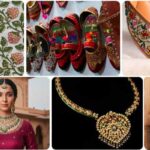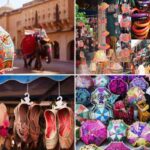


Handicrafts of Rajasthan : Exploring the Vibrant Tapestry of Rajasthan, the land of kings, is also a treasure trove of handicrafts that reflect its rich cultural heritage and vibrant traditions. The state’s artisans have mastered a variety of crafts, each region offering its own unique style. Jaipur, the Pink City, is famous for its exquisite block-printed textiles, blue pottery, and gemstone jewelry. Skilled craftsmen create intricate patterns on fabrics and pottery, often inspired by royal motifs and nature.
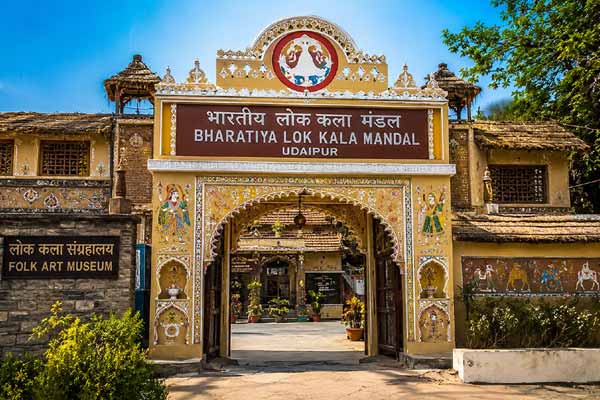
In Jodhpur, the art of leatherwork and bandhani tie-dye thrives, producing colorful fabrics, shoes, and bags that are highly sought after. Jaisalmer, known as the Golden City, excels in wood carving, metalwork, and camel leather crafts, while Bikaner is celebrated for carved camel bone artifacts and fine lacquered miniature paintings. Udaipur, the city of lakes, is renowned for miniature paintings depicting scenes from royal courts, myths, and folklore, as well as papier-mâché work that showcases delicate craftsmanship.
Rajasthan is also famous for marble inlay work, particularly in Jaipur and Kishangarh, where artisans embed semi-precious stones into marble to create decorative items, furniture, and jewelry. Another iconic craft is the creation of puppets and dolls, which play a vital role in the state’s folk performances and storytelling traditions.
The handicrafts of Rajasthan are more than just decorative items—they are a reflection of the state’s history, culture, and artistic legacy. Each piece tells a story of skill, tradition, and creativity passed down through generations. For travelers and collectors, exploring Rajasthani handicrafts offers a colorful, immersive experience of India’s royal and artistic heritage.
If you want, I can also make a version that’s visually structured with headings and highlights for easier reading and travel guide use. Do you want me to do that?
A Heritage Rooted in Royalty and Tradition
The handicraft legacy of Rajasthan has deep historical roots. For centuries, Rajput rulers encouraged art and craftsmanship in their kingdoms. Kings and nobles commissioned ornate furniture, miniature paintings, embroidered garments, jewelry, and decorative objects for their palaces. Skilled artisans flourished under this patronage, and their work became refined, luxurious, and highly distinctive. At the same time, rural communities developed their own handmade traditions using locally available materials such as clay, wool, leather, metal, and wood.
This dual influence of royal elegance and folk simplicity gives Rajasthani handicrafts their unique character. Some crafts are richly detailed and ceremonial, made for aristocratic tastes, while others are practical items used in everyday life, transformed into art by the artisan’s hand. Whether elaborate or humble, each craft carries a sense of authenticity that makes Rajasthan one of the most fascinating craft destinations in the world.
Block Printing: Colors That Tell Stories
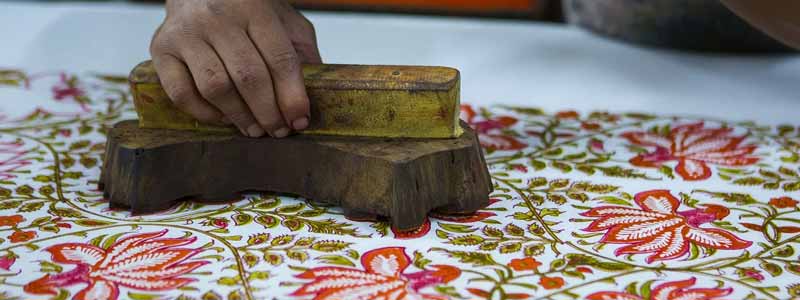
Among the most famous handicrafts of Rajasthan is block printing, especially associated with Jaipur, Bagru, and Sanganer. This traditional textile art uses hand-carved wooden blocks dipped in natural or vegetable-based dyes to create repeating patterns on fabric. The results are elegant, rhythmic, and deeply expressive.
Block printing is more than a decorative technique. It is a meticulous process that begins with designing motifs, carving them onto wooden blocks, preparing the fabric, and then printing one color at a time. The patterns often include flowers, leaves, paisleys, geometric borders, birds, and traditional Rajasthani symbols. The final cloth may be used for sarees, dupattas, bedsheets, curtains, stoles, table covers, and home décor.
What makes Rajasthani block printing special is its handmade warmth. No two pieces are exactly alike. Slight variations in pressure, alignment, or dye absorption create the charm that machine-made products cannot match. In a world dominated by mass production, these textiles remind us of the value of slow, careful craftsmanship.
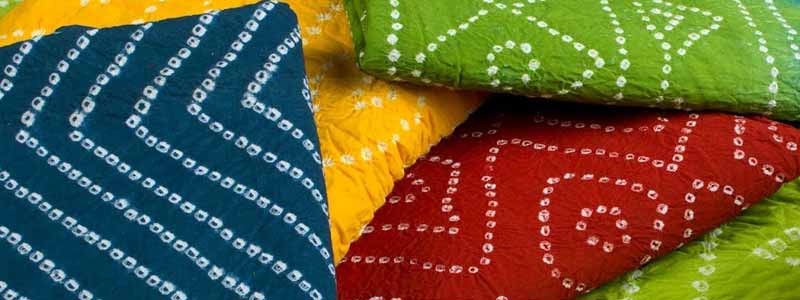
Bandhani and Leheriya: The Art of Tie and Dye
Rajasthan is also celebrated for its tie-and-dye traditions, especially Bandhani and Leheriya. These textile arts are known for their bright colors and festive appeal. Bandhani involves tying tiny sections of cloth with threads before dyeing, creating beautiful dotted patterns when the cloth is opened. Leheriya, on the other hand, produces wave-like patterns that resemble flowing lines of water or wind.
These fabrics are deeply connected with the cultural life of Rajasthan. They are worn during festivals, weddings, religious functions, and special celebrations. Women often choose Bandhani sarees or dupattas in red, yellow, green, pink, or maroon, while Leheriya scarves and turbans are popular among men, especially during the monsoon and festive seasons.
The making of Bandhani requires great precision and patience. Artisans may spend hours tying thousands of tiny knots before dyeing the cloth. The intricate dotted designs produced by this process are admired for their beauty and symbolism. They represent joy, prosperity, and the vibrant spirit of Rajasthan.
Embroidery: Stitching Culture into Fabric
Embroidery is another shining jewel in the craft traditions of Rajasthan. Different regions of the state are known for distinctive embroidery styles, each with its own patterns, colors, and stitches. Mirror work is especially famous, where tiny pieces of reflective glass are sewn into fabric along with colorful threads. This creates a dazzling effect that sparkles in the sunlight.
Rabari, Gota Patti, Kantha-inspired regional styles, and tribal embroidery all contribute to the rich textile heritage of the state. Gota Patti work, especially associated with Jaipur and other urban craft centers, uses appliqué ribbons of gold or silver-colored fabric to decorate sarees, lehengas, and festive garments. It is widely worn at weddings and special occasions.
The embroidery of Rajasthan is often bold, colorful, and symbolic. Birds, flowers, elephants, peacocks, camels, and folk figures are common motifs. These designs are not just ornamental; they often carry cultural meanings and reflect the environment in which the artisans live. The desert landscape, colorful festivals, and nomadic traditions all appear in the stitches of Rajasthani embroidery.
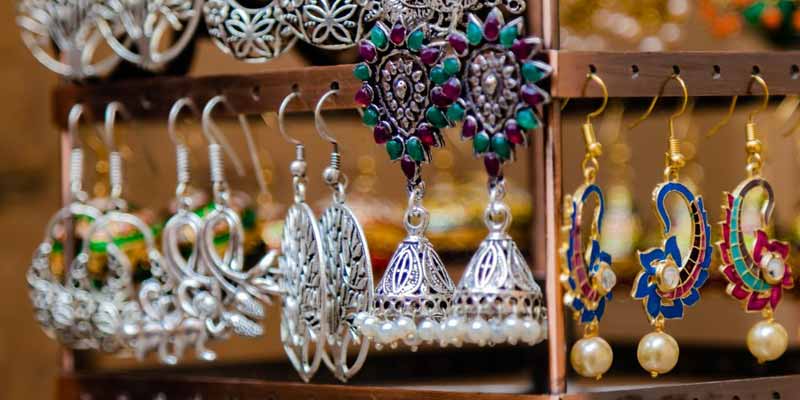
Jewelry: A Royal Sparkle
Jewelry is an essential part of Rajasthan’s handcrafted heritage. The state has a long association with precious and semi-precious stones, silverwork, meenakari, kundan, and tribal ornaments. Jaipur is especially famous as a center of jewelry making, known for gemstone cutting, polished designs, and traditional royal styles.
Kundan jewelry, which uses highly refined gemstone settings, is one of the most admired forms of Indian ornamentation. Meenakari, the art of decorating metal surfaces with colorful enamel, adds vivid beauty to earrings, necklaces, bangles, and decorative boxes. Silver jewelry, worn by many rural communities and tribal groups, has a strong rustic charm and is often designed with bold shapes, bells, chains, and engraved patterns.
Rajasthani jewelry is not only decorative; it is deeply tied to identity, status, ritual, and celebration. Brides often wear elaborate sets that reflect family traditions and regional style. Even simpler ornaments carry artistic value, as they are handmade by skilled craftsmen who preserve age-old techniques.
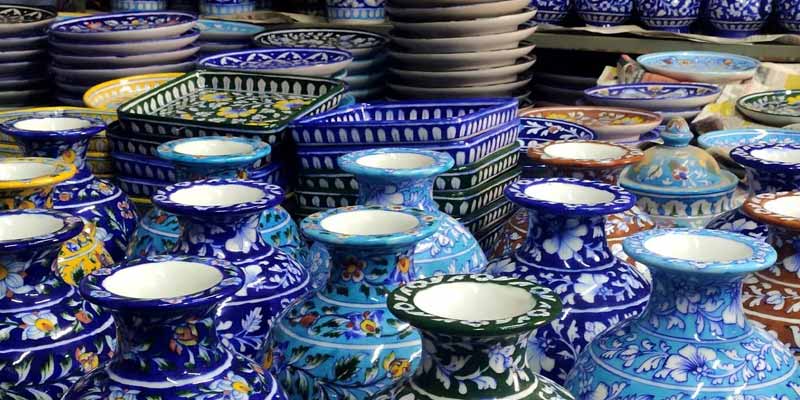
Pottery and Blue Pottery: Clay Transformed into Art
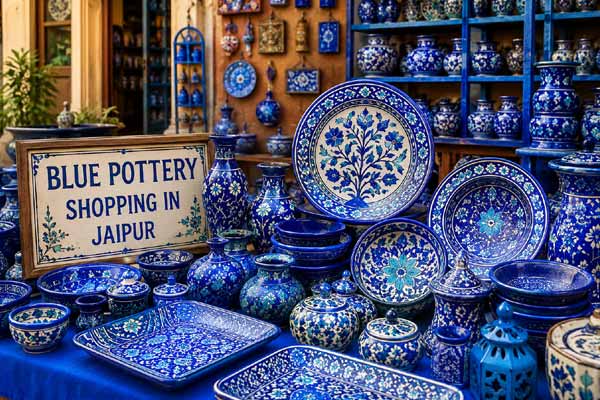
Pottery has long been part of daily life in Rajasthan, where clay vessels, storage containers, and utensils have been used for generations. Over time, pottery became not only functional but artistic. One of the most celebrated forms is Jaipur’s blue pottery, which stands apart for its glazed surface and striking blue-and-white palette.
Unlike traditional clay pottery, blue pottery uses quartz instead of ordinary clay and is decorated with floral, animal, and geometric motifs. The bright cobalt blue, turquoise, and green shades give it a fresh and elegant appearance. Vases, plates, tiles, bowls, ashtrays, and decorative items made in this style are highly valued by collectors and travelers alike.
Other pottery traditions in Rajasthan include terracotta figures, painted pots, and rural clay utensils. These objects often feature handcrafted textures that reflect the earthy simplicity of village life. Pottery in Rajasthan shows how an everyday material like clay can become a medium of artistic expression.
Leather Craft: Strength with Style
Leather craft is another important part of Rajasthan’s artisanal identity. Jodhpur, in particular, is known for its handcrafted leather footwear, especially the famous mojari or jutti. These shoes are made using traditional techniques, often decorated with embroidery, beads, thread work, or mirror accents. Comfortable yet stylish, they are admired both in India and abroad.
Apart from footwear, Rajasthani artisans also create leather bags, belts, folders, cushions, and decorative items. Some regions are known for painted leather goods that feature bright colors and folk motifs. This craft combines durability with visual appeal and demonstrates how practical objects can be transformed into works of art.
Leather craft also reflects the influence of desert life, where sturdy and useful materials have always been important. Yet even in these functional products, Rajasthani artisans introduce elegance, color, and refinement.
Wood Carving and Furniture: Beauty in Form
Wood carving is a significant craft tradition in Rajasthan, especially in regions where temples, havelis, and old houses required decorative woodwork. Artisans carve doors, windows, panels, boxes, toys, and furniture with floral patterns, lattice designs, and traditional figures. The skill involved in wood carving gives each piece a sense of depth and heritage.
Rajasthani furniture often combines practicality with ornate detailing. Chairs, tables, chests, and cabinets may feature hand-painted surfaces, carved legs, brass fittings, and colorful finishes. Antique-style furniture from Rajasthan is prized for its royal character and craftsmanship. Even small wooden objects such as toys or jewelry boxes display remarkable artistry.
This craft reminds us that in Rajasthan, even everyday household items can become expressive and beautiful when shaped by skilled hands.
Metal Craft: From Utility to Ornament
Metal craft in Rajasthan includes brass, copper, iron, and silver items made by traditional smiths. These objects range from cooking vessels and lamps to decorative statues, trays, urli bowls, and temple items. Some metal crafts are deeply connected with religious rituals, while others are used for home decoration or ceremonial purposes.
Engraving, embossing, casting, and repoussé work are commonly used techniques. Artisans create intricate patterns on metal surfaces, transforming hard materials into elegant objects. The shine of brass lamps, the weight of silver bowls, and the intricate detailing on ceremonial pieces all show the high level of craftsmanship found in the state.
In villages and towns, metal workers continue to serve both local communities and urban markets. Their work is a reminder that Rajasthan’s crafts are not only about luxury; they are also about daily life, ritual, and continuity.
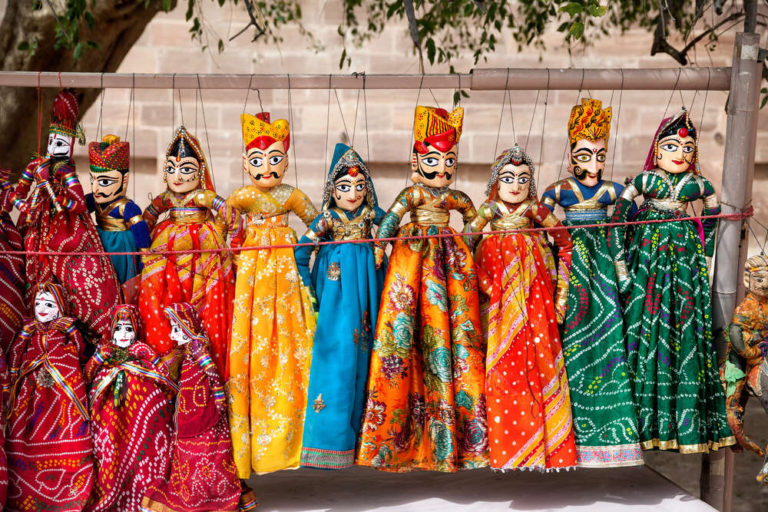
Puppetry and Folk Toys: Stories for All Ages
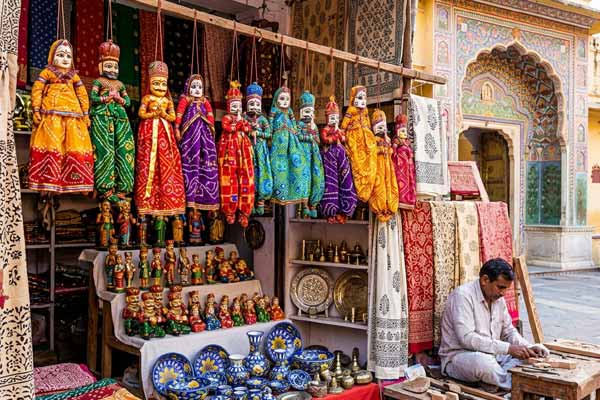
Rajasthan is famous for its puppets, especially the colorful string puppets known as kathputli. These handmade figures are dressed in vibrant clothes, decorated with paint and fabric, and used in traditional storytelling and folk performances. Puppet shows have long entertained audiences while preserving legends, moral lessons, and social memories.
Alongside puppets, Rajasthan also has a tradition of folk toys made from wood, cloth, clay, and metal. These toys often depict animals, dancers, musicians, and village scenes. Their simplicity is part of their charm. They reflect the imagination of artisans who can turn humble materials into lively figures filled with personality.
These craft forms are especially important because they connect art with storytelling. They preserve the playful and expressive side of Rajasthani culture.
Miniature Paintings and Decorative Art
While paintings are often discussed separately from handicrafts, miniature painting is closely linked to Rajasthan’s craft culture. Schools such as Mewar, Marwar, Jaipur, and Kishangarh developed their own distinct painting traditions. These artworks, usually created on paper, cloth, or leaves, are known for their fine detailing, rich colors, and elegant compositions.
Miniature paintings often depict royal courts, mythological scenes, hunting expeditions, festivals, and romantic themes. Along with paintings, artisans create decorative items such as painted boxes, lacquer work, wall hangings, and paper crafts. These artistic forms enrich Rajasthan’s handcrafted identity and show the close relationship between fine art and folk craft.
The Artisan’s Life: Skill, Patience, and Inheritance
The beauty of Rajasthani handicrafts lies not only in the finished product but also in the process of making it. Most crafts are rooted in family traditions. A child often learns by watching parents, grandparents, or other elders at work. Skills are passed down orally and through practice, not from books or formal classrooms. This gives the craft a living continuity.
Yet the artisan’s life is not always easy. Many craftsmen face challenges such as declining markets, rising raw material costs, competition from machine-made products, and changing consumer tastes. Despite this, countless artisans continue their work with dedication because craft is more than a job; it is a way of life and a source of cultural pride.
Supporting handicrafts means supporting communities, preserving heritage, and encouraging sustainable production. Handmade goods usually use fewer industrial resources, have a lower environmental footprint, and carry unique human value. In this sense, Rajasthani handicrafts are not just beautiful; they are meaningful and responsible.
Handicraft Markets of Rajasthan
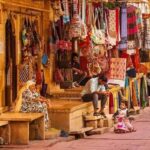
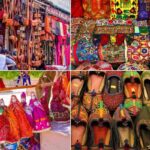
A visit to Rajasthan is incomplete without exploring its lively craft markets. Jaipur’s bazaars, Jodhpur’s old streets, Udaipur’s local shops, Jaisalmer’s artisan corners, and smaller village fairs all offer a chance to discover handmade treasures. These markets are colorful, energetic, and full of bargaining, storytelling, and discovery.
Travelers can find textiles, jewelry, puppets, paintings, home décor, footwear, leather goods, pottery, and souvenirs. But more importantly, they can meet the people behind these products. Speaking with artisans, watching demonstrations, and understanding the making process adds depth to the shopping experience. Every purchase becomes more personal when one knows the hands that created it.