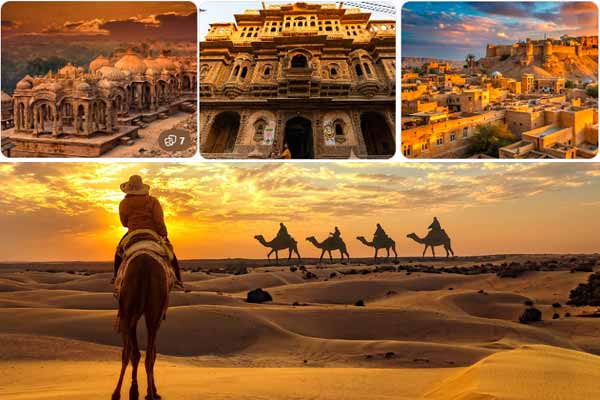

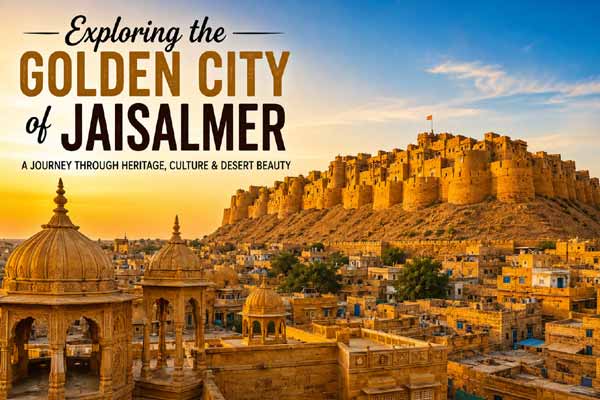

Exploring the Golden City of Jaisalmer is one of Rajasthan’s most enchanting destinations. Known as the “Golden City,” Jaisalmer earns its nickname from the honey-colored sandstone used in its buildings, which glow brilliantly under the desert sun. Rich in history, culture, and architectural beauty, Jaisalmer offers travelers a truly unforgettable experience.
The city’s most iconic attraction is the magnificent Jaisalmer Fort, also known as Sonar Quila or the Golden Fort. Built in 1156 by Rawal Jaisal, it is one of the few living forts in the world, housing homes, temples, shops, and hotels within its ancient walls. Walking through its narrow lanes provides a glimpse into Rajasthan’s royal past.
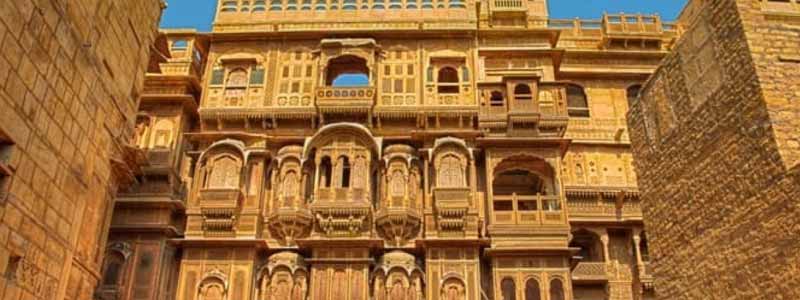
Jaisalmer is also famous for its beautifully carved havelis. The stunning Patwon Ki Haveli, Nathmal Ki Haveli, and Salim Singh Ki Haveli showcase exquisite architecture and intricate stone craftsmanship. These historic mansions reflect the wealth and artistic excellence of the city’s former merchants.
No visit to Jaisalmer is complete without exploring the famous Sam Sand Dunes. Visitors can enjoy camel safaris, jeep rides, traditional folk music, and cultural performances while witnessing breathtaking desert sunsets. Overnight stays in luxury desert camps provide an authentic desert experience under a star-filled sky.
Other attractions include the serene Gadisar Lake, ancient Jain temples, and vibrant local markets filled with handicrafts, textiles, and jewelry.
Whether you are a history enthusiast, adventure seeker, photographer, or cultural explorer, Jaisalmer offers a perfect blend of heritage and desert charm. Its golden architecture, rich traditions, and mesmerizing desert landscapes make it one of Rajasthan’s most captivating travel destinations.
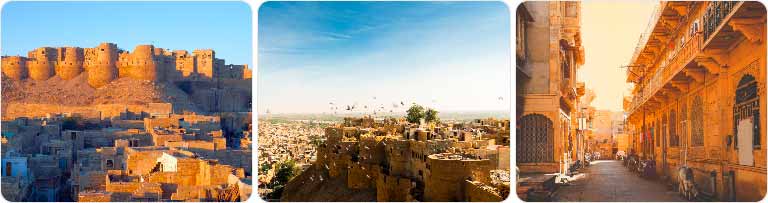
Interesting Facts and Trivia about the Jaisalmer Fort
- It is the 2nd largest fort in Rajasthan and also is located at an altitude of around 250 meters on top of a hill.
- It is a UNESCO World Heritage Site due to its popular architecture and also the significance it had during the course of history.
- The structure is a fortification consisting of three layers, with the outermost being made entirely out of stone as it was the very first layer of protection against enemies..
- It has a total amount of 99 bastions with virtually 93 of them being created at a later factor in background at around 1638 AD.
- A noval, Sonar Kella, and a successive flick was made with this location as the prime place by the renowned author Satyajit Ray. This caused the spread of the popularity of this site.
- Alauddin Khilji attacked the Fort as well as obtained control over it for a period of almost 9 years.
Jaisalmer Fort History
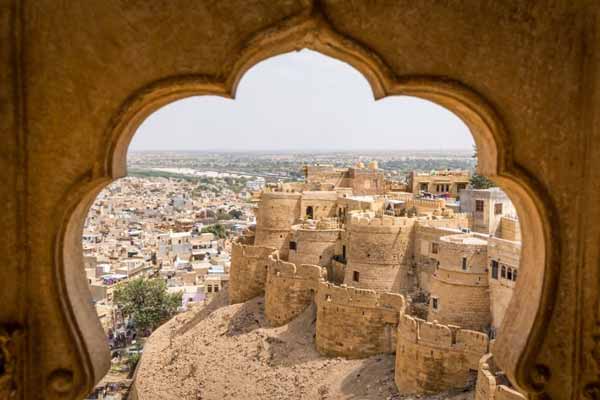
Jaisalmer Fort, also known as Sonar Quila or the Golden Fort, is one of Rajasthan’s most famous historical landmarks. It was built in 1156 AD by Rawal Jaisal, a Rajput ruler of the Bhati clan. Perched atop Trikuta Hill, the fort was strategically located along ancient trade routes connecting India with Central Asia and the Middle East.
Constructed from golden-yellow sandstone, the fort glows like gold during sunrise and sunset, earning Jaisalmer the title of the “Golden City.” Unlike many other forts in India, Jaisalmer Fort is a living fort where thousands of residents still live within its walls. The fort houses beautiful Jain temples, royal palaces, traditional homes, shops, restaurants, and guesthouses. Over the centuries, it has witnessed numerous battles, royal events, and cultural developments, making it one of India’s most significant heritage sites.
Architectural Brilliance: Forts and Havelis
Architecture plays a central role in explaining why Jaisalmer is called Golden City. The city’s skyline is dominated by Jaisalmer Fort, also known as Sonar Qila or “The Golden Fort.” Rising majestically from the desert, this fort is one of the largest in the world and is made entirely of golden-yellow sandstone.
But the fort is just the beginning. Within the city walls, you’ll find exquisite havelis—ornate mansions built by wealthy traders. These structures are masterpieces of design and detail.
Must-see architectural landmarks that prove why Jaisalmer is called the Golden City include:
- Patwon Ki Haveli – A cluster of five havelis adorned with intricate carvings
- Salim Singh Ki Haveli – Known for its unique peacock-shaped roof
- Nathmal Ki Haveli – Famous for its mirror work and asymmetrical architecture
The consistency in the use of yellow sandstone across these landmarks ties them together in a visually golden narrative, reinforcing why Jaisalmer is called Golden City in architectural terms.
Best Time to Visit Jaisalmer Fort
The ideal time to visit Jaisalmer Fort is from October to March when the weather is pleasant and suitable for sightseeing. During these months, temperatures range between 10°C and 27°C, making it comfortable to explore the fort and other attractions.
- October to November: Pleasant weather and clear skies.
- December to February: Cool temperatures and peak tourist season.
- February: Best time to enjoy the famous Jaisalmer Desert Festival.
- March: Comfortable climate with fewer crowds.
Avoid visiting during the summer months (April to June) when temperatures can exceed 45°C.
How to Reach Jaisalmer Fort
Reaching Jaisalmer Fort is convenient due to the city’s good connectivity by air, rail, and road. Located in the heart of Jaisalmer city atop Trikuta Hill, the fort is easily accessible from all major transport hubs.
By Air
The nearest airport is Jaisalmer Airport, situated about 13 km from the fort. Regular flights connect Jaisalmer with major Indian cities. Taxis and cab services are available at the airport for a quick transfer to the fort.
By Train
Jaisalmer Railway Station is approximately 2 km from Jaisalmer Fort. The station is connected to cities such as Jaipur, Jodhpur, Delhi, and Ahmedabad. Auto-rickshaws, taxis, and local transport can easily take visitors to the fort.
By Road
Jaisalmer is well connected by highways to major cities across Rajasthan and neighboring states. Regular government and private buses operate from Jaipur, Jodhpur, Bikaner, Udaipur, and Delhi. Travelers can also hire private taxis or self-drive cars to reach the city comfortably.
Local Transportation
Once in Jaisalmer, the fort can be reached by taxi, auto-rickshaw, or even on foot from nearby areas. Walking through the narrow lanes leading to the fort offers a wonderful opportunity to experience the city’s traditional architecture, local markets, and vibrant culture.
With excellent transport options and its central location, Jaisalmer Fort is easily accessible for travelers seeking to explore Rajasthan’s magnificent Golden City.