Ranthambore National Park – A Complete Guide is located about 13.5 kilometers from the city of Sawai Madhopur in Rajasthan. Located at the junction of the Aravali and Vindhya hill ranges, this is one of the finest places to view wild animals, especially as they are used to being stared at here. The park covers an area of approximately 400 sq km, and if combined with the area of Sawai Man Singh Sanctuary area, is around 500 sq km.
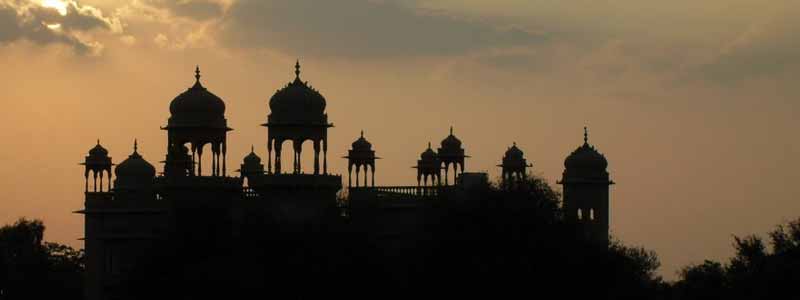
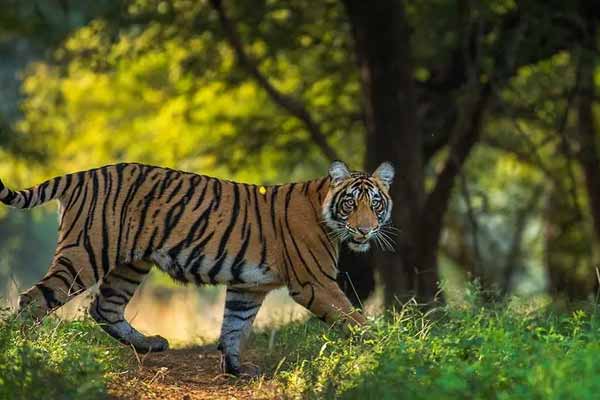
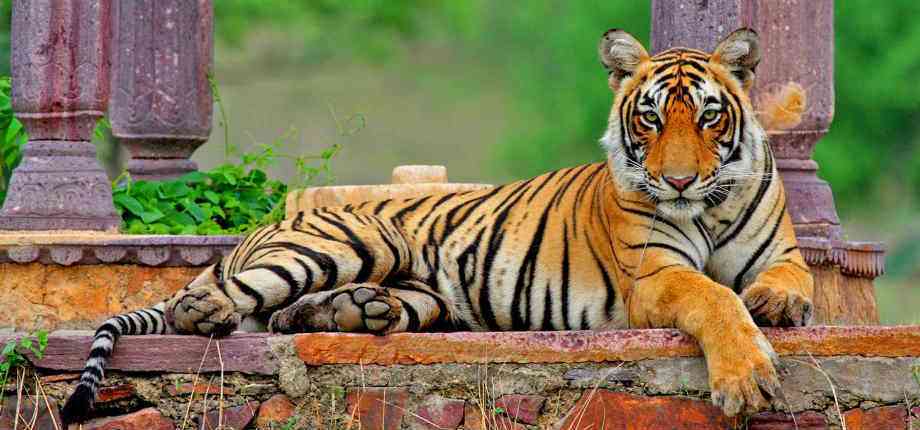
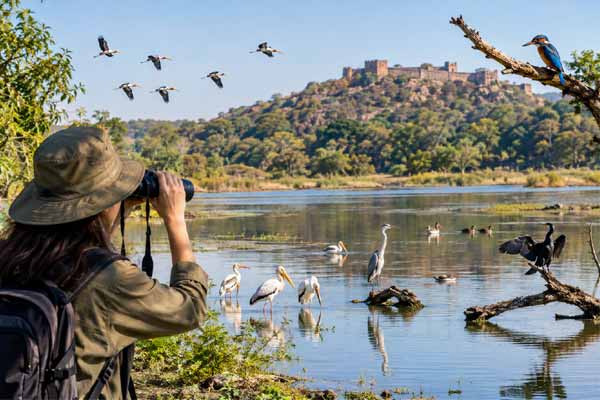
Ranthambore National Park is dotted with structures that remind you of bygone eras. There are numerous water bodies scattered all across the park, which provide perfect relief to the wild animals during the scorching hot days in summers. A huge fort, after which the park is named, towers over the park atop a hill. There are many ruins of bygone eras scattered all over the jungle, which give it a unique, wonderful and mixed flavour of nature, history and wildlife. Tigers at Ranthambore National park have been known to even hunt in full view of human visitors.
Ranthambore National Park – A Complete Guide
History of Ranthambore Tiger Reserve
Ranthambore National Park was established initially as Sawai Madhopur Game Sanctuary in 1955 by the Government of India. In 1973, it was declared as one of the Project Tiger reserves in India. It was on 1st November, 1980 that Ranthambore was declared a national park, while the forests located beside it were named Sawai Man Singh Sanctuary & Keladevi Sanctuary.
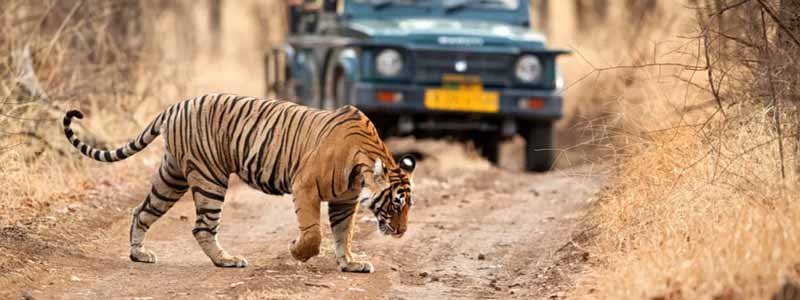
There are two primary types of safaris in Ranthambore National Park: Jeep Safaris and Canter Safaris.
Jeep Safari
Jeeps can accommodate 6 people, making them an intimate and personalized way to experience the park. You have more flexibility with the route and can explore specific zones of the park. A jeep safari is expensive but offers better comfort and privacy.
Canter Safari
A canter is a larger vehicle that can carry around 20 people. This safari option is more affordable, making it suitable for larger groups.
Ranthambore National Park – A Complete Guide
Types Of Zones At Ranthambore National Park
Ten Ranthambore Tiger Safari Zones are located across the park. These are listed in the following order:
ZONE 1: Singh Dwar is the starting point. In this region, tigers may be seen at Sultanpur, Tuti ka Nalla, Peela Pani, Gada Dub, and Amreshwar Dang.
ZONE 2: With locations like Phuta Bandha, Lahpur Tiraha, Nal Ghati, and others, this zone offers the highest likelihood of seeing tigers.
ZONE 3: Padam Talab is the location that tigers visit most frequently in this zone.
ZONE 4: This zone is home to Machli, the most well-known tigress in Ranthambore. The main places where people have reported seeing her include Berda, Lambi, Tamakhan, Adidaant, and Lakkar Da.
ZONE 5: The tigers and other wildlife in this zone typically visit Jokha, Dhakda, Singhdwar, and Anantapur, among other places.
There is a lesser chance of seeing wildlife in Zones 6 (Kundal), 7 (Chidikho), 8 (Balas), 9 (Kuwal ji), and 10 (Aantri), but there are magnificent tigers living there.
Ranthambore National Park – A Complete Guide
Best Time To Visit Ranthambore National Park
Choosing the right time to visit is crucial for making the most of your safari tour. The weather and wildlife activity vary significantly across the different seasons, so it’s important to pick the time that suits your preferences.
Winter (October to March)
Peak Season: This is the best time to visit Ranthambore, as the weather is cool and pleasant for outdoor activities. During these months, the park is in full swing, with a higher chance of seeing tigers and other animals. Daytime temperatures range from 20°C to 25°C (68°F to 77°F), while nights can be chilly (5°C to 10°C or 41°F to 50°F), especially in December and January.
Wildlife Sightings: Animals are more active during this time, and the cooler weather makes it easier for both humans and wildlife to be out in the open. The chance of spotting tigers is significantly higher.
Summer (April to June)
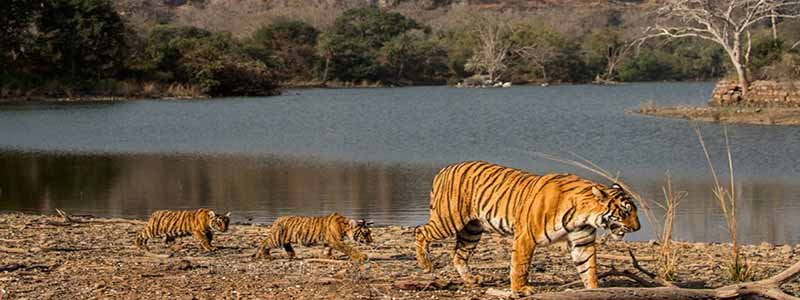
Off-Season: Summer months can get extremely hot, with temperatures soaring above 40°C (104°F). However, this is a great time for tiger sightings because the animals are drawn to the few remaining water sources. The daytime temperature often exceeds 40°C (104°F), but the mornings and evenings are relatively cooler.
Wildlife Sightings: As the weather becomes hotter, animals tend to congregate around waterholes, increasing your chances of spotting a tiger or other wildlife.
Crowds: Fewer tourists visit Ranthambore during the summer, meaning you’ll have a more peaceful experience, but the heat can be taxing for some.
How To Reach Ranthambore
By Air: Reach Jaipur International Airport in Jaipur. This airport is well-connected to all the major cities of India. After reaching the airport, take a bus or a taxi and travel 180 km to reach Ranthambore National Park in Rajasthan.
By Railways: Travellers can reach Sawai Madhopur Railway Station, which connects the National Park to major cities like Jaipur and Delhi. Further, travellers can hire a taxi or take a bus to reach the National Park.
By Road: Tourists can travel to Ranthambore National Park by bus or taxi. The distance between major cities of India and this park is as follows:
Jaipur to National Park: 180 Km (via Rajasthan State Highway 24)
Delhi to National Park: 381 Km( via NH 8 and NH 11A)
Udaipur to National Park: 388 Km(via NH76 and RJ SH 29)
Mumbai to National Park: 1031 Km(via NH3)
Ahmedabad to National Park: 648 Km (via NH8 and NH76)