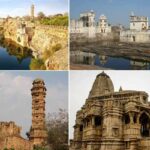
10 Sightseeing Places In Chittorgarh, a historic city in Rajasthan, is known for its majestic forts, palaces, and tales of Rajput valor. The centerpiece is the Chittorgarh Fort, a UNESCO World Heritage Site and one of the largest forts in India. Spread across 700 acres, it houses several key attractions. The Vijay Stambh (Victory Tower), built by Rana Kumbha, offers panoramic views of the city. Nearby, the Kirti Stambh honors Jain traditions with intricate carvings.
Rani Padmini’s Palace, set beside a lotus pool, is famous for the legend of her beauty and sacrifice. Rana Kumbha Palace, known for its historical importance, and the sacred Gaumukh Reservoir also draw visitors. Among religious sites, the Kalika Mata Temple and Meera Temple reflect the city’s spiritual heritage.
Outside the fort, Sanwariyaji Temple, dedicated to Lord Krishna, is a popular pilgrimage site. Nature lovers can enjoy a peaceful visit to Bassi Wildlife Sanctuary, just 5 km away. Chittorgarh also offers vibrant bazaars selling Rajasthani handicrafts. With its rich blend of history, architecture, and culture, Chittorgarh is a must-visit for heritage enthusiasts.
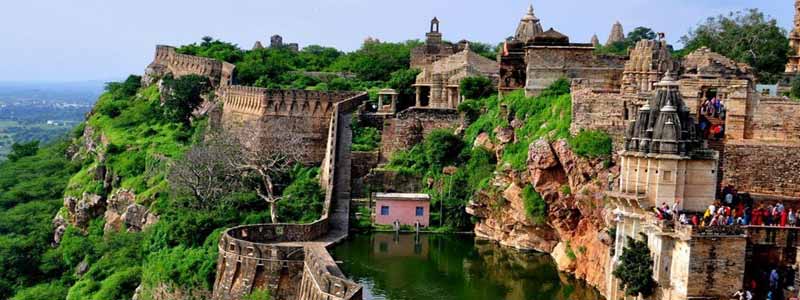
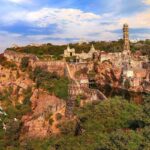
Chittorgarh Fort is one of the largest and most iconic forts in India, symbolizing Rajput pride, valor, and sacrifice. Spread over 700 acres and situated on a 180-meter-high hill, the fort dominates the skyline of Chittorgarh city in Rajasthan. Built in the 7th century by the Maurya rulers and later expanded by Rajput kings, it served as the capital of Mewar.
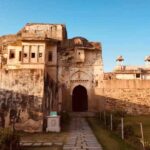
The fort has seven massive gates (pols) and encloses numerous historical structures. The Vijay Stambh (Victory Tower), built by Rana Kumbha, commemorates his triumph over the Sultan of Malwa. The Kirti Stambh, dedicated to Jain Tirthankara Adinath, is adorned with fine carvings. Rani Padmini’s Palace and Rana Kumbha Palace echo the legendary tales of bravery and sacrifice, including the act of jauhar by Queen Padmini.
Also within the fort are sacred sites like the Kalika Mata Temple and Gaumukh Reservoir. The fort stands as a majestic reminder of medieval warfare, architectural brilliance, and the unyielding spirit of the Rajputs.
10 Sightseeing Places In Chittorgarh
Vijay Stambh
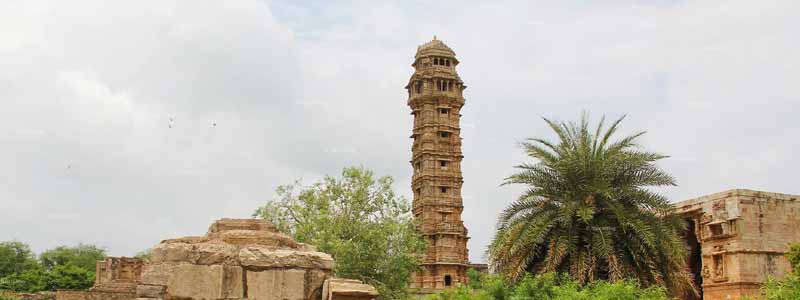
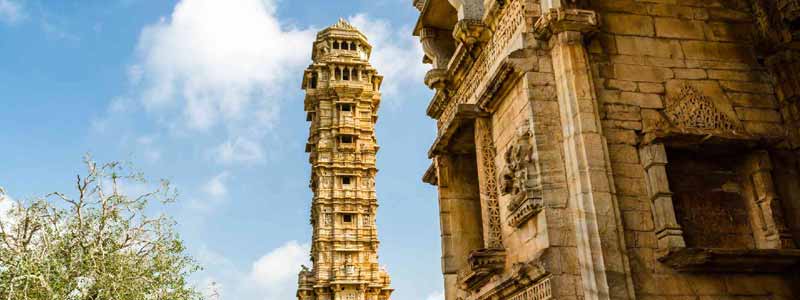
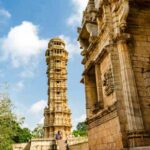
Vijay Stambh, also known as the Tower of Victory, is one of the most iconic monuments in Chittorgarh Fort, Rajasthan. Built by Maharana Kumbha in 1448, this majestic structure was constructed to commemorate his victory over the Sultan of Malwa, Mahmud Khilji. The tower stands at a height of 37.19 meters (122 feet) and consists of nine stories, each adorned with intricate carvings and inscriptions.
Made of red sandstone and white marble, the tower is dedicated to Lord Vishnu, and its surface is richly decorated with Hindu deities, scenes from epics like the Ramayana and Mahabharata, and genealogies of the rulers of Chittor. Visitors can climb a narrow circular staircase of 157 steps to reach the top, which offers panoramic views of the fort and surrounding plains.
Vijay Stambh is not only an architectural marvel but also a powerful symbol of Rajput pride, bravery, and religious devotion. Illuminated beautifully at night, it remains one of the most admired historical landmarks in Rajasthan.
10 Sightseeing Places In Chittorgarh
Kirti Stambh
Kirti Stambh, or the Tower of Fame, is one of the most remarkable monuments within the Chittorgarh Fort complex in Rajasthan. This ancient seven-storeyed tower stands about 22 meters high and is dedicated to Lord Adinath, the first Jain Tirthankara. Built in the 12th century by a wealthy Jain merchant named Jijaji Bhagerwala, Kirti Stambh is an exquisite example of medieval Jain architecture.
The tower is adorned with intricate carvings of Jain saints, deities, and motifs, showcasing the craftsmanship of that era. Narrow staircases lead to the top, offering views of the fort and surrounding areas. Unlike the more famous Vijay Stambh, which commemorates military victory, Kirti Stambh symbolizes spiritual glory and devotion.
The monument is an important pilgrimage site for Jain devotees and attracts historians and architecture enthusiasts alike. Its detailed sculptures and serene presence make it a standout attraction in Chittorgarh Fort, reflecting the city’s diverse cultural and religious heritage.
10 Sightseeing Places In Chittorgarh
Rana Kumbha’s Palace
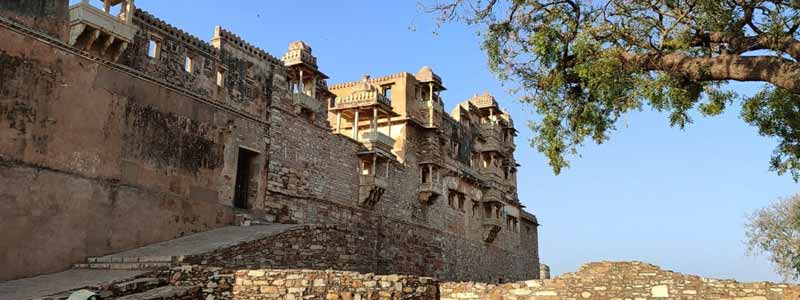
Rana Kumbha’s Palace is one of the most historically significant and architecturally fascinating structures within the Chittorgarh Fort complex. Built during the reign of Maharana Kumbha in the 15th century, this palace is renowned as the birthplace of Maharana Udai Singh, the founder of Udaipur. It was once a grand royal residence and administrative center of the Mewar kingdom.
Today, the palace stands as a partially ruined structure, but its massive gateways, courtyards, stables, and underground cellars still evoke a strong sense of the past. According to legend, Queen Rani Padmini committed Jauhar (self-immolation) here along with other royal women to protect their honor from Alauddin Khilji.
Visitors are captivated by the palace’s rugged charm and panoramic views of the surrounding fort area. It is also believed to be haunted, which adds a layer of mystery for curious travelers. Rana Kumbha’s Palace remains a symbol of Rajput valor, sacrifice, and architectural legacy in Chittorgarh.
10 Sightseeing Places In Chittorgarh
Rani Padmini’s Palace
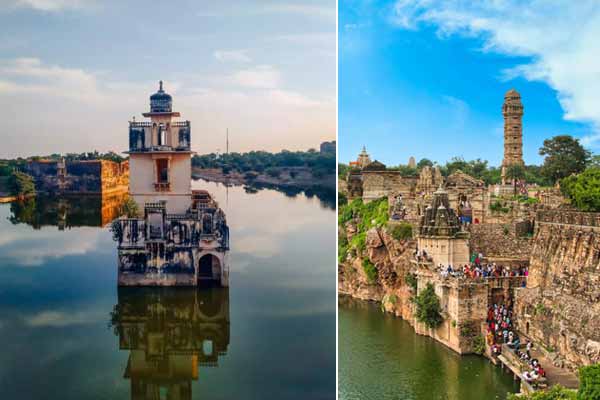
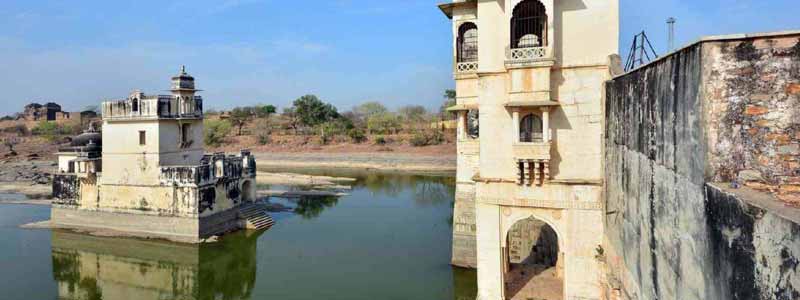
Rani Padmini’s Palace, located within the grand Chittorgarh Fort, is one of the most iconic historical landmarks in Rajasthan. Surrounded by a lotus-filled water moat, this elegant white structure is associated with the legendary beauty and valor of Queen Padmini. The palace is believed to be the site where Alauddin Khilji, the Sultan of Delhi, caught a glimpse of Rani Padmini’s reflection in a mirror, which eventually led to the infamous siege of Chittorgarh in 1303.
The palace showcases traditional Rajput architecture with arched pavilions, delicate balconies, and serene surroundings. Although much of it is in ruins, it still evokes a sense of regal charm and historical intrigue. The tale of Rani Padmini’s ultimate sacrifice through Jauhar (self-immolation) to protect her honor is deeply connected to this site and symbolizes Rajput pride and resistance.
Visitors today can explore the palace, take in its tranquil setting, and reflect on the poignant stories that shaped Rajasthan’s valorous past.
10 Sightseeing Places In Chittorgarh
Meera Temple
Meera Temple, located within the Chittorgarh Fort complex, is a revered site dedicated to the legendary poet-saint Meera Bai, a 16th-century Rajput princess and ardent devotee of Lord Krishna. Built during the reign of Rana Kumbha, the temple is a symbol of Meera’s unwavering devotion and spiritual strength.
The architecture of the temple is a blend of Rajput and Indo-Aryan styles, featuring intricately carved pillars, domes, and arches. A striking idol of Lord Krishna stands at the sanctum, often accompanied by depictions of Meera Bai herself, expressing her divine love for the deity.
According to folklore, Meera renounced royal life and chose a spiritual path, composing devotional songs that are still sung across India. The temple stands as a tribute to her life, devotion, and poetry.
Pilgrims and visitors are drawn to the serene atmosphere and spiritual significance of the temple, making it an essential stop for anyone exploring the cultural and religious heritage of Chittorgarh.
Kalika Mata Temple
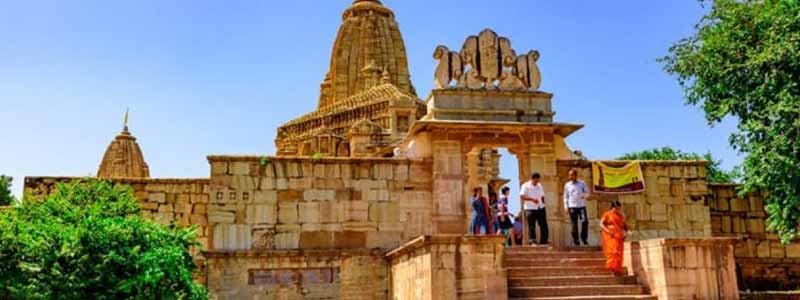
The Kalika Mata Temple in Chittorgarh is a significant and ancient shrine dedicated to Goddess Kali, located within the Chittorgarh Fort complex. Originally built in the 8th century, it was later renovated in the 14th century. The temple is renowned for its unique architectural style, featuring a blend of Hindu and Rajput influences. It stands on a high platform, offering panoramic views of the fort and surrounding landscape 10 Sightseeing Places In Chittorgarh.
The temple is a place of great religious importance, particularly for the locals. It holds a fascinating history, with the belief that the Goddess Kali was worshipped here during the reign of the Rajput rulers. Pilgrims and tourists alike visit to pay homage and seek blessings. The temple’s sanctum houses a black stone idol of Kali, and the walls are adorned with intricate carvings.
Visitors can experience the temple’s spiritual ambiance while exploring the vast fort. A peaceful, revered spot, Kalika Mata Temple provides a glimpse into the religious and cultural heritage of Chittorgarh.
Gomukh Kund
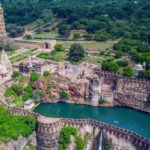
Gomukh Kund is one of the most significant and picturesque spots in Chittorgarh Fort. Located within the fort complex, this sacred water reservoir holds great spiritual importance. The name “Gomukh” translates to “cow’s mouth,” as the water flows from a rock structure shaped like a cow’s mouth. The water here is considered holy, and the site is deeply revered by locals and visitors alike.
Gomukh Kund is surrounded by lush greenery and provides a serene atmosphere, making it a popular spot for reflection and tranquility. The place is also associated with many legends from Rajasthan’s royal history. It’s believed that Rana Kumbha, the Rajput king who built the fort, would often visit the site to pray and seek blessings.
The Gaumukh Reservoir and the surrounding areas offer picturesque views and are perfect for a peaceful escape from the hustle and bustle of the fort. Visitors can enjoy the calming ambiance and the rich historical significance of this sacred site, making it an unmissable part of Chittorgarh’s cultural heritage.
Sathis Deori Temple
The Sathis Deori Temple in Chittorgarh is a significant religious site, located approximately 10 km from the Chittorgarh Fort. This Jain temple, dedicated to Lord Adinath, is known for its stunning architectural beauty and historical importance. The temple is renowned for its intricate carvings and the peaceful ambiance that surrounds 10 Sightseeing Places In Chittorgarh.
The name “Sathis Deori” refers to the belief that 72 widows (known as Sathis) committed Sati (self-immolation) at the temple in honor of their husbands, showcasing the deep cultural traditions of that era. The temple’s architecture is a testament to the skilled craftsmanship of the era, with finely detailed pillars and walls adorned with exquisite Jain art.
Visitors to the temple can enjoy both spiritual solace and architectural marvels while soaking in the serene atmosphere of the surroundings. The temple is a great spot for those interested in Jainism, Rajasthan’s rich history, and spiritual experiences. It offers a peaceful retreat for pilgrims and history enthusiasts alike.
Would you like more information on how to visit Sathis Deori Temple or nearby attractions?
Sanwariyaji Temple
Sanwariyaji Temple, located about 40 km from Chittorgarh, is a significant pilgrimage site dedicated to Lord Krishna. The temple is situated in a tranquil, rural setting, offering a peaceful atmosphere for devotees and visitors alike. The main deity here is Lord Krishna, worshipped in his incarnation as Sanwariya Ji, a local form of the god.
The temple is known for its beautiful architecture, with intricate carvings and vibrant religious motifs. It’s a place where locals and pilgrims come to seek blessings, particularly for family well-being and prosperity. The temple complex includes a serene water reservoir, adding to its spiritual aura.
Sanwariyaji Temple is especially revered for its connection to the legend of Krishna, where people believe that offering prayers here brings peace and happiness. The temple attracts both devotees and tourists looking to explore Rajasthan’s spiritual heritage.
This temple, along with its picturesque surroundings, makes it a must-visit spot for those seeking a blend of devotion and scenic beauty in the 10 Sightseeing Places In Chittorgarh.