Which is the best month for the Rajasthan wildlife tour?
rtp123
Which is the best month for the Rajasthan wildlife tour?, the land of deserts and royalty, boasts a surprisingly diverse wildlife ecosystem spread across its rugged Aravalli hills, dry deciduous forests, and wetlands. The state is home to four major national parks and over 25 sanctuaries, making it a premier destination for wildlife enthusiasts.
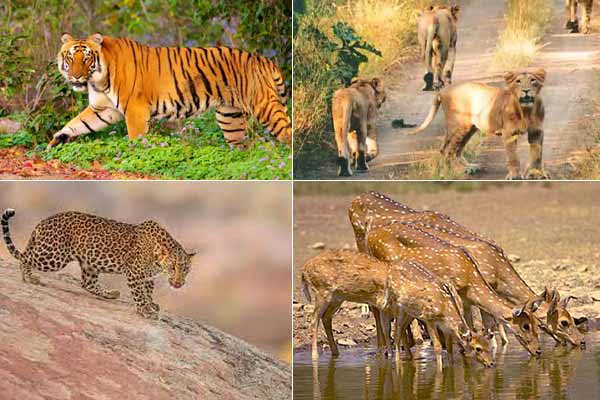
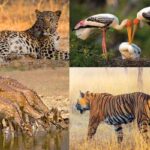
The majestic Bengal Tiger is the flagship species, primarily found in Ranthambore National Park and Sariska Tiger Reserve. For bird lovers, the UNESCO World Heritage Site, Keoladeo Ghana National Park (Bharatpur), is an essential stop, hosting over 370 species, including the migratory Siberian Crane.
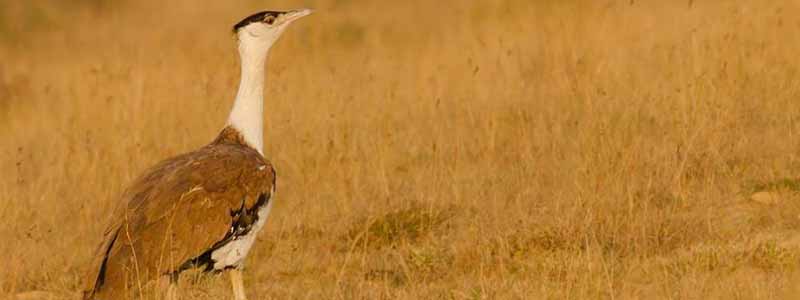
In the arid regions, the Desert National Park protects the unique ecosystem of the Thar, featuring the critically endangered Great Indian Bustard, along with the blackbuck and desert fox. Other key species across the state include the elusive leopard (notably in Jawai and Jhalana), sloth bear, sambar deer, nilgai (blue bull), and numerous reptiles and birds of prey.
The best time for wildlife spotting is generally the winter season (October to March), when the weather is pleasant and animals are more active.
Would you like a more detailed overview of any specific national park or animal in Rajasthan?
Which is the best month for the Rajasthan wildlife tour?
Why Choose a Wildlife Safari in Rajasthan?
Rajasthan can be known for its dry landscape, but it is home to some of India’s most famous national parks and wildlife sanctuaries. These places are rich in biodiversity and give you the opportunity to see royal animals, rare birds and exotic plants – all in a trip.
The best part? You do not need to be expert or courageous. With Rajasthan Tour Planner, anyone can enjoy these safaris – families, couples, single travelers, or even children.
Types of Safaris You Can Enjoy
At Rajasthan Tour Planner, we offer different types of safari options:
Jeep Safari – The most popular option, great to cover large areas and spot animals quickly. Cantor Safari – ideal for group passengers and families. Walking Tours – Best to learn about birdwatching and field plants and insects. Camel Safari – offered near desert parks like Jaisalmer for a unique desert adventure.
Each safari is guided by trained experts who know the forests well and ensure your safety when sharing amazing wildlife stories.
Which is the best month for the Rajasthan wildlife tour?
Top 9 Best Wildlife Jungle Safari Destinations in Rajasthan
Rajasthan is a top destination for wildlife enthusiasts in India, especially for its tiger and leopard reserves. Here are 9 of the best destinations for a thrilling jungle safari experience:
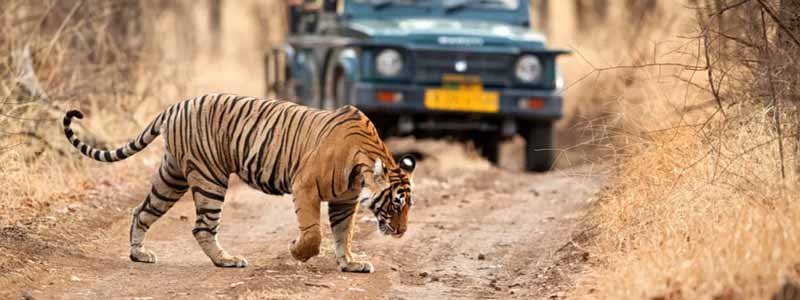
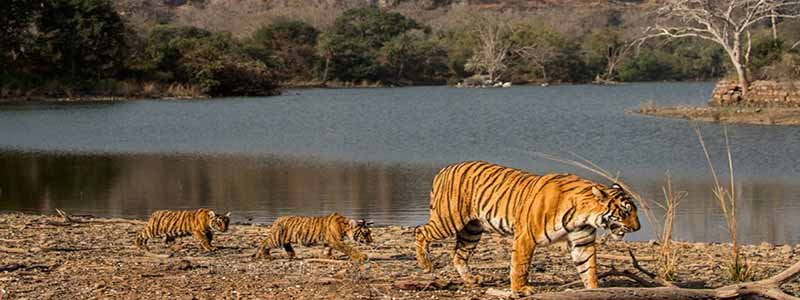
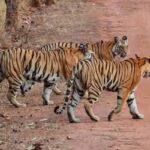
Ranthambore is amongst the leading wildlife safari destination in India and one of the largest national parks in Rajasthan to see wild animals in their natural habitat. The park is located in the Sawai Madhopur district of Rajasthan and perhaps it is the first choice among wildlife enthusiasts who wants to get a closer look at the beautiful and majestic Royal Bengal Tigers. A tiger safari into the dense forest will offer immense pleasure to the nature lovers as you can witness beautiful wild cats as well as other animals and plant species. Though this national park is widely known for its tiger population, it is also a home to other animal species such as sloth bears, chitals, hyenas, wild boars, sambars, nilgai and leopards to name a few.
Why to Visit Ranthambore National Park?
It offers wildlife safaris into various zones in the national park and buffer zones.The national park offers two types of safaris – Canter (20 seater), Jeep (6 seater).Ranthambore has more than 500 species of flora.You can come face to face with many endangered wildlife species roaming free.It is one of the best places to spot Indian Tigers.
Where to Stay in Ranthambore?
Ranthambore National Park has some of the finest and outlandish resorts surrounded by forests providing world-class facilities. You can expect to find all types of accommodation options for all sorts of visitors equipped with other recreational activity options like swimming pools and spas.
How to Reach Ranthambore?
Ranthambore can be accessed via roadways. Plenty of taxi services are available from airports and railway stations. The closest airport and railway station is Jaipur International Airport (153 km) and Sawai Madhopur Junction (10 km).
Which is the best month for the Rajasthan wildlife tour?
Sariska Tiger Reserve
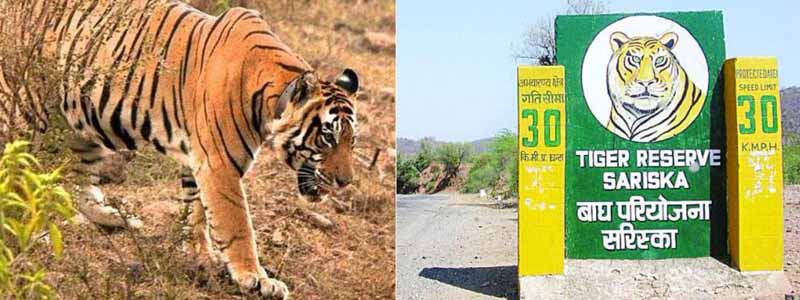
A place which was once the hunting grounds of Alwar district is now one of the popular wildlife reserves in India. Sariska Tiger Reserve is widely visited and is one of the most important jungle safari national parks in Rajasthan having a dry deciduous forest that appeals the various animal species as well as the Royal Bengal Tigers. During your jungle safari in Sariska Tiger Reserve, apart from majestic tigers you will get an opportunity to also sightsee other species such as hanuman langurs, wild boars, leopards, four horned antelope, rhesus monkeys, hares, chinkara, chausingha, nilgai, golden jackals, sambar, striped hyenas and caracal. And if birdwatching is your interests, don’t worry, Sariska Tiger Reserve has that option too. You can see rare species of birds like crested serpent eagle, tree pie, sandgrouse, golden backed woodpecker, bush quail, and many others.
Why to Visit Sariska National Park?
Take a jeep safari around the 866 square kilometre park.First of its kind to relocate and safe-guard the Bengal Tigers in Sariska Tiger Reserve.The parks’ main highlight is the beautiful Aravalli Range.It also has various places to visit near the park.
Where to Stay in Sariska Tiger Reserve?
Expect pricey to moderate resorts in Sariska Tiger Reserve. The park offers well-appointed rooms with only the best possible facilities and amenities. There are other accommodation options near the reserve as well offering hospitable services to the guests.
How to Reach Sariska Tiger Reserve?
Sariska Tiger Reserve is conveniently accessible via roadways that can be available from the nearest airport Jaipur International Airport/Sanganer Airport (110 Km) and Alwar Railway Station (36 km).
Which is the best month for the Rajasthan wildlife tour?
Mukundara Tiger Reserve
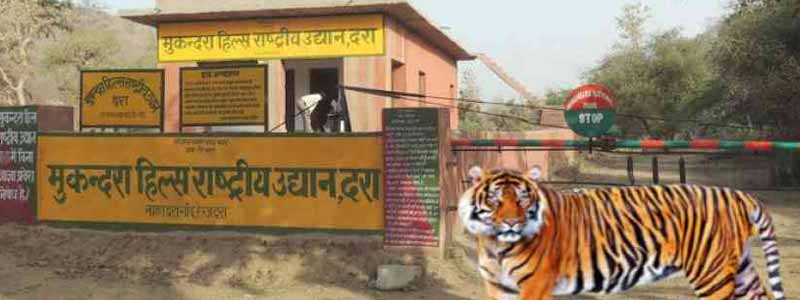
Mukundara Tiger Reserve is one of the best places in Rajasthan. Located near Kota, this thickly covered forest occupies an area of 759 sq km, and it houses about 50 tigers. And in order to comfortably visit this place for sighting tigers and other species, the ideal months are from January to March.
Why to Visit Mukundara Tiger Reserve?
Home to a large number of tiger species (more than 50).The reserve is home to other animal species also like chinkaras, sloth bears, panthers and wolves.It is the third biggest reserve in the state of Rajasthan.
Where to Stay in Mukundara Tiger Reserve?
There are staying options in Kota, you may find comfortable rooms equipped with basic amenities for the guests.
How to Reach Mukundara Tiger Reserve?
The closest railway station is located in Kota and the closest airport in Jaipur. You can get plenty of taxi options from these two cities.
Which is the best month for the Rajasthan wildlife tour?
Desert National Sanctuary
Desert National Sanctuary consisting of 20 % sand dunes is one of the major crowds pulling national parks in Rajasthan. In fact, it is also said to be one of the largest national parks in the country spanning over an area of 3162 square kilometres. A visit here can make the wildlife enthusiasts see its beautiful landmarks like Salt Lake bottoms, uneven rock formations and sand dunes offering a perfect example of desert ecosystem. A wildlife safari in Desert National Sanctuary will give you an opportunity to see various species like the endangered Great Indian Bustard, kestrels, sandgrouse, laggar falcons, vultures, harriers and eagles like tawny, spotted, short toed. It also has an impressive collection of other species such as chinkara, hedgehogs, black bucks, wolves, Bengal foxes, desert cats and desert foxes. Here, the visitors can enjoy exploring the Sam Sand Dunes which is located near the Thar Desert and also the Gadsisar Sagar Tank.
Why to Visit Desert National Sanctuary?
The best place to witness a rare bird, the Great Indian Bustard.Spend time in the beautiful Sam Sand Dunes.Explore the entire park via jeep safari.Visit the Gadsisar Sagar Tank to see various birds and animals coming to relax.Spot various species of Deers.See the state animal Camels roaming free and independent.
Where to Stay in Desert National Sanctuary?
There is no accommodation options inside Desert National Sanctuary however, you can stay in Jaisalmer. You can get plenty of resorts and heritage hotels as well as guest houses. Khuri is also another option to stay, being an hour drive from the sanctuary (50 km) it offers an attractive location amid sand dunes.
How to Reach Desert National Sanctuary?
In order to get to Desert National Sanctuary, you have to first arrive at Jaisalmer. Although Jaisalmer has an airport it is for civil enclave only i.e for Indian Air Force. Thus, the most convenient way is via railway. Jaisalmer is located 40 kms to Desert National Park. you can find RSRTC buses from Delhi to Rajasthan.
Which is the best month for the Rajasthan wildlife tour?
Keoladeo Ghana Bird Sanctuary
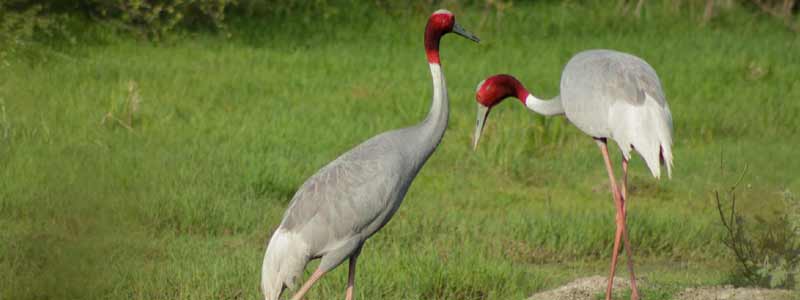
A man-made wetland where animal species and birds spend time in their natural habitat of Keoladeo Ghana Bird Sanctuary (Also Known as Keoladeo National Park & Bharatpur Sanctuary) is rather a popular tourist place in Rajasthan among wildlife aficionados. This mesmerizing place to visit for bird watching receives various migratory feathered creatures especially during the hibernal season. Located in Bharatpur, this must visit wildlife attraction serves home to around 379 floral and 366 bird species as well as several exotic animals. For nature lovers, bird enthusiasts and even if you are someone who studies ornithology, a visit to Keoladeo Ghana Bird Sanctuary cannot be more appealing and exciting. It so happens that, this avian habitation is one of the richest in the world making it a world heritage site, thus appealing maximum number of international tourists.
Why to Visit Keoladeo Ghana Bird Sanctuary?
It is a UNESCO heritage site in India existing for more than 250 years.Keoladeo Ghana Bird Sanctuary is home to more than 370 bird species.An important studying area for ornithologists.Various safaris like bicycle, rickshaw, boat are available in the park.Serves as a protective place not just for animals but also for the town of Bharatpur during monsoons (flooding/flash floods).
Where to Stay in Keoladeo Ghana Bird Sanctuary?
Tourists can find accommodation options in Keoladeo Ghana Bird Sanctuary like Forest Lodges and a Government Guest House, Shanti Kutir. Besides, there are plenty of other staying places near the park offering well-maintained facilities.
How to Reach Keoladeo Ghana Bird Sanctuary?
The closest airport to this bird sanctuary is located in Agra about 54 km away and the nearest railway is Bharatpur Junction located 5 km approx from Keoladeo Ghana Bird Sanctuary. However, if a road trip is in your mind, the roads are easily accessible from places like Agra, Delhi, Mathura, and Jaipur with many bus options.
Kumbhalgarh Wildlife Sanctuary
It is probably an interesting place to visit for wildlife and the reason why is perhaps due to the contrast one can see, its green forested land surrounded by the majestic Kumbhalgarh Fort. Kumbhalgarh Wildlife Sanctuary is located in the Rajsamand district and it is home to some highly endangered and other species like chinkaras, hares, four horned antelopes, sambhar, nilgai, jungle cats, sloth bears, hyenas, leopards and wolves. Here, you can take a walk on the wild side by going for foot tracking in one of the zones in the sanctuary. Other jungle safaris will take you to an abandoned road from Kumbhalgarh Fort to Ghanerao to see species such as lions and cheetahs. As a matter of fact, this sanctuary is a relocated home for Asiatic Lions and Cheetahs. A highly recommended tour a visitor must indulge in is taking a lion safari at Kumbhalgarh Wildlife Sanctuary.
Why to Visit Kumbhalgarh Wildlife Sanctuary?
Take a lion safari to spot the majestic animals roaming free and wild.Explore the Kumbhalgarh Fort.Catch a sight of beautiful bird species.Go for a safari foot tracking the marks of animals.
Where to Stay in Kumbhalgarh Wildlife Sanctuary?
Kumbhalgarh is located on the western range of the Aravalli Hills and it has a number of treats for the wildlife and history lovers. This place offers heritage hotels and luxury resorts offering posh services. Kumbhalgarh also has a safari camp offering private and dorm camps for adventure lovers designed in Rajputana style.
How to Reach Kumbhalgarh Wildlife Sanctuary?
Kumbhalgarh is connected via roadways from various cities, RSRTC buses are available. The closest airport is Maharana Pratap Airport at Dabok in Udaipur and Falna Railway Station is the nearest railway station (84 km) to Kumbhalgarh.
Mount Abu Wildlife Sanctuary
Rajasthan wildlife safari in one of the much talked about city of Mount Abu can offer an exuberant wildlife holiday. It is no secret that Mount Abu is the only hill station in Rajasthan thus, along with safaris, you can as well revitalize your senses in this beautiful paradise like place. Mount Abu Sanctuary is surrounded by igneous rocks and it has large hollow or cavities on the rocks. This gives a unique feature to the sanctuary and rare attraction. However, during safaris here, you can see various animal species like hedgehogs, Indian hares, porcupines, mongoose, tigers, pangolin, leopards, bears, langurs, foxes, wild boars, etc. this sanctuary alone has about 250 species of birds and a large collection of orchids and bamboo plants along with other rare plant species.
Why to Visit Mount Abu Wildlife Sanctuary?
Mount Abu Wildlife Sanctuary is one of the oldest sanctuaries of the Aravalli range.You can spot leopards and perhaps it is the main attraction.See rare species of orchids and bamboo plants.Explore the unique rock formations due to the weather conditions.
Where to Stay in Mount Abu Wildlife Sanctuary?
Mount Abu has a number of resorts and hotels that offer comfortable and convenient facilities to the visitors. You can expect to find a range of budget to moderate hotels.
How to Reach Mount Abu Wildlife Sanctuary?
The most convenient way to reach Mount Abu is via rail and Abu Road is the nearest railway station (28 km). However, places like Delhi, Ahmedabad, Mumbai and the rest of Rajasthan are well-connected to Mount Abu. the closest airport to Mount Abu is in Udaipur (210 km).
Sitamata Wildlife Sanctuary
During your wildlife adventure in India, a visit to Pratapgarh district’s best kept wildlife sanctuary, Sitamata Sanctuary is a must visit in your checklist. This place offers a spine tingling sights to see, from the four-legged super-fast squirrel that can fly to the black dotted leopard that is often seen gently walking amid the emerald forest. Sitamata Sanctuary is also home to various bird species and thus it is often visited by many bird watchers. As you go on a safari in the undulating forest expect to come across various animals like jungle cat, jackal, fox, hyena, leopard, wild boar, pangolin, caracal and of course the leopard as well as the flying squirrel.
Why to Visit Sitamata Sanctuary?
Best place to see the flying squirrel.Spot various species of plants, animals and birds.See leopards in their natural habitat.Explore the dense forest of the wildlife sanctuary.
Where to Stay in Sitamata Sanctuary?
You can find a decent collection of hotels in this city of Pratapgarh offering well-maintained rooms with equipped facilities and amenities.
How to Reach Sitamata Sanctuary?
The closest airport to Sita Mata Wildlife Sanctuary is located in Udaipur (145 km) and the closest railway station is located in Mandsaur i
National Chambal Wildlife Sanctuary
National Chambal Gharial Wildlife Sanctuary in Kota is one of the most promising wildlife destinations, perhaps for the wildlife conservation in Rajasthan that looks after the endangered gharials, the threatened Ganges River dolphin and the red crowned roof turtle. A visit here will definitely lift your spirits high seeing its act towards wildlife protection. National Chambal Wildlife Sanctuary is home to species such as Indian wolf, smooth coated otter, striped hyena, mugger crocodiles amongst many. It is also home to around 26 rare turtle species and a few of them you may get to witness during the safari are the crowned river turtle, Indian narrow headed softshell turtle and three striped roof turtles. This park offers various activities also like hiring boats and going to sightsee along with expert tour guides.
Why to Visit National Chambal Gharial Wildlife Sanctuary?
Great place to witness the endangered river dolphins.See a huge collection of turtles.Boat ride to see various land and water species.Perfect place for birdwatching, this place houses 320 exotic species of birds.
Where to Stay in National Chambal Gharial Wildlife Sanctuary?
You can find forest rest houses and several other commercial hotels near the sanctuary. Each of these places offer well-maintained rooms and facilities.
How to Reach National Chambal Gharial Wildlife Sanctuary?
The nearest airport and railway station is located at Agra and you can get plenty of bus and taxi services from all the major Rajasthan cities. RSRTC buses are also available.
Best Time to Visit Rajasthan Wildlife Safari
When it comes to booking a wildlife vacation in Rajasthan, timing is crucial. Choosing the optimum time to visit is simple, as certain months are unique to this region, providing the best chance of seeing animals in this part of India. Now let’s take the plunge and figure out which is the best month for the Rajasthan wildlife tour.
October to March are often regarded as the best months for wildlife enthusiasts visiting Rajasthan. The climate is pleasant and consistent throughout the year, with temperatures ranging from 10 0C to 25 0C. The vegetation is unfamiliar during this time, allowing the formation of a natural environment for various species to be easily detected.
April to June: Despite Rajasthan’s sweltering summers, there are fantastic prospects for animal viewing. The animals are easier to see during these months because the trees have fewer leaves and the animals concentrate in areas where they can access water. However, the greatest time of year is when temps can reach 45 degrees Celsius, so use plenty of water and be quite cautious if you are there.
July to September: During the monsoon season, Rajasthan’s environment is vibrant, with the entire area turning green with new vegetation growth. Despite the fact that the rains are not ideal for observing animals, the marzo makes the park a birder’s paradise because numerous migratory birds visit the area. If you enjoy bird watching, this is an excellent time to explore the country.