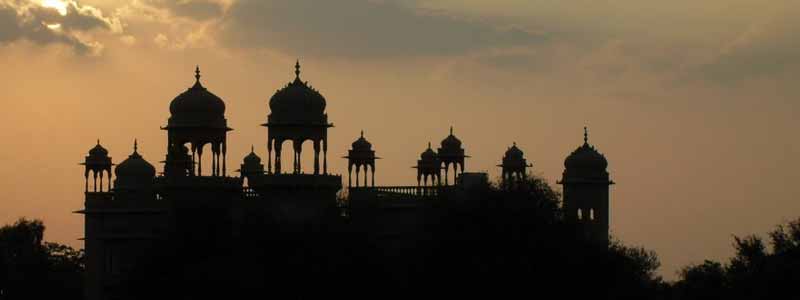
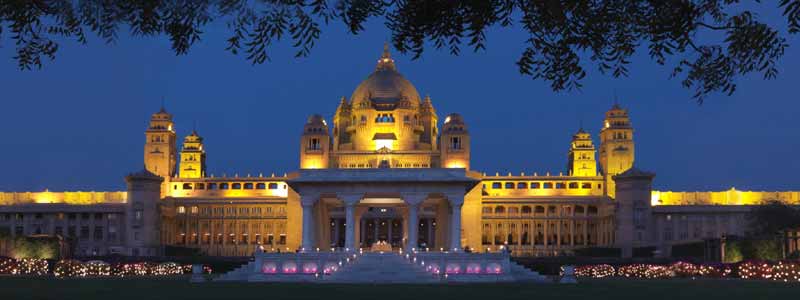
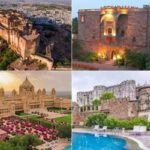
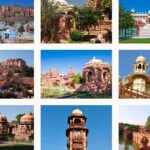
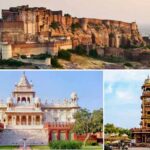
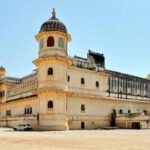
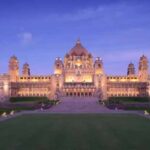
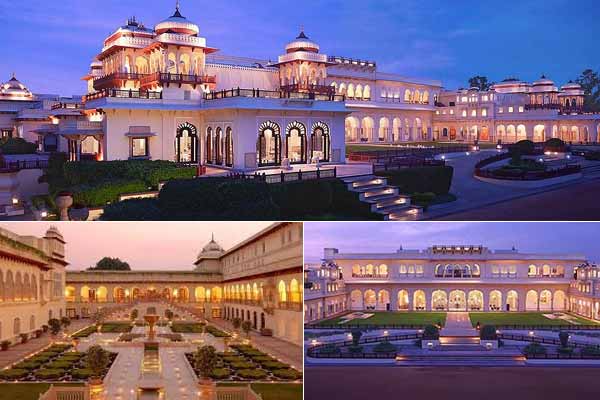
Umaid Bhawan Palace Museum Jodhpur in Jodhpur offers a rare glimpse into the transition of Indian royalty into the modern era. Completed in 1943, the palace was commissioned by Maharaja Umaid Singh primarily as a famine-relief project to provide employment for thousands of locals during a decade-long drought.
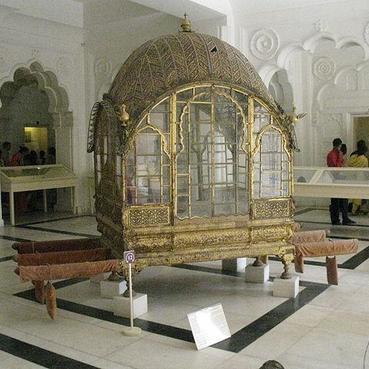
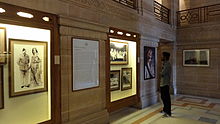
The museum, located in a dedicated wing of the world’s sixth-largest private residence, showcases the opulence of the Rathore dynasty. Its galleries feature a fascinating collection of Art Deco furniture, royal portraits, and exotic weaponry. A standout attraction is the “quirky” clock collection, featuring timepieces shaped like windmills and lighthouses. Visitors can also marvel at a display of glass and porcelain wares, royal memorabilia, and a striking gallery of vintage cars, including classic Rolls-Royces, parked in the lush palace gardens.
Architecturally, the museum serves as a masterclass in the Indo-Deco style, blending Rajput traditions with Western Art Deco elements. Built using golden-yellow “Chittar” sandstone without the use of mortar, the structure remains a testament to early 20th-century engineering and royal compassion.
According to local folklore, a saint, for reasons unknown to us, cursed the land that famine would fall upon the territory. Unfortunately and coincidentally, that came true and the area was in a serious drought for nearly three years. Which is why, Maharaja Umaid Singh, decided to build a lavish palace to give employment to a thousand of people who were famine-stricken farmers. It took 15 years to complete as the Maharaja wanted to provide consistent employment for the suffering farmers. The construction of the Umaid Bhawan Palace started on 18 Nov 1929 and was completed in 1943.
Umaid Bhawan Palace Museum Jodhpur
Architecture of Umaid Bhawan Palace Museum Jodhpur
The iconic structure was designed by the famous British architect Henry Lanchester with the help of 3000 workers at a worth of about 11 million rupees. The palace has 347 rooms. Not only that but also there are three kinds of functional parts. A part of the palace is the residence of the royal family, another part is conducted by Taj Hotels and the other part is a museum that focuses on the history of the Jodhpur Royal Family.
The structure of the palace is beautifully set amidst 26 acres which includes 15 acres of green gardens. The major attraction of the palace is the inner vaulted dome in the interior part which is covered by an outer dome. The entry to the palace leads to a lobby with polished black granite floor and then the rest of the area is sandstone flooring.
The principal architecture of the palace followed the elegant Art Deco style of that time. It is said that following the features of Buddhist and Hindu edifices, the layout and design of the palace were built by Maharaja Umaid Singh and the architect Henry Lanchester. The works of the classical interior of the renowned palace are one of the finest examples of Great Rajput artwork.
Winter is the best time to visit Umaid Bhawan Palace and Museum. During winter, from November to February, the weather in Jodhpur is the most pleasant. You’ll be able to explore the entire collection comfortably and understand the intricate details of the palace architecture.
How to reach Umaid Bhawan Palace Museum Jodhpur?
Umaid Bhawan Museum is 10 km from Jodhpur city center and about 5 km from the old town. And it’s about the same, around 4-5 km away from Jodhpur railway station, the bus stand and the airport. The nearest international airports are at Jaipur (340 km away) and Delhi (630 km away).
By Air: Take a flight to Jodhpur Airport, which is about 4–6 km from the palace. From the airport, you can hire a taxi, cab, or auto-rickshaw to reach the museum in roughly 10–15 minutes.
By Train: The nearest station is Jodhpur Junction, around 5–6 km away. From there, taxis, auto-rickshaws, or app-based cabs like Ola/Uber can take you to Umaid Bhawan Palace Museum easily.
By Road: Jodhpur is well connected by buses and private vehicles. From the main bus stand or city centre, you can hire a taxi or auto-rickshaw to the museum, which is just a short drive away.