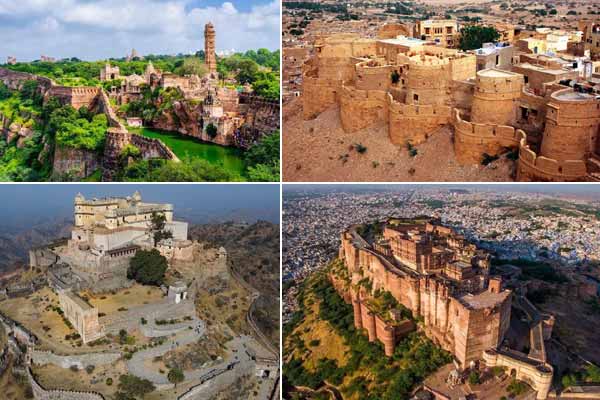
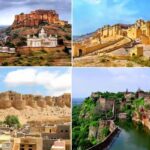
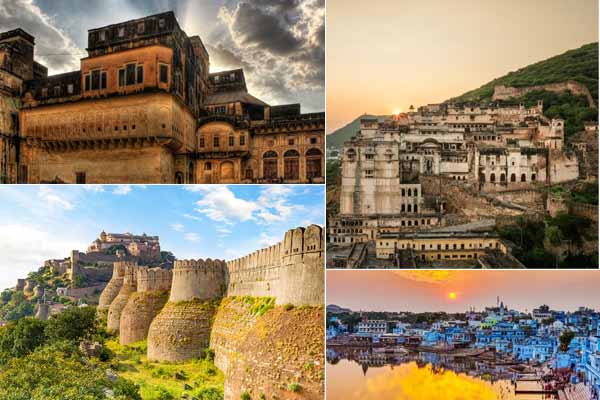
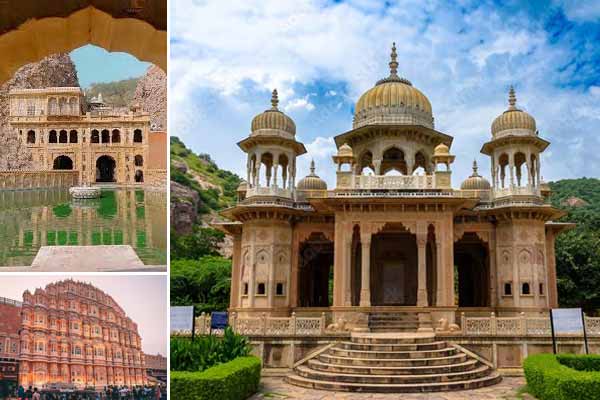
Top 7 Hilltop Forts in Rajasthan, also known as the ‘Land of the Kings’ is home to many royal hill forts. These architectural wonders, dating back from the 8th to 18th century, showcase the majesty of the Rajputi architecture. The hill forts of Rajasthan were originally built to ensure defense against the attacking forces of surrounding enemies.
There are 7 hill forts located in different cities of Rajasthan, which are world-famous for their royal architecture. You can explore the Amer Fort in Jaipur, and admire the blend of Hindi and Mughal architecture. Visit the Chittorgarh Fort, the biggest hill fort in India. It is located in Chittorgarh and is a UNESCO World Heritage Site. Admire the Gagron Fort, located in Gagron city, another gem among the Rajasthan’s hill forts. It is globally known for being a fort that doesn’t have any foundation in its architecture. You will be surprised to know that this fort, back in the day, has seen approximately 14 battles.
Explore the Jaisalmer fort, which is located in Jaisalmer city. It is considered among the most historic hill forts of Rajasthan. It’s also called ‘The Golden City of India’ because of the yellow sandstone used in the Fort’s architecture. It is also suggested to visit the Kumbhalgarh Fort, which is known for having the second-longest defensive wall in the world. If you’re someone who loves both animals and history, Ranthambore Fort is the place for you. This fort in Sawai Madhopur is located near a Tiger reserve and offers a great combination of history and wildlife. Explore the Hilltop Forts of Rajasthan
7 Most Stunning Hilltop Forts in Rajasthan are listed below:
Rajasthan, the “Land of Kings,” is renowned for its magnificent hilltop forts that stand as testaments to the region’s rich history, valor, and architectural prowess. Many of these forts are also UNESCO World Heritage Sites.
Top 7 Hilltop Forts in Rajasthan
1. Chittorgarh Fort
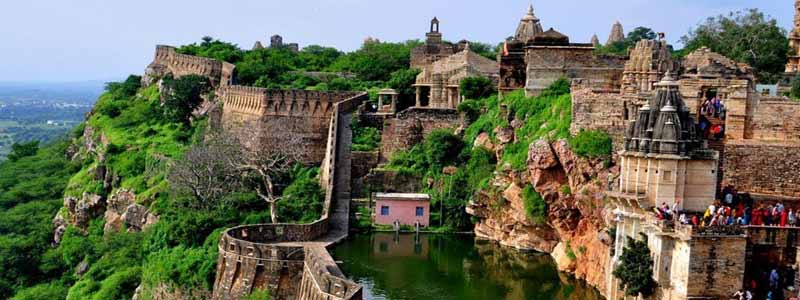
Not just a UNESCO World heritage side but rather a dreamy architecture sprawled on the area of 691.9 acres, perched atop at the height of 590.6 meters. What else you need to explain GRAND; we have all of that too! The Chittorgarh Fort is indeed the largest fort in India, it is so big that villages with more than 4000 people inhabit this fort and still covers a small part of it.
The Chittorgarh fort has temples, palaces, awe-inspiringly grand gates and two iconic pillars. Some of the eminent rulers like Guhilat, Suryavanshi, Khiljis, Bahadur shah, Akbar and many others have cherished the beauty of this palace over the years; which being said makes it obvious that this fort has witnessed many battles and not just love from these rulers. Today, it only receives love, myriad of love from travelers around the world and off course its inhabitants!
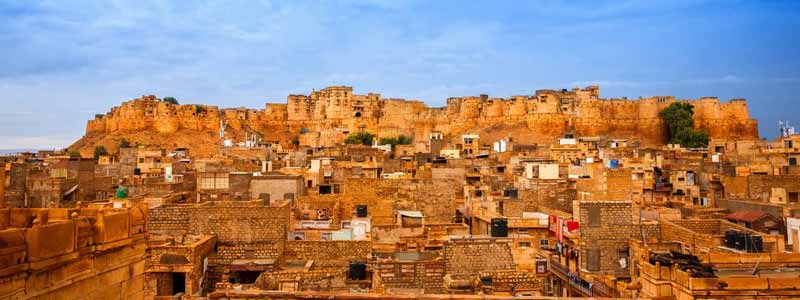
Jaisalmer Fort, affectionately known as “Sonar Quila” or the “Golden Fort,” is a breathtaking spectacle rising from the golden sands of the Thar Desert in Jaisalmer, Rajasthan. Built in 1156 by Rawal Jaisal, it is a testament to Rajput ingenuity and resilience. Its massive yellow sandstone walls shimmer with a honey-gold hue as the sun traverses the sky, providing perfect camouflage against the desert landscape.
What sets Jaisalmer Fort apart is its distinction as one of the very few “living forts” in the world. Unlike many historical monuments that stand as mere relics, a significant portion of Jaisalmer’s population still resides within its ancient walls. Its labyrinthine lanes are a bustling ecosystem of homes, shops, guesthouses, and temples, offering a unique glimpse into a continuous historical narrative.
The fort’s architecture is a captivating blend of Rajput and Islamic styles, characterized by intricate carvings, delicate balconies, and elaborate facades. Key attractions include the Royal Palace, a cluster of ornate Jain temples dating from the 12th to 15th centuries, and the grand havelis of wealthy merchants, such as Patwon Ki Haveli and Salim Singh Ki Haveli, renowned for their exquisite craftsmanship.
Designated a UNESCO World Heritage Site as part of the Hill Forts of Rajasthan, Jaisalmer Fort is not just a structure of stone; it’s a vibrant, living heritage that continues to tell tales of trade, valor, and the enduring spirit of its people.
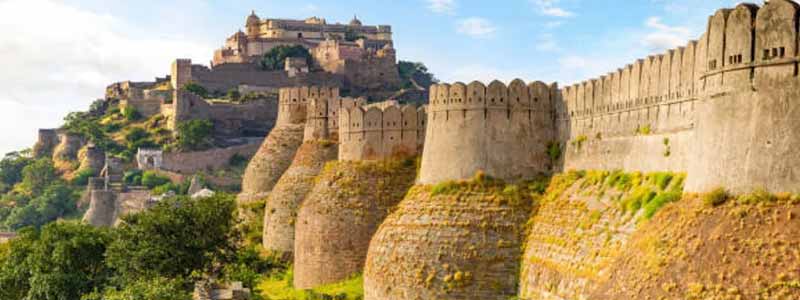
Kumbhalgarh Fort, majestically perched in the Aravalli Hills of Rajasthan, is a testament to Rajput military architecture and ingenuity. Built during the 15th century by Maharana Kumbha, it stands as the second most important citadel in the Mewar region after Chittorgarh. Its strategic location, at an elevation of 1,100 meters, offered natural defenses that made it virtually impregnable.
The fort’s most remarkable feature is its massive perimeter wall, stretching an astonishing 36 kilometers. This continuous wall is often referred to as the “Great Wall of India,” being the second longest in the world after the Great Wall of China. Its breadth, wide enough for eight horses to ride abreast in some sections, speaks volumes about its defensive capabilities. The fort is protected by seven formidable gates, each strategically designed to thwart invaders.
Within its sprawling confines, Kumbhalgarh Fort encompasses a rich array of structures, including numerous palaces, such as the famous Badal Mahal (Palace of Clouds) at its highest point, offering panoramic views. It also houses over 360 temples, both Hindu and Jain, showcasing the religious tolerance and artistic patronage of the Mewar rulers. The fort is also historically significant as the birthplace of the legendary Maharana Pratap.
Kumbhalgarh’s impenetrable nature meant it was breached only once, and that too due to a scarcity of drinking water, highlighting its exceptional design and resilience. As a UNESCO World Heritage Site, Kumbhalgarh Fort stands as a captivating example of Rajput architectural prowess and a vital piece of Rajasthan’s rich history.
Top 7 Hilltop Forts in Rajasthan
4. Amer Fort, Jaipur
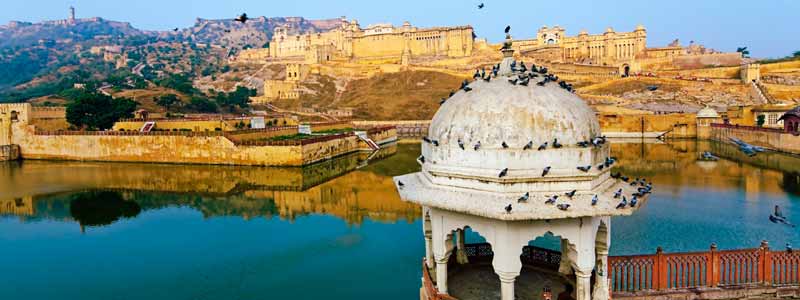
Amer Fort (often referred to as Amber Fort), nestled amidst the Aravalli Hills just 11 kilometers from Jaipur, is a magnificent testament to Rajput architecture and a UNESCO World Heritage Site. Built predominantly with pale yellow and pink sandstone, and white marble, its striking appearance belies the intricate beauty within.
The fort’s construction was initiated by Raja Man Singh I in 1592, with successive rulers expanding and embellishing it over 150 years until the capital shifted to Jaipur in 1727. Its design masterfully blends Rajput and Mughal architectural styles, creating a complex of four main courtyards, each with its unique charm.
Highlights include the grand Jaleb Chowk, the primary courtyard where armies once paraded. From here, one ascends to the Diwan-e-Aam (Hall of Public Audience), an expansive hall adorned with numerous pillars, where the ruler would address his subjects. The most captivating section is the Diwan-e-Khas (Hall of Private Audience), which houses the breathtaking Sheesh Mahal (Mirror Palace). Its walls and ceilings are intricately inlaid with thousands of tiny mirrors, creating a dazzling effect with even a single flicker of light. Another notable area is the Sukh Niwas, designed with an ingenious water cooling system for royal comfort during scorching summers.
Amer Fort not only offers a glimpse into royal life but also boasts stunning panoramic views of the surrounding hills and the serene Maota Lake, making it a truly immersive historical and cultural experience.
Top 7 Hilltop Forts in Rajasthan
5. Ranthambore Fort
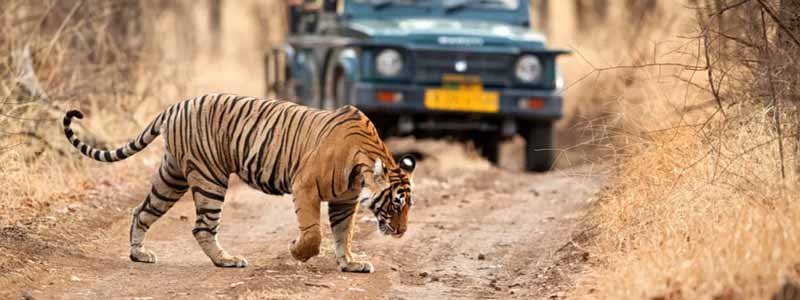
Ranthambore Fort, a majestic sentinel within the Ranthambore National Park in Rajasthan, stands as a testament to centuries of Rajput power and strategic brilliance. Perched atop a 700-foot-high hill, this formidable stronghold was built by the Chauhan rulers in the 10th century, its location making it virtually impregnable.
The fort’s history is steeped in significant events, most notably the fierce siege by Alauddin Khilji in 1301, during which the Rajput women performed Jauhar to protect their honor. Over the centuries, the fort changed hands between various dynasties, including the Delhi Sultanate, Mughals, and eventually the Jaipur rulers, each leaving their architectural imprint.
Ranthambore Fort’s design blends Rajput and Mughal architectural styles, featuring massive stone walls, impressive gateways like Toran Dwar and Ganesh Pol, and various structures within its sprawling complex. Among its most prominent features is the Trinetra Ganesh Temple, a revered pilgrimage site, believed to be the only temple where Lord Ganesha is depicted with a third eye. The fort also contains remnants of palaces, temples, mosques, and ancient water harvesting systems.
Recognized as a UNESCO World Heritage Site as part of the “Hill Forts of Rajasthan,” Ranthambore Fort offers panoramic views of the surrounding national park, a vital tiger habitat. It’s a unique destination where history, architecture, and wildlife converge, drawing both history enthusiasts and nature lovers.
Top 7 Hilltop Forts in Rajasthan
6. Gagron Fort
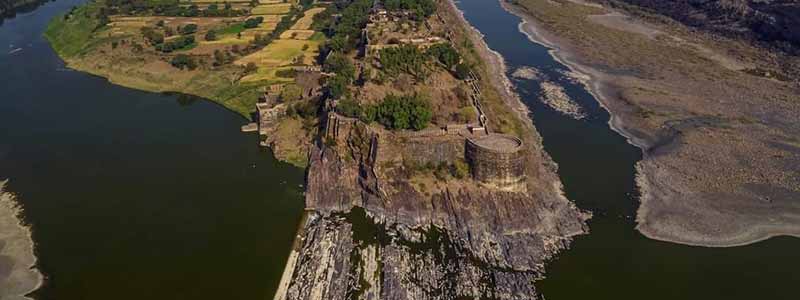
Gagron Fort, nestled in the Jhalawar district of Rajasthan, stands out among the state’s numerous forts due to its unique status as a “Jal Durg” or water fort. Unlike most hill forts, Gagron is almost entirely surrounded by the tranquil waters of the Ahu and Kali Sindh rivers on three sides, with a deep moat on the fourth, providing a formidable natural defense.
Believed to have been built by the Doda Rajputs between the 7th and 14th centuries, Gagron Fort has witnessed a tumultuous history, including 14 major battles and two instances of Jauhar, the ritualistic self-immolation by Rajput women to protect their honor. The fort’s strategic location at the confluence of the two rivers made it a significant stronghold, controlling vital trade routes and territories in the Hadoti region.
Architecturally, Gagron Fort showcases a blend of Rajput and Sultanate styles. It’s notable for having three ramparts, a rarity compared to the usual two in most forts. Within its expansive walls, visitors can explore various structures, including palaces, temples, and step wells, though some are in ruins. A unique feature is the absence of a visible foundation, as the fort is built directly on the natural rocky terrain of the hill.
In 2013, Gagron Fort was inscribed as a UNESCO World Heritage Site, as part of the “Hill Forts of Rajasthan,” recognizing its exceptional architectural significance and its unique example of a hill-and-water fort. Today, it remains a captivating destination, offering a glimpse into Rajasthan’s rich history and architectural ingenuity.
Top 7 Hilltop Forts in Rajasthan
7. Mehrangarh Fort
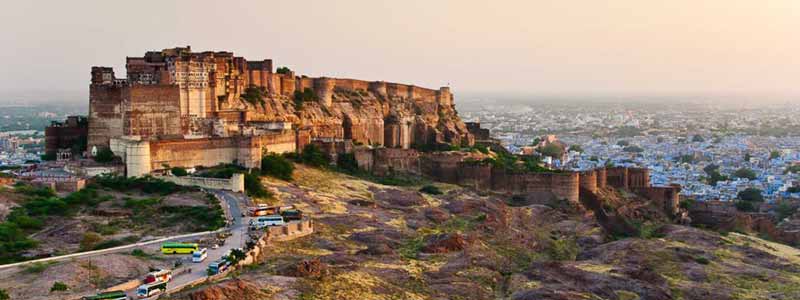
Mehrangarh Fort, majestically perched on a 400-foot-high hill overlooking the “Blue City” of Jodhpur, is one of Rajasthan’s most impressive and well-preserved forts. Its name, “Mehrangarh,” is believed to be derived from “Mihirgarh,” meaning “Fort of the Sun,” a nod to the Rathore clan’s mythical descent from the sun god.
The construction of Mehrangarh Fort was initiated in 1459 by Rao Jodha, the founder of Jodhpur, as he sought a more secure capital than Mandore. While the fort’s foundation dates back to the 15th century, much of its present structure was built by subsequent rulers, particularly during the 17th century, resulting in a fascinating blend of architectural styles.
The fort’s colossal walls, rising up to 36 meters in height and 21 meters in width, enclose a series of exquisitely crafted palaces, each with unique features. Notable among these are the Moti Mahal (Pearl Palace), Phool Mahal (Flower Palace), and Sheesh Mahal (Mirror Palace), renowned for their intricate carvings, vibrant frescoes, and dazzling mirror work. The fort also boasts seven formidable gates, including the famous Jai Pol and Fateh Pol, each commemorating historical victories.
Mehrangarh Fort houses a comprehensive museum that displays a rich collection of royal artifacts, including palanquins, weaponry, costumes, and miniature paintings, offering a vivid glimpse into the opulent lifestyle of the Rathore rulers. Although not part of the UNESCO World Heritage “Hill Forts of Rajasthan” collective, Mehrangarh remains a significant historical and architectural marvel, drawing visitors from around the globe to admire its grandeur and soak in its rich history.