Top 12 Iconic Stepwells in Rajasthan, known locally as baoris or baolis, are remarkable examples of traditional water-harvesting systems that once sustained life in the region’s arid landscape. Built between the 7th and 19th centuries, these structures were designed not only to store water but also to provide cool retreats during the scorching summer months. Their architectural brilliance lies in the combination of functionality and intricate craftsmanship.
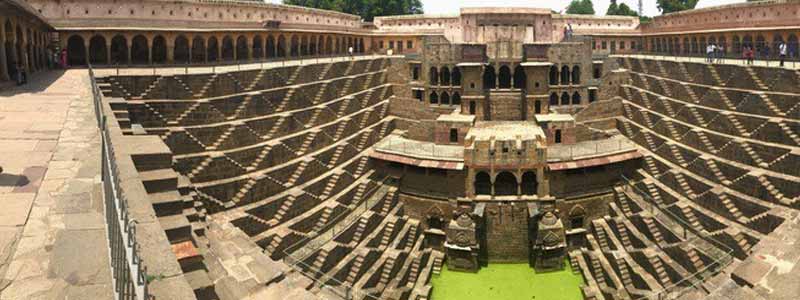
One of the most iconic stepwells in Rajasthan is Chand Baori in Abhaneri, near Jaipur. Constructed during the reign of King Chanda of the Nikumbh dynasty, it features over 3,500 narrow steps arranged in perfect geometric symmetry, descending nearly thirteen stories. The stepwell’s depth and design ensured that water remained available even during severe droughts.
Another notable example is the Rani ki Baori in Bundi, reflecting the region’s tradition of royal patronage. Many stepwells were commissioned by queens or noblewomen, symbolizing their role in sustaining communities. These stepwells often served as social and cultural hubs where people gathered, rested, and performed rituals.
The architectural style of Rajasthan’s stepwells varies from simple utilitarian pits to elaborate, temple-like structures adorned with sculptures and carvings. Though many have fallen into disrepair, recent conservation efforts aim to preserve these historical treasures. Stepwells stand today as enduring symbols of Rajasthan’s ingenuity, resilience, and artistic heritage.
Chand Baori in Abhaneri, Rajasthan, is one of India’s deepest and most visually striking stepwells, admired for its extraordinary geometry and engineering. Built during the 8th–9th century by King Chanda of the Nikumbh dynasty, it was designed to conserve water in a region known for its harsh, dry climate. The stepwell features over 3,500 narrow steps arranged in a precise, crisscrossing pattern that forms a stunning triangular façade. These steps descend about thirteen stories to reach the pool of water at the bottom, creating a cool, shaded environment even during peak summer.
The structure reflects both utility and artistry. Its depth ensured a reliable water supply, while its symmetrical design showcased the architectural innovation of early Rajasthan. Adjacent to the steps is a multi-storied pavilion with carved jharokhas, sculptures of deities, and niches that indicate its use as a resting and gathering place for villagers and travelers. Over time, Chand Baori became not only a functional water source but also a cultural landmark. Today, it stands as a remarkable testament to ancient Indian craftsmanship, resilience, and aesthetic vision.
Top 12 Iconic Stepwells in Rajasthan
Rani Ji Ki Baori, Bundi
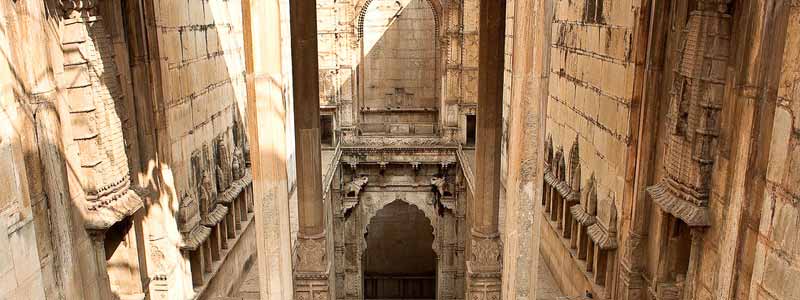
Rani Ji Ki Baori in Bundi, Rajasthan, is a beautifully crafted stepwell known for its elegant architecture and historical significance. Built in the 17th century by Rani Nathavati Ji, the queen of Rao Raja Anirudh Singh, it reflects the tradition of royal women commissioning public water structures for the welfare of their communities. This stepwell is admired for its serene atmosphere, symmetrical layout, and finely carved details that highlight Bundi’s rich artistic heritage.
The stepwell features sturdy sandstone pillars, gracefully arched corridors, and niches adorned with sculptures of Hindu deities. As visitors descend its wide steps, they encounter a cool, tranquil space that once offered relief from Rajasthan’s intense heat. The deeper levels of the baori retain water for most of the year, showcasing the ingenuity of traditional water management techniques.
Rani Ji Ki Baori also served as a social and cultural meeting point, where villagers gathered for daily activities and religious rituals. Today, it stands as an important historical monument, reflecting the architectural innovation, community spirit, and aesthetic sensibilities that define Bundi’s legacy.
Top 12 Iconic Stepwells in Rajasthan
Toorji Ka Jhalra, Jodhpur
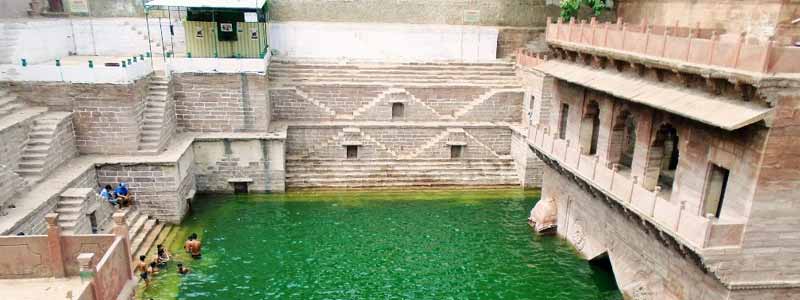
Toorji Ka Jhalra, located in the heart of Jodhpur, is a beautifully restored 18th-century stepwell that reflects the city’s traditional water-harvesting practices and vibrant architectural heritage. Commissioned by Rani Tanwar Ji, the queen of Maharaja Abhay Singh, it highlights the important role royal women played in creating public water structures in Rajasthan. Built from the region’s characteristic red sandstone, the stepwell features a striking arrangement of steps that descend in multiple geometric layers toward the central pool.
The design combines functionality and aesthetics: the deep structure helped store water year-round, while its cool, shaded interior provided relief from Jodhpur’s intense desert heat. Intricately carved niches, projecting balconies, and ornate platforms showcase the artistic craftsmanship of the Marwar region. Historically, the stepwell served not only as a water source but also as a communal space where locals gathered for daily chores and social interaction.
After years of neglect, Toorji Ka Jhalra underwent significant restoration, reviving its beauty and importance. Today, it is a popular heritage site in Jodhpur, admired for its stunning architecture, serene ambience, and enduring cultural significance.
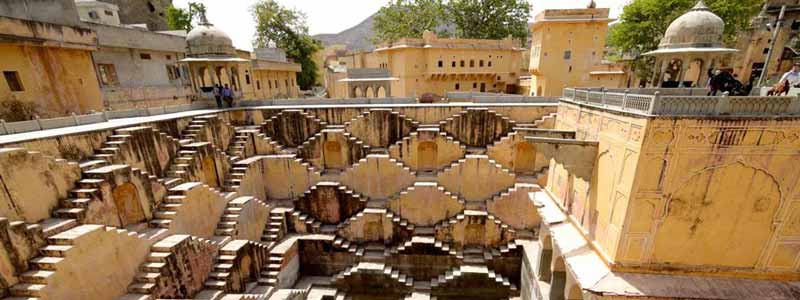
Panna Meena Ka Kund, located near the Amber Fort in Jaipur, is an elegant 16th-century stepwell known for its symmetrical beauty and practical design. Built during the reign of Maharaja Jai Singh I, it served as an important water source for the surrounding community, especially during the dry months. The stepwell features a stunning pattern of crisscrossing steps arranged in perfect symmetry, allowing people to reach the water with ease from any side.
Constructed from smooth yellow and honey-colored sandstone, the kund reflects the warm hues of the Amer landscape. Its cool, shaded interior provided a comfortable resting place for travelers, villagers, and women who came to collect water. The stepwell also functioned as a community gathering space where people met, conversed, and performed daily chores.
Today, Panna Meena Ka Kund stands as a beautifully preserved example of traditional Rajasthani water architecture, admired for its simplicity, geometric precision, and historical significance.
Top 12 Iconic Stepwells in Rajasthan
Nahargarh Stepwells, Nahargarh Fort (Jaipur)
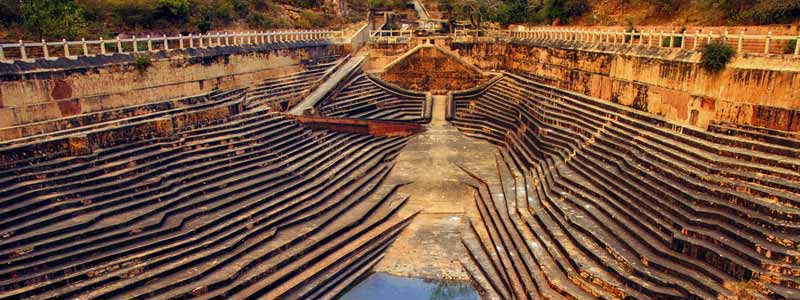
Nahargarh Stepwells, located near Nahargarh Fort in Jaipur, Rajasthan, are remarkable examples of traditional water-harvesting systems integrated into fort architecture. Built during the 18th century, these stepwells were designed to supply water to the fort’s residents and soldiers, ensuring a dependable resource in the arid landscape of Jaipur. Their strategic location reflects careful planning to support the fort during both peace and conflict.
The stepwells feature broad, symmetrical steps descending to deep reservoirs, with stone walls and shaded corridors that offered cool relief from the desert heat. Some areas include carved niches and small pavilions, showcasing the artistic craftsmanship typical of the period. These structures not only served practical purposes but also functioned as gathering spaces where people rested, socialized, and performed daily rituals.
Today, Nahargarh Stepwells stand as an important heritage site, highlighting Rajasthan’s ingenuity in water management, the architectural sophistication of fort complexes, and the enduring cultural significance of stepwells in sustaining communities.
Hadi Rani Ki Baori, Todaraisingh (Tonk)
Hadi Rani Ki Baori, located in Todaraisingh in the Tonk district of Rajasthan, is an impressive stepwell known for its architectural grace and historical charm. Built during the 17th century, the baori is associated with the legendary figure Hadi Rani, celebrated for her courage and devotion. The structure served as a vital water source for the local community, especially in the region’s dry climate.
The stepwell features broad steps, pillared pavilions, and beautifully carved arches that reflect the craftsmanship of the era. As visitors descend its levels, they are greeted by cool, shaded spaces that once offered relief from the desert heat. The baori is also adorned with sculpted niches and ornamental details, highlighting Rajasthan’s rich artistic traditions.
Beyond its practical purpose, Hadi Rani Ki Baori functioned as a social gathering spot where residents met for daily tasks and rituals. Today, it stands as an important heritage monument, admired for its serene atmosphere, historical associations, and striking architectural design.
Jachcha ki Baori, Hindaun City
Jachcha Ki Baori, located in Hindaun City in Rajasthan’s Karauli district, is a traditional stepwell known for its simple yet purposeful design and its long-standing role in community life. Believed to have been constructed several centuries ago, the baori served as a crucial water source for residents, especially during dry seasons when other supplies ran low. Its architecture features broad descending steps leading to a deep central well, allowing people to access water at varying levels.
Unlike the more ornate stepwells of Rajasthan, Jachcha Ki Baori is valued for its practical layout and enduring functionality. The surrounding stone walls and platforms provided shaded resting spaces for travelers, women collecting water, and locals seeking relief from the heat. Over time, the baori also became a social hub where villagers gathered for conversations, daily chores, and small rituals.
Today, although less visited than larger stepwells, Jachcha Ki Baori remains an important reminder of Rajasthan’s water-harvesting traditions and the community-centric structures that once supported everyday life.
Bhandarej Baori, Bhandarej (Dausa)
Bhandarej Baori, located in the historic village of Bhandarej in the Dausa district of Rajasthan, is a striking example of early water-harvesting architecture. Believed to date back to the 11th century, during the rule of the Kachwaha dynasty, the baori served as a vital lifeline for the local community, ensuring a steady water supply in the region’s semi-arid climate. Its design reflects a blend of practicality and artistic skill.
The stepwell features broad, gently descending steps leading to the central reservoir, allowing easy access to water even as levels fluctuated. Surrounding the baori are stone walls, pillared corridors, and carved elements that showcase the craftsmanship typical of the era. The structure also formed part of a larger network of ancient water channels and reservoirs that once supported the settlement.
In addition to its utilitarian role, Bhandarej Baori acted as a community gathering space for villagers performing daily rituals and chores. Today, it stands as an enduring symbol of Rajasthan’s traditional water-management systems and the architectural ingenuity that defines the region’s historical heritage.
Bhooton Ki Baoli, Ransi (Near Jaipur)
Bhooton Ki Baoli, located in the village of Ransi near Jaipur, is a lesser-known yet intriguing stepwell that reflects Rajasthan’s traditional water-harvesting ingenuity. Though not as elaborately carved as some of the region’s grander baoris, it holds cultural significance and local folklore, which adds to its mystique. The name “Bhooton Ki Baoli,” meaning Stepwell of Spirits, stems from tales passed down through generations, giving the site an aura of mystery and attracting curious visitors.
Architecturally, the baoli features broad stone steps leading down to a deep central well, designed to store water throughout the year. The thick stone walls and simple structural layout highlight practicality over ornamentation. Its cool, shaded interior once provided relief to villagers and travelers seeking respite from Rajasthan’s desert heat.
Like many stepwells, Bhooton Ki Baoli also served as a communal space where locals gathered for daily chores, conversations, and small rituals. Today, though quieter and less visited, it remains an important reminder of the region’s ancient water-management systems and the blend of history and folklore that enriches Rajasthan’s heritage.
Neemrana Baori, Neemrana
Neemrana Baori, located in the historic town of Neemrana in Rajasthan’s Alwar district, is a magnificent multi-storied stepwell renowned for its grand scale and striking architectural design. Believed to date back to the 18th century, the baori was built to ensure a reliable water supply for the local community in the region’s dry climate. Its impressive layout features nine levels of symmetrical steps that descend deep into the earth, creating a visually stunning geometric pattern.
Constructed from sturdy stone masonry, Neemrana Baori showcases a blend of practicality and artistic craftsmanship. The broad steps, arched entrances, and pillared pavilions provided shaded resting areas for villagers, travelers, and traders who passed through the town. The stepwell also served as a social gathering place where people met, exchanged news, and performed daily tasks.
Over time, the baori became an integral part of Neemrana’s heritage landscape. Today, though not as heavily visited as nearby attractions, it remains an important reminder of Rajasthan’s traditional water-management systems and the architectural brilliance that once supported everyday life in the region.
Nagaur Fort Baori, Nagaur
Nagaur Fort Baori, located within the historic Nagaur Fort in Rajasthan, is an exceptional example of a fortified stepwell that combines utility with architectural elegance. Believed to have been constructed during the medieval period, this baori was designed to provide a reliable water supply to the fort’s inhabitants, including the royal family, soldiers, and visitors. Its strategic placement within the fort ensured easy access to water during both daily life and sieges.
The stepwell features broad, symmetrical steps descending to a deep water reservoir, surrounded by stone walls and small pavilions. Intricate carvings and niches along the walls reflect the skilled craftsmanship of the period, while the cool, shaded interior provided relief from Rajasthan’s harsh summer heat.
Beyond its practical function, Nagaur Fort Baori served as a social and communal space where people gathered, rested, and performed rituals. Today, it stands as a significant heritage monument, highlighting the ingenuity, resilience, and architectural sophistication of medieval Rajasthan.
Birkha Bawari, Jodhpur
Birkha Bawari, located in Jodhpur, Rajasthan, is a historic stepwell renowned for its elegant design and functional brilliance. Constructed to address the water scarcity of the arid Marwar region, this baori exemplifies the ingenuity of traditional Rajasthani water-harvesting techniques. Its name, “Birkha,” reflects the local term for a reservoir or water structure.
The stepwell features broad stone steps arranged symmetrically, leading down to a deep central tank that stored water throughout the year. Built from red sandstone, it combines durability with aesthetic appeal. The shaded corridors and pillared pavilions offered relief from the intense desert heat, making it a social hub for locals. Villagers gathered here for daily chores, water collection, and small community rituals.
Though less elaborate than some larger stepwells, Birkha Bawari stands as an important heritage site, showcasing Rajasthan’s architectural craftsmanship, practical water-management strategies, and the cultural significance of stepwells in sustaining communities in arid landscapes.