

Patwa Haveli / Patwon ki Haveli (Kothari’s Patwa Haveli), also known as Patwa Haveli, is a cluster of five magnificent mansions in the heart of Jaisalmer, Rajasthan. Built in 1805 by a wealthy merchant named Guman Chand Patwa, the havelis were constructed for his five sons and took over 50 years to complete. The entire complex is the largest and most ornate of its kind in Jaisalmer, showcasing the immense prosperity of the Patwa family.
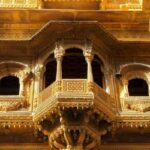
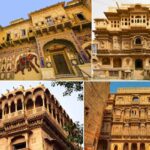
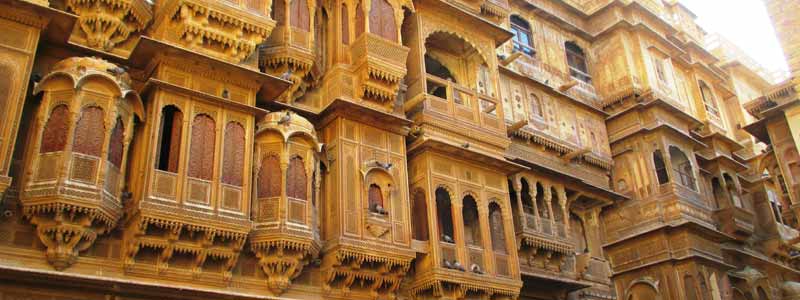
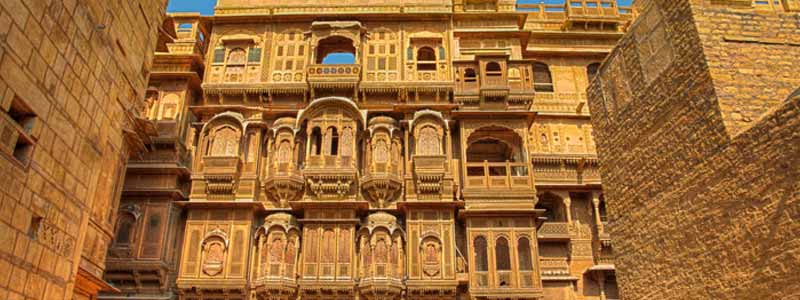
Crafted from the region’s distinctive yellow sandstone, the havelis glow with a golden hue under the desert sun. Their architecture is a remarkable blend of Rajputana and Mughal styles, featuring intricate carvings, ornate jharokhas (balconies), and beautifully decorated gateways. Inside, visitors can admire stunning mirror work, vibrant murals, and detailed carvings on pillars and ceilings that offer a glimpse into the lavish lifestyle of the merchants who once lived there.
The first and grandest of the five havelis is now a private museum. It’s often referred to as Kothari’s Patwa Haveli, named after the Kothari family who later purchased it. This haveli has been meticulously preserved, displaying period-specific artifacts and recreating the rooms to show what life was like in the 19th century.
History of Patwaon Ki Haveli, Jaisalmer
Patwaon Ki Haveli was constructed by a wealthy Jain merchant family known as the Patwa brothers in the 19th century. The Patwas were prominent traders who dealt with gold, silver, and precious stones.
The Haveli complex consists of five separate mansions, each belonging to one of the Patwa brothers. Due to its unique and distinct sections, it is also known as the “Mansion of the Brocade Merchants.”
Over time, Patwaon Ki Haveli fell into disrepair and neglect. However, in recent years, efforts have been made to restore and preserve this architectural gem. The Haveli is now open to the public, allowing visitors to admire its splendid architecture and learn about the rich history and heritage of Jaisalmer.
Architecture of Patwaon Ki Haveli, Jaisalmer
The architecture of Patwaon Ki Haveli in Jaisalmer is a remarkable blend of Rajputana and Mughal styles. It showcases intricate craftsmanship, detailed carvings, and unique design elements that make it a standout structure in the city.
Here are some key architectural features of Patwaon Ki Haveli:
Sandstone Construction: The entire haveli is constructed using yellow sandstone, which is abundant in the region. The sandstone gives the haveli its distinct golden hue and is a characteristic feature of Jaisalmer’s architecture.
Intricate Facades: The facades of Patwaon Ki Haveli are adorned with intricate carvings and elaborate designs. The carvings depict a range of motifs including floral patterns, mythological figures, animals, and scenes from everyday life.
Jharokhas (Balconies): One of the most notable features of the haveli is its extensive use of jharokhas, which are intricately carved balconies. The jharokhas are designed with delicate latticework called jalis, allowing for privacy while still permitting ventilation and light to enter.
Ornate Gateways: The haveli features grand and ornate gateways that lead to different sections of the mansion. The gateways are often decorated with carvings, filigree work, and floral patterns.
Courtyards: Patwaon Ki Haveli comprises multiple courtyards, each associated with a specific section of the mansion. The courtyards are spacious and adorned with decorative elements like arches, columns, and water features.
Frescoes and Paintings: Some parts of the haveli showcase beautiful frescoes and paintings on the walls and ceilings. These depict scenes from Rajasthani culture, mythology, and historical events, adding to the overall artistic appeal of the haveli.
Multi-Level Structure: The haveli is constructed on multiple levels, with each section belonging to one of the five Patwa brothers. Each section has its own distinct entrance, courtyard, and architectural style, giving the haveli a unique and segmented appearance.
Ornamental Details: The architecture of Patwaon Ki Haveli is known for its attention to ornamental details. From the intricately carved brackets and arches to the decorative elements adorning the balconies and windows, every aspect of the haveli displays a high level of craftsmanship.
The architectural splendor of Patwaon Ki Haveli reflects the wealth, taste, and cultural influences of the Patwa merchant family. It stands as a testament to the rich heritage and architectural legacy of Jaisalmer, attracting tourists and admirers of historical architecture from all over the world.

Best Time to Visit Patwaon Ki Haveli, Jaisalmer
October to February is considered the best time to head to the Patwaon Ki Haveli. The weather remains pleasant at this time of the year with an average temperature ranging from 7 degrees Celsius to 30 degrees Celsius, making it easy for you to explore the surroundings of the haveli and other popular sightseeing places in Jaisalmer in your utmost comfort.
However, before planning your visit, it’s always a good idea to check the weather forecast and consider your comfort level with the prevailing conditions. Additionally, be sure to check if there are any specific events or festivals taking place in Jaisalmer that you may want to experience during your visit.
How to Reach Patwaon Ki Haveli, Jaisalmer?
Since Patwaon Ki Haveli is located in the heart of the city, it can be easily accessed by people via local transport. You can hire auto rickshaws or bicycle rickshaws to be there at your desired destination or simply book a cab from the list of top car rental companies in Jaisalmer. The choice is yours!
The following are 3 different ways to reach Jaisalmer:
By Air: Jaisalmer Airport is the nearest airport to Jaisalmer. However, due to its limited connectivity with the other major airports in India, many people prefer flying to the Jodhpur Airport, which is about 300 km away.
By Train: Jaisalmer is well connected to the rest of the cities via the railway network. You can take a direct train to Jaisalmer Railway Station from Delhi, Jaipur, Jodhpur, etc., to experience a hassle-free commute to Jaisalmer. From there, you’ll find numerous options to commute further within the city.
By Road: Jaisalmer is accessible by road through well-maintained national highways. You can reach Jaisalmer by bus or by hiring a taxi or self-driving. The city is connected to nearby cities like Jodhpur, Jaipur, Bikaner, and others via road.