List of 13 Most Famous National Parks in Rajasthan
rtp123
List of 13 Most Famous National Parks in Rajasthan the Land of Kings—is truly a king among the lands! Be it eco-tourism, Wildlife Sanctuary Tourism or Spiritual Tourism, this state remains an unparalleled destination for tourists of all kinds. Visiting any national park in Rajasthan is a treat for adventure travellers. It ranks among the top tourist spots in the Indian subcontinent even among the tens and thousands of foreign tourists as well. It is not an exaggeration to say that no foreign tourist to India returns their respective homes without visiting Rajasthan.
Several National Parks in Rajasthan are the centre of attraction and thus see millions of tourists throughout the year and there are 20 total national parks in Rajasthan. Also known for its rich culture and heritage, there are many things on display even to this day. Its vibrant traditions are a treat to watch and savor. Valor and spirit of nationalism run through this land and in its people.
List of 13 Most Famous National Parks in Rajasthan
With a variation in the land, the place offers a number of regions where you can spot different animals together. Enlisted here are the top national park and wildlife sanctuaries in Rajasthan –
Rajasthan attracts a large number of tourists in India and across the world. It is Best known as the land of kings and famous for its history, Rajasthan also attracts a large number of wildlife lovers. If you are planning a visit to the wildlife sanctuary in India, then Rajasthan is the best place for you. It has a number of wildlife sanctuaries and national parks which call you for an amazing wildlife experience. Enlisted here are the top national park and wildlife sanctuaries in Rajasthan –
List of 13 Most Famous National Parks in Rajasthan
1. Ranthambore National Park, Sawai Madhopur
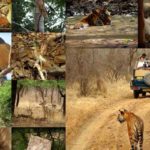
Ranthambore National Park is located about 13.5 kilometers from the city of Sawai Madhopur in Rajasthan. Located at the junction of the Aravali and Vindhya hill ranges, this is one of the finest places to view wild animals, especially as they are used to being stared at here. The park covers an area of approximately 400 sq km, and if combined with the area of Sawai Man Singh Sanctuary area, is around 500 sq km.
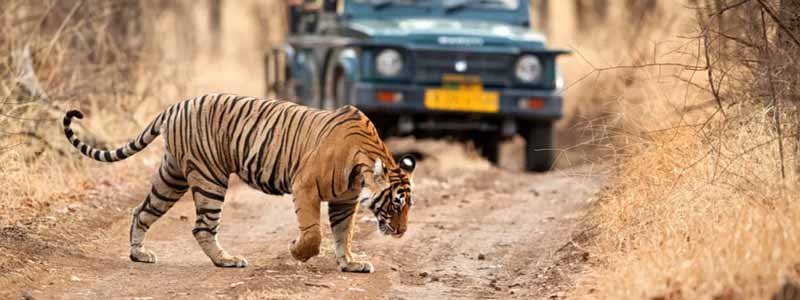
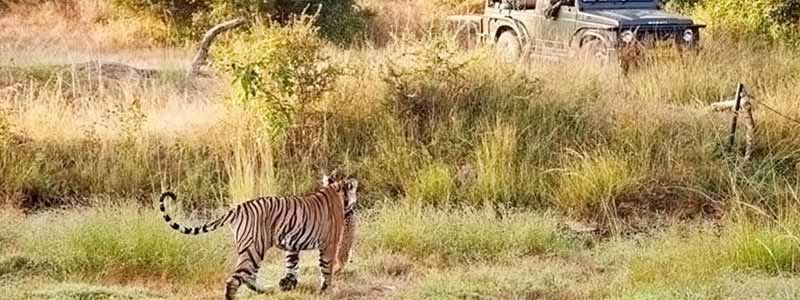
Ranthambore National Park is dotted with structures that remind you of bygone eras. There are numerous water bodies scattered all across the park, which provide perfect relief to the wild animals during the scorching hot days in summers. A huge fort, after which the park is named, towers over the park atop a hill. There are many ruins of bygone eras scattered all over the jungle, which give it a unique, wonderful and mixed flavour of nature, history and wildlife. Tigers at Ranthambore National park have been known to even hunt in full view of human visitors.
List of 13 Most Famous National Parks in Rajasthan
2. Sariska National Park, Alwar
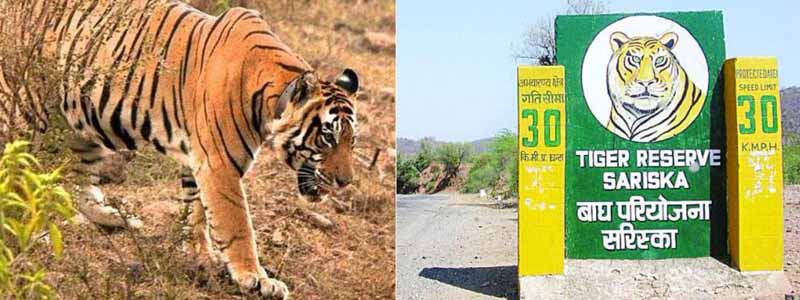
Sariska National Park is one of the major tiger reserves located in Alwar, Rajasthan. It has spread over an area of 881 sq km comprising different landscapes such as dry deciduous forests, scrub thorn arid forests, rocky hills and grasslands.
In the earlier time, this region was a hunting reserve for the royal family of the Alwar state. In the year 1958, Sariska declared a wildlife sanctuary. This region was given the status of a tiger reserve in the year 1978 when it was made part of Project Tiger. Further in the year 1982, it was given the full-fledged status of a national park in India.
Sariska National Park has gained very much popular among tourists due to its rich and diverse flora & fauna. Are you planning to visit Sariska anytime soon and are curious to know about the types of animals found in Sariska National Park?
List of 13 Most Famous National Parks in Rajasthan
3. Desert National Park, Jaisalmer
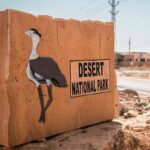
Desert National Park is one of the hidden gems of Jaisalmer. A National Park in the deserts of Jaisalmer is truly a unique experience. The vast expanse of sand and the rugged terrain makes for a striking contrast to the lush green forests that are often associated with National Parks.
Throughout the park, visitors will find unique and fascinating species of flora and fauna that flourish in this harsh environment. Visiting the park is also a great opportunity to discover the region’s rich cultural heritage, with many ancient ruins and traditional villages within its boundaries. Overall, a National Park in the deserts of Jaisalmer is a must-visit destination in Jaisalmer for anyone interested in exploring the natural wonders of this incredible region.
To preserve the pristine ecosystem of the Thar Desert, the Desert national park was created in 1980. Listed among India’s largest national parks, covering an area of 3162 sq. km. The park is known for its unique architecture, rich history, and diverse flora and fauna. It’s filled with a variety of different terrain, including salt lakes, mudflats, and rocky outcrops.
There are spectacular sand dunes as well at Desert National Park that shouldn’t be missed. These dunes, which can reach up to 200 meters in height, are a great place to explore and enjoy the desert. Summer months are perfect for camel rides through the dunes, while winter is perfect for Jeep safaris.
List of 13 Most Famous National Parks in Rajasthan
4. Keoladeo National Park, Bharatpur
Keoladeo National Park, popularly known as Bharatpur Bird Sanctuary, is located in the Bharatpur in Rajasthan, and recognised as one of the world’s most important bird breeding and feeding grounds. It is a haven for bird lovers as it’s home to a wide variety of indigenous & migratory water birds. Around 370 species of birds inhabit the park, besides various mammals like deer & nilgai, and reptiles like the basking python.
Keoladeo National Park was once a royal hunting & game reserve for the Maharajas and the British. It was recognised as a World Heritage Site by UNESCO in 1985. It is interesting to note that Keoladeo National Park is the only one of its kind in India which is enclosed by a 2 meters boundary wall to fend off encroachments.
List of 13 Most Famous National Parks in Rajasthan
5. Kumbhalgarh Wildlife Sanctuary, Kumbhalgarh
Kumbhalgarh Wildlife Sanctuary, a hidden gem waiting to be explored. Nestled amidst the Aravalli Range, this sanctuary encircles the majestic Kumbhalgarh Fort, offering a thrilling blend of history and wildlife.
This sanctuary, which spans more than 610 square kilometres, is a haven for lovers of the outdoors, adventure, and wildlife. The sanctuary’s vast landscape is full of natural wonders and abundant with life, ranging from dense forests to rolling hills and meandering streams.
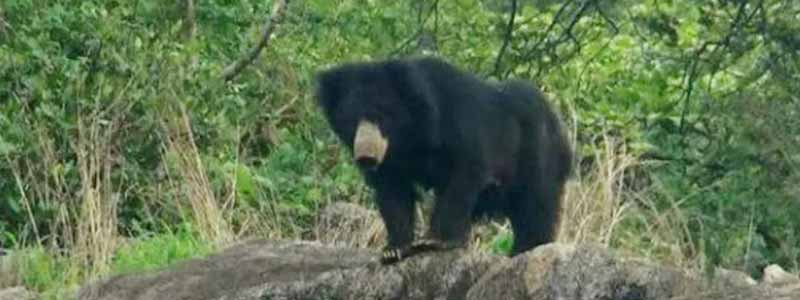
The Kumbhalgarh Wildlife Sanctuary is not just a haven for endangered species but also a crucial player in their conservation. Look for elusive creatures like wolves, sloth bears, jungle cats, hyenas, and jackals. If you’re lucky, you might even catch a glimpse of a majestic leopard or a graceful sambhar deer. Birders, rejoice! With over 250 species of birds calling this sanctuary home, Kumbhalgarh is a paradise for birdwatching enthusiasts. Listen to the melodic calls of exotic birds as you explore the lush landscapes.
Pack your bags, put on your boots, and get ready for an incredible journey into the wilderness of Kumbhalgarh.
List of 13 Most Famous National Parks in Rajasthan
6. Mount Abu Wildlife Sanctuary, Mount Abu
The Mount Abu Wildlife Sanctuary is one of the oldest parts of the Mount Abu mountain ranges. The Mount Abu Wildlife Sanctuary is home to many sightseeing points offering fantastic views. Many people visit the Mount Abu Wildlife Sanctuary just for the sightseeing and views, but most visit The Mount Abu Wildlife Sanctuary for the animals and birds. The Mount Abu Wildlife Sanctuary is about 7 kilometres long and only 300 metres wide. This means that while you take the long walk down The Mount Abu Wildlife Sanctuary you won’t miss much on either side.
The Mount Abu Wildlife Sanctuary is located in one of the regions oldest mountain ranges- The Aravali. The area was declared a wildlife sanctuary in 1960. In addition to the sightseeing opportunities, the Mount Abu Wildlife Sanctuary is a popular destination for eco-tourism. The Mount Abu Wildlife Sanctuary crosses a variety of mountain highs, from 300m to 1722m at Gurashikhar- the highest peak in the Aravali Ranges.
The Mount Abu Wildlife Sanctuary is full of floral beauty. There is an evergreen forest that meets the water and the valleys on the other side. The Mount Abu Wildlife Sanctuary houses around 112 plant families with 449 genera and 820 species. Many of these species are dicots and the rest are monocots. You can also find many orchids at the Mount Abu Wildlife Sanctuary. Don’t forget the many roses and bamboo rich areas.
List of 13 Most Famous National Parks in Rajasthan
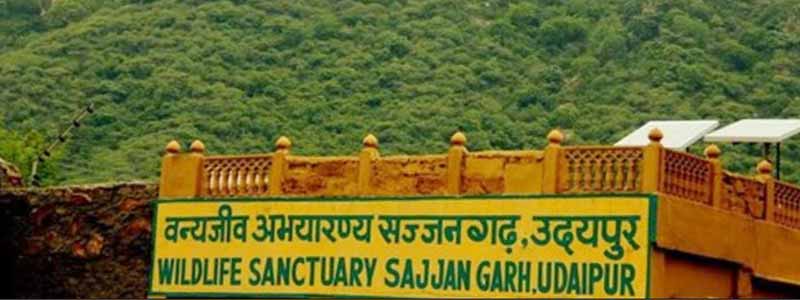
7. Sajjangarh Wildlife Sanctuary, Udaipur
Sajjangarh Wildlife Sanctuary is a stunning natural reserve situated in the Aravalli Range in the Indian state of Rajasthan. Spread over an area of 5.19 square kilometres; this sanctuary is located just 5 kilometres away from the city of Udaipur. The sanctuary is also known as the Sajjangarh Palace Wildlife Sanctuary, as it surrounds the beautiful Sajjangarh Palace. The sanctuary is a rich and diverse ecosystem that shelters various flora and fauna. The landscape is dominated by dense forests, rolling hills, and water bodies, which create the perfect habitat for different animals, birds, and reptiles. The sanctuary is home to several endangered species, making it an important conservation site.
One of the major attractions of Sajjangarh Wildlife Sanctuary is the vast collection of birds found here. Over 200 species of birds have been recorded in the sanctuary, including migratory birds that visit during the winter season. Some commonly spotted birds include Indian Peafowl, Black Drongo, Red-vented Bulbul, Jungle Babbler, and Indian Roller.Apart from the birds, the sanctuary is also home to several mammals, such as the Indian leopard, spotted deer, wild boar, hyena, jungle cat, and many more. The sanctuary is also known for its thriving population of monkeys, including the common langur and rhesus macaque.
Sajjangarh Wildlife Sanctuary is a haven for wildlife and a popular tourist destination. Visitors can enjoy various activities such as trekking, bird watching, nature walks, and jeep safaris. The sanctuary is open throughout the year, but the best time to visit is between October and February when the weather is pleasant and the migratory birds are in full swing.Sajjangarh Wildlife Sanctuary is a beautiful natural reserve that offers a unique opportunity to observe and appreciate the rich biodiversity of Rajasthan. Whether you are a nature lover or a wildlife enthusiast, visiting this sanctuary will surely be an unforgettable experience.
8. Darrah Sanctuary, Kota
Darrah Wildlife Sanctuary was founded in the year 1955. In earlier times, the place served as the favourite hunting ground of the Kings of Kota. In 2004, The Darrah National Park was established by integrating the Darrah Wildlife Sanctuary, Chambal Wildlife Sanctuary and the Jaswanth Sagar Wild life sanctuary. This Sanctuary is thickly forested and covers a hilly region lying in the south eastern border of Kota in Rajasthan. This Park is in the district of Sawai Madhopur and is over a hillock on the South Eastern Mukundarah hill ranges.
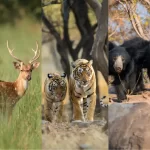
The park was home to a number of rhinos, deer, and tigers in earlier days. At present, the sanctuary provides habitat to various species of animals including deer, sloth bears, wolves, antelopes, leopards, and nilgai. Wolves and antelopes can be spotted here in large numbers.
There are entry charges and the fee is Rs.20 for Indian nationals and Rs.100 for foreigners. The sanctuary visiting time is from 10 am to 5 pm and a permit has to be obtained from the local forest ranger to visit the Park. Permits are also available with the District Forest Officer and the Tourist Reception centre at Kota.
9. Sita Mata Sanctuary, Pratapgarh
The Sita Mata Wildlife Sanctuary is a wildlife sanctuary situated in the southeast portion of the Pratapgarh district in Rajasthan, India, declared as a protected forest area by the Government of Rajasthan Notification dated 2/11/1979. It is a dense forest, with an area of 422.95 square kilometers, which is about 40% of the total land area of the district. The land is undulating because of the confluence of three different formations — Malwa Plateau, the Vindhyachal Hills and Aravali mountain range.
The average elevation ranges between 280 and 600 metres above mean sea level with an average rainfall of 756 mm annually. The temperature variation during winter is between 6 and 14 degrees Celsius and in summer is between 32 and 45 degrees.
The thickly wooded Sita Mata Wildlife Sanctuary sprawls over the Aravali ranges and the Malwa plateau, with the seasonal rivers Jakham, Karmoi, Sitamata, Budhho, and Tankiya flowing through the forest. Jakham is the largest. It is located about 45 km from Pratapgarh and 108 km from the divisional headquarters. Udaipur, the sanctuary, covering 423 km2 of mainly dry deciduous vegetation has exceptionally rich flora and fauna. The Champion and Seth forest type of Sita Mata is “IInd Dry Tropical Forest”.
10. Keladevi Wildlife Sanctuary, Karauli
Kaila Devi Sanctuary, surrounded by dense greenery, starts right after Kaila Devi Temple and continues both sides of the road before joining the Ranthambore National Park. It is home to a rich variety of flora & fauna. Kaila Devi Sanctuary is spread over an area of almost 676.40 square kilometers. The inner parts of the sanctuary are dotted with high rising hills & numerous deep gorges which descend a couple of hundred feet.
During the summers, the green dense forest here turns ash grey coloured, while a canopy of green covers it during monsoon. You can also observe several waterfalls during the monsoon.
Some of the wildlife which you can observe at Kaila Devi Sanctuary is Nilgai, Chinkaras, Leopards and Jackals. Some of the birds which you can spot at Kaila Devi Sanctuary are Kingfishers & Sandpipers.
11. Machiya Biological Park, Jodhpur
Machia Biological Park is an essential part of the agenda for nature lovers travelling to Jodhpur. Located about 8.5 km from the city, this biological wonderland is a part of the vast Machia forest block, situated close to the Kaylana Lake. It is a host to varied species of flora and fauna as well as a nature interpretation centre and the Machia Fort. Along with the enclosures for the animals, one can also find a birdwatching point, proof of the site’s fantastic biodiversity.
The premises houses a veterinary hospital for maintaining the well-being of the animals inside. Elephant riding may be availed by travellers for a small fee. There is also a bird watching point for bird lovers. A nature interpretation centre has been set up for those seeking an in-depth experience of the ecology and biodiversity.
The Machia fort can also be found here, which offers some breathtaking views from the top, especially during sunset. The Kaylana Lake is quite close to this area, and there is a viewpoint within the premises to observe the lake.
It is home to multiple wild animals such as the deer, desert fox, monitor lizard, rabbits, feral cats, gazelles, mongooses, tortoises, etc. Management is consistently on the lookout for suitable additions to the park. There are a total of 20 enclosures within the park.
12. Ramgarh Vishdhari Sanctuary, Bundi
Bundi’s Ramgarh Vishdhari Sanctuary, adjacent to Ranthambore National Park, has now been given the status of the state’s fourth Tiger Reserve by the state government. Ramgarh Vishdhari Sanctuary will now be called Ramgarh Vishdhari Tiger Reserve. Earlier Ranthambore, Sariska and Mukandra Hills Tiger Reserves are the reserves for tigers in Rajasthan.
After getting permission from the National Tiger Conservation Authority, on Monday 16 May 2022, on behalf of the state government, the Secretary of the Ministry of Forest and Environment has signed and stamped it. Its gazette notification has been issued. In such a situation, now there are four tiger reserves in the Rajasthan. Ramgarh Vishdhari Sanctuary has become the 52nd tiger reserve of the country and the fourth tiger reserve of the state.
Due to the increase in the population of tigers and the reduction of space in Ranthambore, now the mutual conflict of tigers will be curbed and the tigers will also get better habitat. With Ramgarh Vishdhari Sanctuary being a tiger reserve, there will be a seamless movement of tigers from Ranthambore to Mukundra.
13. Mukundara Tiger Reserve, Kota
Mukundra Tiger Reserve is now the third tiger reserve of Rajasthan is also known as Darrah wildlife sanctury in the past is located in the southerneastern part of Kota town of Rajasthan. In the past it is the Royal Hunting Ground of the Maharaja of Kota. This place is located at a distance of about 50 km from Kota. It is located on the eastern bank of Chambal River and its tributaries toches this area.
The Darrah wildlife sanctuary was declared NATIOANL PARK Mukundra Hills Natioanl Park in 2004. Total area of the National park is about 200 sqkm. Mukundra Hills National Park is constiting of three wildlife sanctuaries namely Darrah wildlife sanctuary, Chambal wildlife sanctuary and Jaswant Sagar wildlife sanctuary.This park got the approval of Natioanl Tiger Conservation authority NTCA in 2013 and then the Rajasthan gets its third tiger reserve in the form of the Mukundra Hills Tiger Reserve,and now it is the home of four tigers which is recently shifted here from the Ranthambore Tiger Reserve.