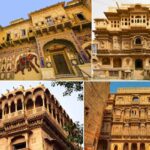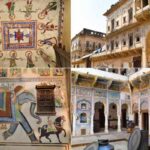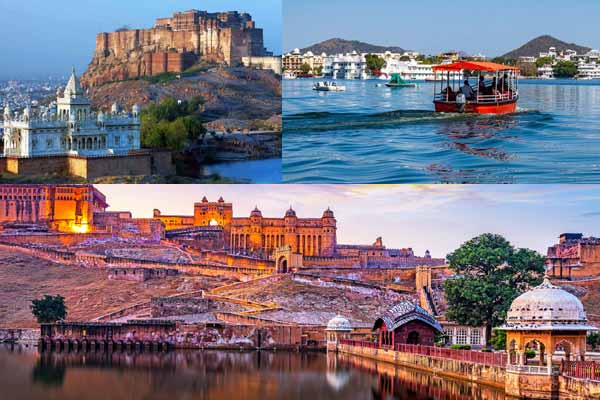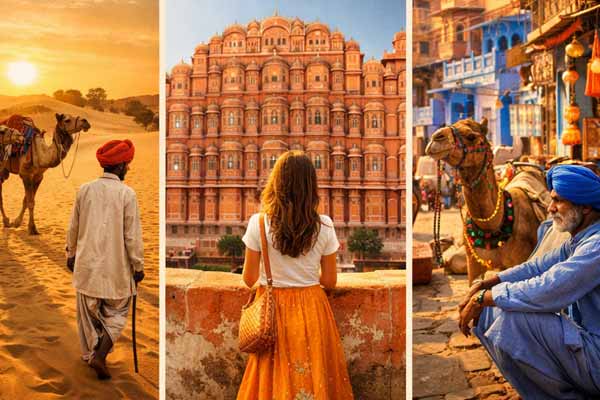

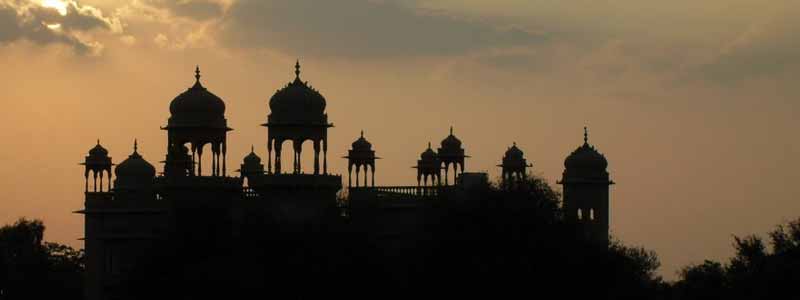
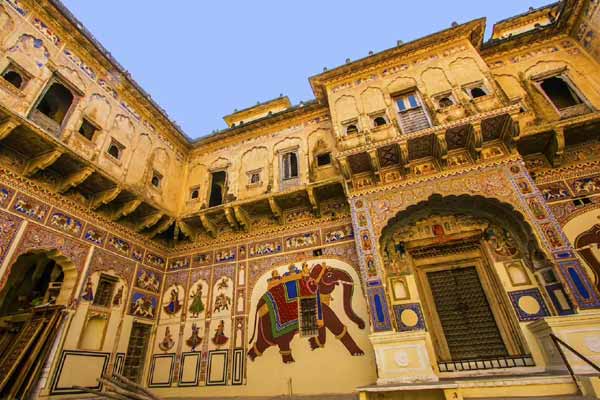

History of Shekhawati, is a culturally rich region in the northeastern part of Rajasthan, famous for its grand havelis, vibrant frescoes, and deep-rooted heritage. Often referred to as the “Open-Air Art Gallery of India,” Shekhawati showcases beautifully painted mansions built by wealthy merchants during the 18th and 19th centuries.
The towns of Mandawa, Nawalgarh, and Jhunjhunu are among the most popular destinations in the region. These towns are dotted with intricately decorated havelis featuring frescoes that depict mythological stories, royal lifestyles, and even European influences, reflecting a unique blend of tradition and modernity.
Historically, Shekhawati derives its name from Rao Shekha, a Rajput chief who ruled the area in the 15th century. The region prospered as an important trade route, leading to the construction of opulent homes by Marwari traders.
Today, Shekhawati attracts travelers, history lovers, and photographers who come to admire its artistic heritage and rustic charm. With its quiet villages, heritage hotels, and timeless beauty, Shekhawati offers a unique glimpse into Rajasthan’s glorious past, making it a must-visit destination for cultural exploration.
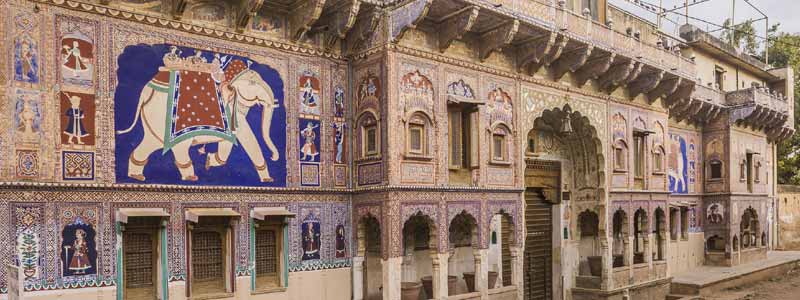
Introduction to the History of Shekhawati
The History of Shekhawati is a fascinating story of bravery, trade, art, and cultural richness. Located in the northeastern part of Rajasthan, Shekhawati is widely known as the “Open-Air Art Gallery of India.” This region includes districts like Jhunjhunu, Sikar, and Churu, and is famous for its beautifully painted havelis, forts, and temples.
What makes Shekhawati truly unique is how history and art blend together. Every wall, street, and building tells a story from the past. From Rajput rulers to wealthy merchants, each contributed to shaping the region’s identity.
Origins and Early Development
The name “Shekhawati” comes from Rao Shekha, a brave Rajput leader who ruled the region in the 15th century. He belonged to the Kachwaha clan of Jaipur and played a major role in establishing political stability in the area.
Before his rule, Shekhawati was a semi-arid land with scattered settlements. However, its location made it an important route for traders traveling between Delhi and western parts of India. Caravans carrying spices, textiles, and precious goods passed through this region, helping it grow economically.
Over time, small villages developed into towns, and trade became the backbone of the local economy.
Rise of the Shekhawat Dynasty
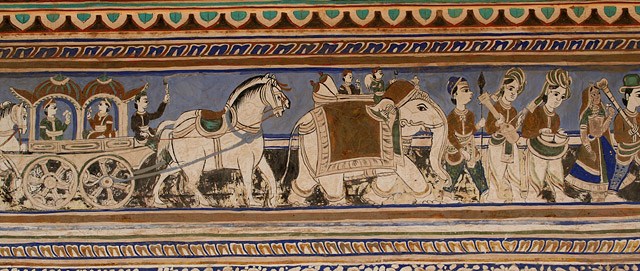
The real transformation in the History of Shekhawati began under the leadership of Rao Shekha and his descendants. They established strong administrative systems and built forts to protect their territories.
The Shekhawat rulers divided the region into smaller estates known as “thikanas.” Each was governed by local chiefs who maintained loyalty to the main ruler. This system allowed efficient governance and ensured peace in the region.
The Rajputs also promoted culture and traditions. They supported temples, encouraged local festivals, and maintained strong social values. Their influence is still visible in the customs and lifestyle of the region today.
Shekhawati During the Mughal Period
During the reign of Akbar, many Rajput rulers formed alliances with the Mughal Empire. The Shekhawat rulers also followed this path, which brought stability and growth to the region.
These alliances were beneficial for both sides. The Mughals gained loyal allies, while the Rajputs retained control over their territories. Trade increased, and new ideas in art and architecture began to flow into Shekhawati.
Mughal influence can be seen in the decorative patterns and themes used in local artwork. This blending of cultures added richness to the region’s artistic heritage.
The Role of Marwari Merchants
One of the most important chapters in the History of Shekhawati is the rise of Marwari merchants. These business communities were known for their sharp financial skills and strong trade networks.
During the 18th and 19th centuries, many Marwari families moved to cities like Mumbai and Kolkata to expand their businesses. They became successful traders, bankers, and industrialists.
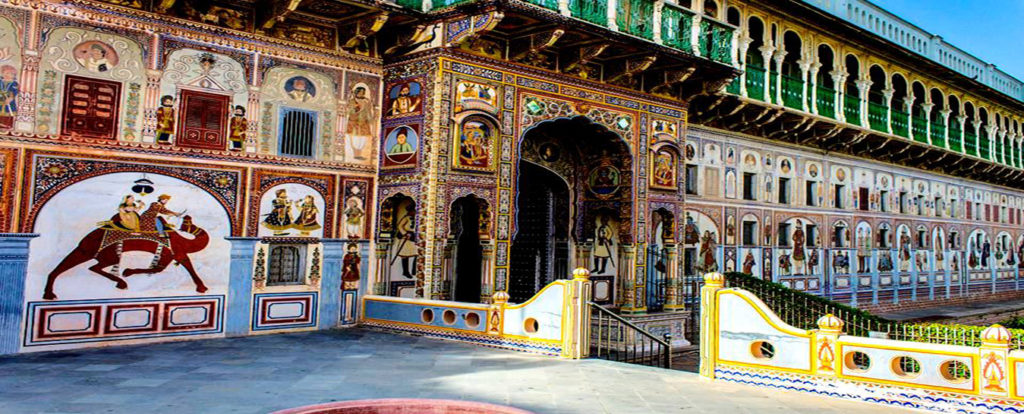
Despite moving away, they remained deeply connected to their hometowns. They invested their wealth in building grand havelis in Shekhawati. These mansions were not just homes but symbols of status, culture, and artistic excellence.
The Golden Era of Fresco Art
The most remarkable feature of Shekhawati is its fresco paintings. Between the 18th and early 20th centuries, the region experienced a golden age of art.
Artists used natural colors made from minerals and plants to create detailed paintings on walls, ceilings, and courtyards. These frescoes covered entire buildings, making Shekhawati a living art gallery.
The themes of these paintings were diverse and interesting. They included:
- Stories from Hindu mythology
- Scenes from royal life
- Daily activities of common people
- British-era influences like trains and clocks
Towns such as Mandawa and Nawalgarh became famous for their richly decorated havelis. Even today, visitors from around the world come to admire this unique art form.
Architectural Brilliance of Shekhawati
The architecture of Shekhawati reflects its glorious past. The region is filled with forts, havelis, temples, and stepwells, each showcasing fine craftsmanship.
Havelis are the most prominent structures. They are large mansions with inner courtyards, carved doors, and painted walls. Each haveli tells a story about the family that built it.
Forts were built for protection and served as administrative centers. Stepwells, locally known as “baoris,” were used to store water and are examples of smart engineering in a desert region.
What makes Shekhawati architecture special is the combination of functionality and beauty. Even practical structures were designed with artistic detail.
Impact of British Rule
The arrival of British India brought significant changes to Shekhawati. The introduction of railways shifted trade routes, reducing the importance of traditional caravan paths.
As a result, many Marwari merchants permanently settled in big cities where business opportunities were better. This led to a gradual decline in the economic activity of Shekhawati.
The grand havelis, once full of life, were left unattended. Over time, many of them began to deteriorate due to lack of maintenance.
However, British influence also appeared in fresco art, where modern elements like bicycles, trains, and European clothing were painted alongside traditional themes.
Cultural Heritage and Traditions
Despite changes over time, the cultural spirit of Shekhawati remains strong. Festivals like Teej and Gangaur are celebrated with great enthusiasm.
The people of Shekhawati wear colorful traditional clothes and speak local dialects that reflect their heritage. Food also plays an important role, with dishes like dal-baati-churma being popular.
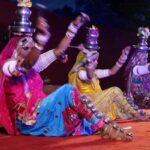
Music, dance, and storytelling are still part of everyday life. These traditions connect the present generation with their rich past.
Decline and Preservation Efforts
Over the years, many havelis and historical buildings in Shekhawati have faced neglect. The main reasons include migration, lack of funds, and environmental damage.
However, efforts are now being made to preserve this heritage. Government bodies and private organizations are working together to restore old structures and promote tourism.
Some havelis have been converted into heritage hotels, giving visitors a chance to experience royal living. Awareness about conservation is also increasing among locals.
Shekhawati in Modern Times
Today, Shekhawati is gaining recognition as an important tourist destination. Travelers, historians, and artists visit the region to explore its unique blend of history and art.
The History of Shekhawati is now being studied in schools and universities as an example of cultural and economic development. It also highlights how migration and trade can shape a region’s identity.
Tourism is helping revive the local economy, and new opportunities are emerging for the people of Shekhawati.
FAQs About History of Shekhawati
1. What is Shekhawati known for?
Shekhawati is known for its beautifully painted havelis and rich cultural heritage.
2. Who was Rao Shekha?
Rao Shekha was a Rajput ruler who founded and ruled the Shekhawati region in the 15th century.
3. Why are frescoes important in Shekhawati?
Frescoes are important because they reflect the art, culture, and daily life of the people during that time.
4. Which towns are famous in Shekhawati?
Mandawa and Nawalgarh are among the most famous towns known for their havelis.
5. What caused the decline of Shekhawati?
The decline was mainly due to changes in trade routes and migration of wealthy families.
6. Is Shekhawati a good tourist destination?
Yes, it is a great place for history lovers and art enthusiasts.