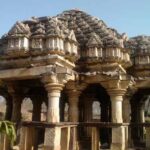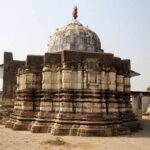

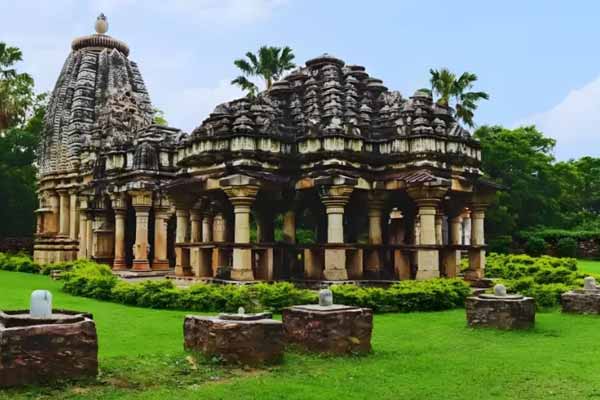

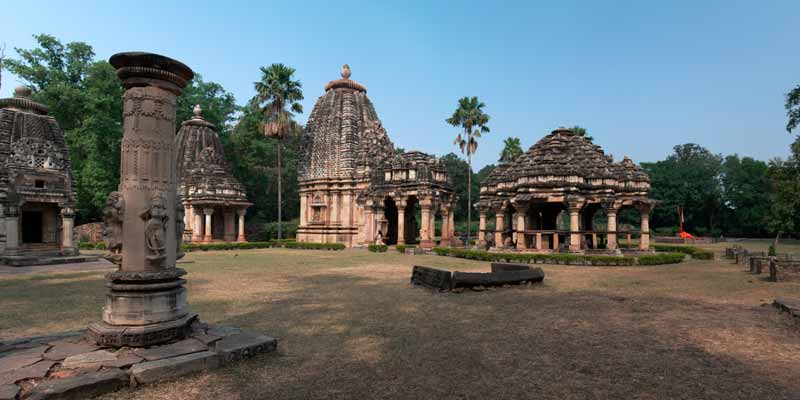
Ghateshwar Temple Baroli Located near Kota, Rajasthan, the Ghateshwar Temple is the architectural crown jewel of the 10th-century Baroli (Badoli) Temple complex. Built during the Gurjara-Pratihara dynasty, this Shiva temple is celebrated for its remarkable preservation and intricate Nagara-style craftsmanship. Its name is derived from the unique ghata (pot-shaped) Shiva Linga enshrined in the sanctum.
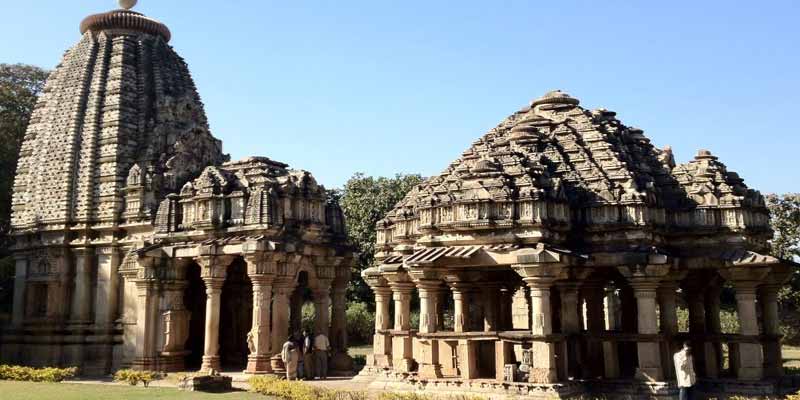
The temple’s structure consists of a pancharatha (five-fold) sanctum, a vestibule, and a magnificent mukhamandapa (front porch) supported by six exquisitely carved pillars. A standout feature is the makara-torana, an ornamental arch depicting mythical crocodiles, which serves as the grand entrance. The exterior is adorned with detailed sculptures of deities like Nataraja and Chamunda, alongside graceful surasundaris (celestial maidens).
Directly in front lies the Sringar Chauri, a pillared hall added later for ceremonial performances. Managed by the Archaeological Survey of India, the Ghateshwar Temple remains a sublime testament to early medieval Indian art, offering a serene glimpse into the spiritual and cultural heritage of the Chambal river region.
History of Ghateshwar Temple Baroli
Built during the 10th century CE, the Ghateshwar Temple in Baroli (Rajasthan) is a hallmark of the Gurjara-Pratihara dynasty. Though its exact royal builder remains a subject of debate—with some local traditions attributing it to the Huna ruler Mihirkula and others to Pratihara kings—the temple represents the peak of early medieval Nagara architecture.
Its history was brought to global attention in 1821 by British historian Colonel James Tod, who marveled at its preservation compared to the surrounding ruins. The name “Ghateshwar” stems from the unique ghata (pot-shaped) Shiva Linga found within its sanctum.
Throughout the centuries, the temple survived regional conflicts, though some nearby structures show signs of iconoclasm. A significant modern historical milestone occurred in 2020 when the famous Natesa idol (stolen from Baroli in 1998) was successfully repatriated from London to India. Today, as a protected Archaeological Survey of India (ASI) site, it stands as the most complete and majestic relic of the nine-temple Baroli complex.
Ghateshwar Temple Baroli Timings and Best Time to Visit
The Ghateshwara Mahadeo Temple Click to open side panel for more information is generally open to visitors from 6:00 AM to 6:00 PM daily. Since it is a protected monument under the Archaeological Survey of India (ASI), these timings typically align with sunrise and sunset.
The best time to visit is between October and March. During these cooler months, the Rajasthan heat is manageable, making it ideal to explore the outdoor complex and admire the intricate stone carvings.
- Early Morning: Arriving at 6:00 AM offers a serene atmosphere and the best lighting for photography of the Nagara-style shikhara.
- Monsoon Season: July to September is also beautiful, as the surrounding Chambal region turns lush green, though humidity can be high.
Would you like to know about the entry fees or nearby attractions in Rawatbhata?
Places to Visit Near Ghateshwar Temple Baroli
Here are some notable places to visit near Ghateshwar Temple, Baroli (Badoli) that enrich a cultural and scenic trip:
Baroli Temple Complex – Located next to Ghateshwar Temple, this group of eight ancient temples from the 10th–11th century is renowned for its fine stone carvings and stepwells.
Rawatbhata – A nearby town offering local markets, Chambal riverside views, and a glimpse of regional life.
Chambal River & Chambal Sanctuary – Famous for gharials, river dolphins, and migratory birds, ideal for nature and wildlife lovers.
Rana Pratap Sagar Dam – A scenic spot near Rawatbhata, known for calm waters and panoramic views.
Menal Temples – A historic Shaiva temple complex set amid forests and seasonal waterfalls, about a few hours’ drive away.
Chittorgarh Fort – A UNESCO World Heritage Site showcasing Rajput history, palaces, temples, and legendary tales of valor.
Together, these destinations offer a blend of history, spirituality, nature, and heritage around Ghateshwar Temple.
How to Reach Ghateshwar Temple Baroli
Reaching the Ghateshwar Temple in Baroli is most convenient via Kota, as the temple is located just 50 km (about a 1.5-hour drive) from the city.
By Road : The temple is situated on the Kota-Rawatbhata road. You can hire a private taxi or take a local bus from Kota’s main bus stand toward Rawatbhata. The temple complex is easily accessible and well-marked along this route.
By Rail : Kota Junction (KOTA) is the nearest major railway station. It is a well-connected hub on the Delhi-Mumbai line. From the station, you can take a taxi or an auto-rickshaw directly to the Baroli temples.
By Air : The nearest airport is Udaipur (Maharana Pratap Airport), roughly 165 km away. Alternatively, Jaipur Airport (250 km) offers more flight options. From either airport, you would need to hire a car or take a train to Kota.