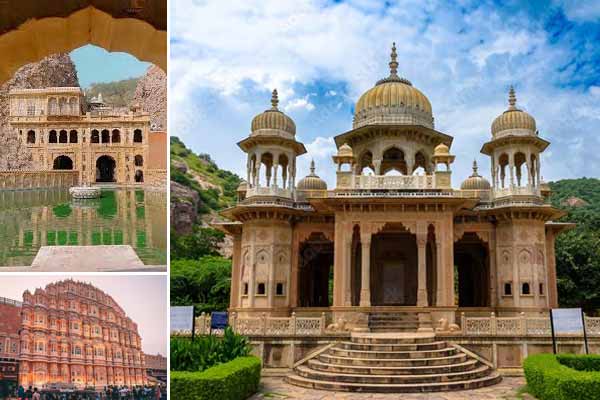

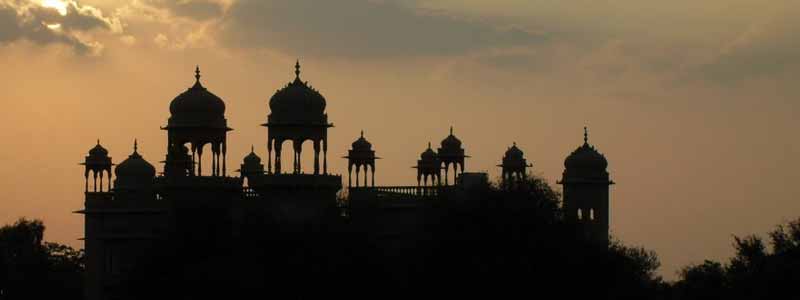

Devi Kund Sagar is located in Bikaner, in the Indian state of Rajasthan. Bikaner is very famous in Rajasthan as it was the capital for the ruler of Bikaji, and the city was also named after the Bikaji dynasty. Devi Kund Sagar is a crematorium for the royal family of the Bikaji rulers. The cenotaphs present at the Devi Kund Sagar crematoriums were built for each and every member of the royal family of the Bikaji rulers who passed away during battles or due to sickness.
Devi Kund Sagar cenotaphs are built with pure white marble and red sandstone where an inscription of the remains is engraved on top of the cenotaph. The inscriptions provide the details about the ruler or the royal family member ad how they passed away. The Devi Kund Sagar crematorium was built according to the Rajputana architecture style where a slight hint of Islamic culture could be seen.
Maharaja Anup Singh was considered as one of the great rulers of the Bikaji regime (1669-1698 AD); therefore the architecture of his cenotaph is different from others and is considered as a marvellous historical monument. His cenotaph consists of 16 pillars surround the white marble. The tales of Lord Krishna are carved onto these pillars along with other animals. A similar cenotaph was also built for another great ruler, Maharaja Ratan Singh. Even though the remains of the royal family member were cremated and the ashes are not present in the cenotaphs, these cenotaphs were built to remember all the royal family members.
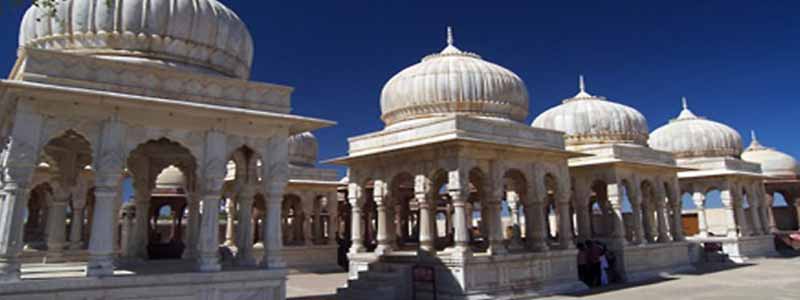
History of Devi Kund Sagar
Rao Bika of the Rathore Clan of Rajasthan founded the city of Bikaner in 1488. His cenotaph, along with those of a few other rulers after him is situated in Bikaji Ki Tekri, the first fort of Bikaner. The royal crematory at Devi Kund Sagar was later constructed sometime in the 16th century to pay homage to the members of the Bikaji dynasty.
The earliest cenotaph at Devi Kund Sagar is of Rao Kalyan Mal (1539-1571 AD), who was the fifth ruler of Bikaner. Generations of Bikaner kings, queens, princes and princesses after him each have a memorial dedicated to them at Devi Kund Sagar. When visiting, you will notice that the chhatris for men, women, and children are all designed in different architectural style.
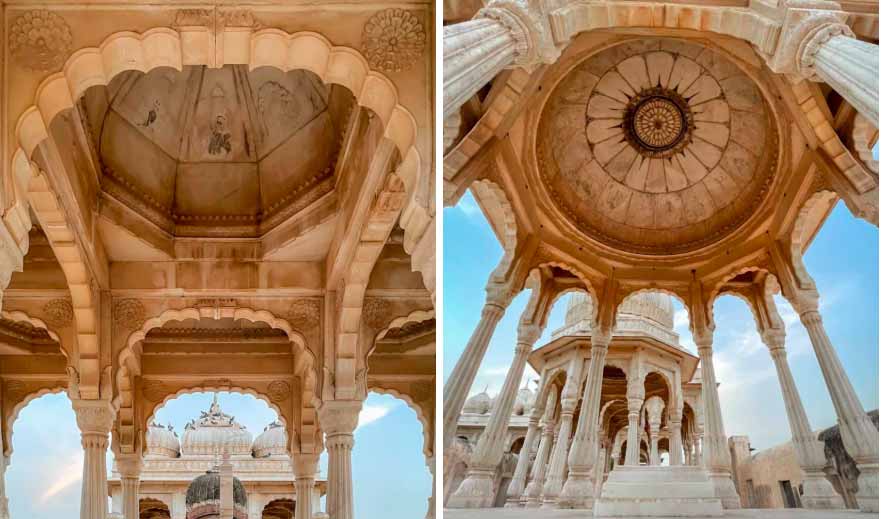
Devi Kund Sagar architecture:
Devi Kund Sagar’s cenotaphs are very famous for their architecture, and some of them include engravings, oral patterns, splendid portraits, inscriptions, and much more. The architecture is a mix of Rajput and Mughal styles, which can be seen in the cenotaphs. The earlier ones were built using red sandstone, while the other cenotaphs were built using white marbles. Not only the kings but the queens also have their own dedicated cenotaphs here. The difference between them is the chattris which have a canopy and inscriptions and has decorative design along with the footprints on their bases. At the same time, the canopy of the male members is white with stela that contains their names and portraits. The Devi Kund Sagar has yet another distinguishing feature, the cenotaphs of 22 female satis and 1 Sata (self-immolation by a man on his wife’s pyre).
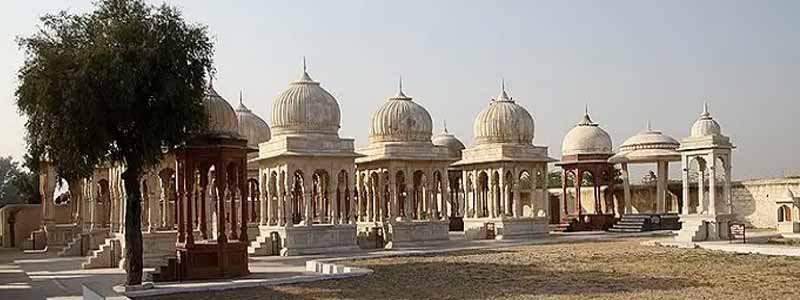
Places To Visit Near Devi Kund Sagar
Devi Kund Sagar is located close to Bikaner city, offering easy access to many of its prominent attractions. Here are some must-visit places nearby:
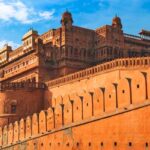
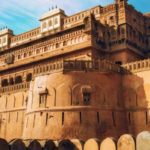
- Junagarh Fort: A magnificent 16th-century fort that has never been conquered. It boasts stunning palaces, courtyards, and a museum showcasing royal artifacts. It’s an architectural marvel and a must-see.
- National Research Centre on Camel: Located just a short drive from Devi Kund Sagar, this unique center allows you to learn about camel breeding, enjoy camel rides, and even sample camel milk products.
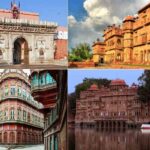
- Lalgarh Palace: A grand Indo-Saracenic architectural masterpiece built in red sandstone, now partly a heritage hotel and museum, offering a glimpse into the opulent royal lifestyle.
- Rampuria Havelis: These exquisite 19th-century mansions showcase stunning Bikaneri architecture with intricate carvings and jharokhas (balconies), providing a visual treat in the old city.
- Shiv Bari Temple: A beautiful temple dedicated to Lord Shiva, known for its serene ambiance and intricate sandstone carvings.
- Karni Mata Temple (Deshnok): A bit further afield (around 30 km), this unique “rat temple” is famous for housing thousands of sacred rats. It’s an unusual and fascinating cultural experience.
These attractions provide a rich blend of history, culture, and unique experiences, making your visit to Bikaner truly memorable.
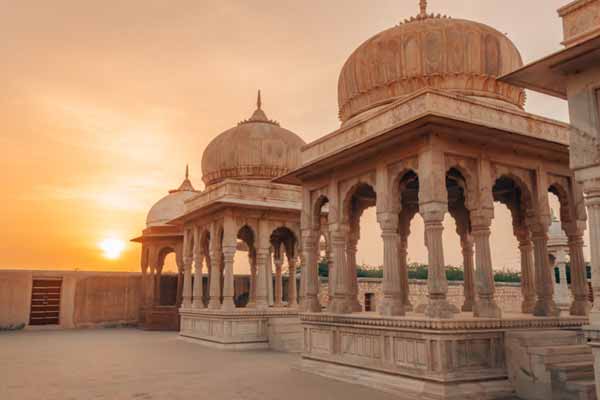
How to Reach Devi Kund Sagar?
Devi Kund Sagar is a historical site located about 8-9 km east of Bikaner city in Rajasthan, India. It serves as the royal crematorium for the Bika dynasty rulers and their families, featuring numerous beautifully carved cenotaphs (chhatris).
To reach Devi Kund Sagar from Jaipur, your primary destination will be Bikaner. Here are the common ways to travel:
- By Train: This is often the most economical and popular option. Direct trains are available from Jaipur to Bikaner Junction. The journey typically takes around 6-10 hours depending on the train.
- By Road: You can drive or take a bus from Jaipur to Bikaner. The road distance is approximately 335 km, taking 5-6 hours by car via NH11. Private taxis and Rajasthan State Road Transport Corporation (RSRTC) buses are readily available.
- By Air & Train: While there are no direct flights to Bikaner from Jaipur, you can fly to nearby airports like Jodhpur or Udaipur and then proceed by train or taxi to Bikaner. This is generally the fastest, though most expensive, option.
Once you arrive in Bikaner, Devi Kund Sagar is easily accessible by auto-rickshaw or taxi, being just a short drive from the city center. It’s recommended to visit during cooler months (October to March) and consider late afternoon for beautiful photography.