
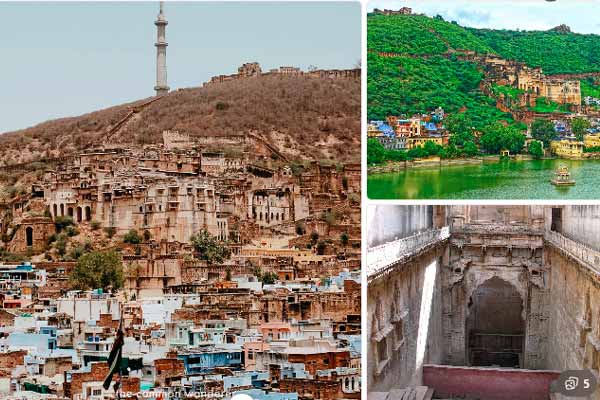

Bundi Travel Guide – Nestled in the Hadoti region of southeastern Rajasthan, Bundi is a charming historic town often called the “City of Stepwells.” Surrounded by the Aravalli hills and dotted with lakes, palaces, and temples, it offers a tranquil alternative to Rajasthan’s larger tourist cities like Jaipur or Udaipur.
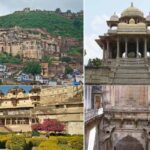
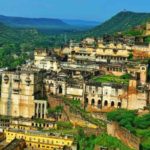
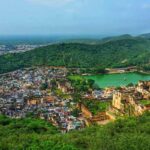
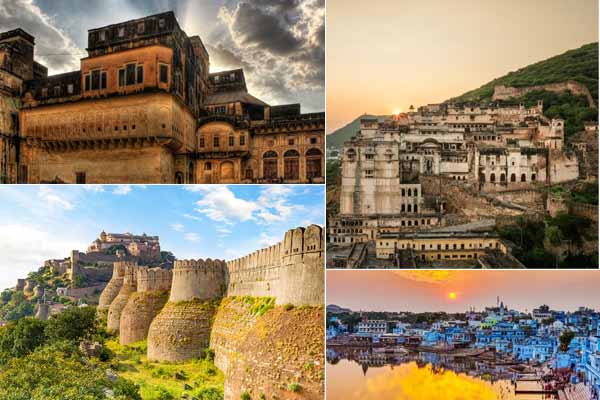
The town’s crown jewel is Taragarh Fort, a 14th-century hilltop fort offering panoramic views of the blue-washed town below. Just beneath it lies the Garh Palace, famed for its exquisite murals and the Chitrashala, which showcases delicate Bundi miniature paintings. Raniji Ki Baori, an intricately carved step-well built in 1699, exemplifies Bundi’s historic water architecture. Other highlights include Sukh Mahal, where Rudyard Kipling once stayed, and the scenic Jait Sagar and Nawal Sagar lakes.
Bundi’s old town, with its narrow lanes, colourful bazaars, and heritage havelis, reflects the soul of traditional Rajasthan. Visitors can explore local crafts, savour spicy street-food, and experience festivals like Bundi Utsav and Kajli Teej, which bring the city alive with folk music, dance, and fairs.
Best visited between October and March, Bundi offers a peaceful yet enriching glimpse into Rajasthan’s regal past—an enchanting destination for history lovers, artists, and travellers seeking authenticity away from the crowds.
History of Bundi
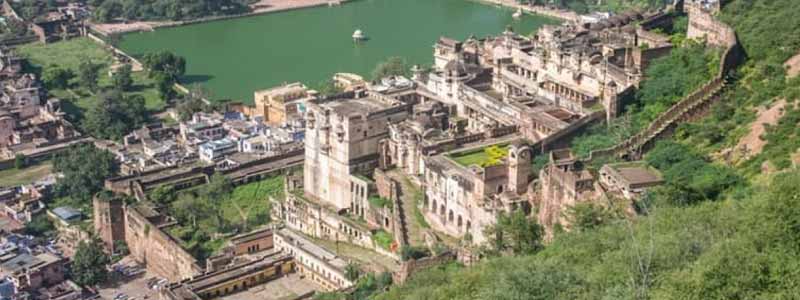
Bundi, located in southeastern Rajasthan, has a history steeped in valor, artistry, and Rajput heritage. The region was originally inhabited by various local tribes, most notably the Meenas, before the arrival of the Chauhans, a powerful Rajput clan. Around the 12th century, the Hada Chauhans, a branch of the main Chauhan dynasty of Ajmer and Delhi, captured the area and established their rule. The town’s name “Bundi” is believed to have derived from a Meena chieftain named Bunda Meena, whose territory was conquered by Rao Deva, the first Hada ruler of Bundi, in 1342 CE.
Under the Hada Rajputs, Bundi flourished as a princely state known for its forts, stepwells, palaces, and murals. The Taragarh Fort, built during Rao Deva’s reign, became a symbol of their power and resilience. In later centuries, Bundi developed its own distinctive style of miniature painting—the Bundi School—renowned for its vivid colors and detailed depictions of courtly life, mythology, and nature.
During the Mughal era, Bundi’s rulers maintained semi-autonomous relations with the empire, often serving as vassals while preserving their cultural independence. In 1624, Bundi was divided when Kota was carved out as a separate state for Rao Madhosingh.
After Indian independence in 1947, Bundi joined the Union of India, becoming part of the modern state of Rajasthan. Today, its rich legacy of art, architecture, and Rajput valor continues to captivate historians and travellers alike.
Top Tourist Attractions | Bundi Travel Guide
The picturesque town of Bundi, in southeastern Rajasthan, is a treasure trove of palaces, forts, stepwells, and lakes—each narrating tales of Rajput valor and artistic brilliance. Here are the top tourist attractions that make Bundi an unmissable destination:
1. Taragarh Fort
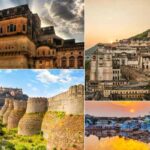
Perched atop a steep hill, Taragarh Fort (built in 1354 CE by Rao Deva) dominates Bundi’s skyline. Its massive battlements, tunnels, and viewpoints offer stunning panoramas of the blue-painted town below. The fort also houses ancient reservoirs and the famous Bhim Burj cannon.
2. Garh Palace & Chitrashala
Located beneath the fort, Garh Palace is Bundi’s architectural masterpiece. Within it lies the Chitrashala (or Ummed Mahal), renowned for its 18th-century murals depicting royal processions, festivals, and scenes from Krishna’s life—hallmarks of the Bundi School of Miniature Painting.
3. Raniji Ki Baori (Queen’s Stepwell)
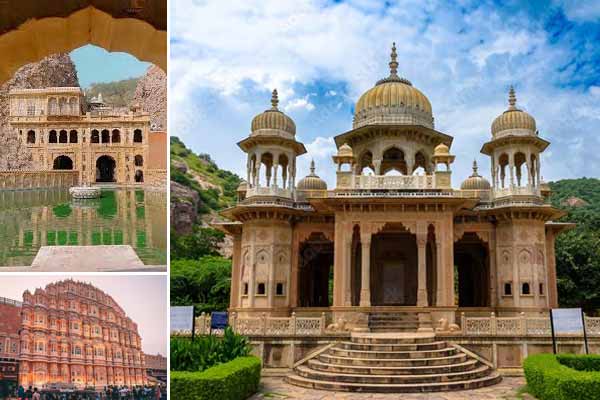
Constructed in 1699 by Rani Nathavati Ji, this spectacular stepwell is Bundi’s most famous landmark. With its multilevel pavilions, arched gates, and carved pillars, it exemplifies Rajasthan’s water-harvesting artistry.
4. Sukh Mahal
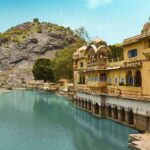
Overlooking Jait Sagar Lake, this graceful summer palace was a favorite retreat of Bundi’s rulers. It is said that Rudyard Kipling stayed here while writing Kim, inspired by the town’s mystique.
5. Nawal Sagar Lake
This square-shaped artificial lake lies at the heart of Bundi, reflecting the palace and fort on its calm surface. A partially submerged temple dedicated to Lord Varuna sits in its centre, creating a postcard-perfect view.
6. Jait Sagar Lake
Encircled by hills and lotus blooms during monsoon, this serene lake is ideal for nature lovers and photographers. The nearby Shikar Burj and Sukh Mahal add to its scenic charm.
7. Dabhai Kund (Jail Kund)
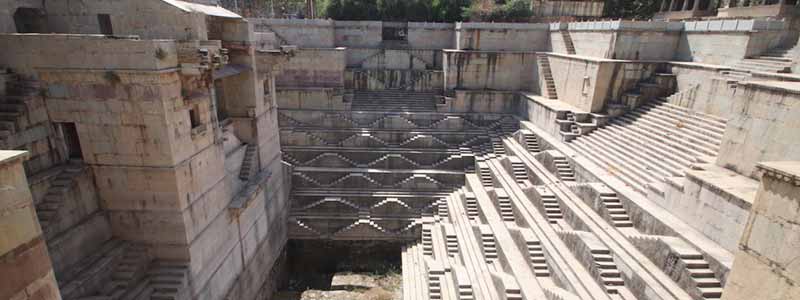
One of the largest stepwells in Bundi, Dabhai Kund showcases geometric precision and deep, terraced steps. Its architectural beauty and symmetry attract history buffs and photographers alike.
8. 84 Pillared Cenotaph (Chaurasi Khambon ki Chhatri)
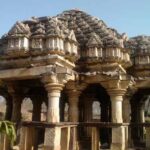
Built by Rao Anirudh Singh in the 17th century, this grand memorial structure features 84 carved pillars supporting an intricately decorated roof—an outstanding example of Rajput craftsmanship.
9. Sagar Mahal & Phool Sagar Palace
These lesser-visited palaces reflect Bundi’s regal elegance. Phool Sagar Palace, blending Rajput and European architecture, remains partly inhabited by the royal family.
10. Stepwells & Baoris Trail
Beyond Raniji Ki Baori, Bundi has over 50 historic stepwells, including Nagar Sagar Twin Baoris and Dabhai Kund, each with unique carvings and layouts—a fascinating walk through the city’s ingenious water-harvesting heritage.
Best Time to Visit Bundi
The best time to visit Bundi is between October and March, when the weather is pleasant and ideal for sightseeing. During these months, temperatures range from 15°C to 28°C, making it comfortable to explore Bundi’s forts, palaces, lakes, and stepwells. The clear skies and cool breeze enhance the charm of outdoor excursions, photography, and cultural walks through the old town.
The monsoon season (July to September) also gives Bundi a unique appeal, as the surrounding Aravalli hills turn lush green, and the lakes and baoris brim with rainwater. However, travel may be affected by occasional heavy showers.
It’s best to avoid visiting in summer (April to June), when temperatures often rise above 40°C, making daytime exploration difficult.
If you want to experience Bundi at its liveliest, plan your trip during Bundi Utsav in November, when the town comes alive with folk performances, local art, and traditional festivities. Overall, winter and post-monsoon months offer the most delightful Bundi experience.
How to Reach Bundi
Bundi is easily accessible by air, rail, and road from major cities in Rajasthan and North India. The nearest airport is in Kota (about 35 km away), though flight options are limited. The closest major airport is Jaipur International Airport, around 210 km from Bundi, well-connected to major Indian cities. From Jaipur, travellers can reach Bundi by taxi or bus in about 4–5 hours.
Bundi has its own railway station (BUDI) on the Kota–Chittorgarh line, connected to cities like Kota, Jaipur, and Delhi. Kota Junction, about 36 km away, is a major rail hub offering frequent trains.
By road, Bundi lies on National Highway 52, linking it to Jaipur, Udaipur, and Kota. Regular government and private buses, as well as taxis, are available.
Overall, rail and road travel offer the most convenient and scenic routes to Bundi.