


A Travel Guide to Sambhar Lake in Rajasthan – Located about 80 km southwest of Jaipur, the Sambhar Lake is a truly unique destination, holding the title of India’s largest inland saline wetland. Its vast, shimmering salt flats create a stunning “white desert” aesthetic that is a favorite spot for landscape photographers.
The ideal time to visit is from November to February. During these cool winter months, the lake transforms into a major birdwatching haven, hosting spectacular flocks of thousands of Pink Flamingos and other migratory species.
The top attractions include the revered 1,300-year-old Shakambhari Mata Temple, built on a rocky outcrop which offers magnificent, sweeping views across the salt pan. Visitors can explore the heritage salt production site, witness the unique salt extraction process, and take a ride on the iconic, narrow-gauge Salt Train. Additionally, the nearby historic Sambhar town features the sacred Devayani Kund, a freshwater tank often called the ‘Little Pushkar’ with roots in Hindu mythology. It is a peaceful, culturally rich side trip. The closest major transport link is the Phulera railway junction.
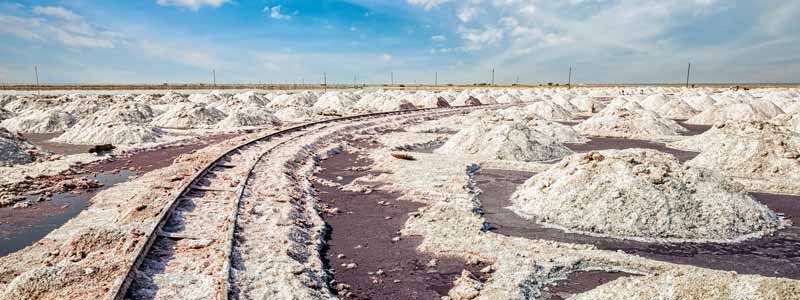
History and Legend of Sambhar Lake
Sambhar Lake is India’s largest saline lake responsible for producing nearly 90% of the salt production in India.
There are many stories and legends regarding the formation of Sambhar Lake. According to Mahabharata, the lake was owned and created by a demon king named “Brishparva”. Another legend states that Shakambari Devi formed this lake by converting dense forest into precious gems. But upon the villagers’ request, who feared feuds arising due to wealth, she converted the land of jewels into a huge Salt Lake.
Salt extraction from Sambhar Lake is not a recent development but has been going on for several hundred years. From Rajputs and Mughals to Sindhi and Marathas, the Sambhar Lake has been owned and managed by several rulers. It is now jointly governed by the State government and Sambhar Salts Limited.
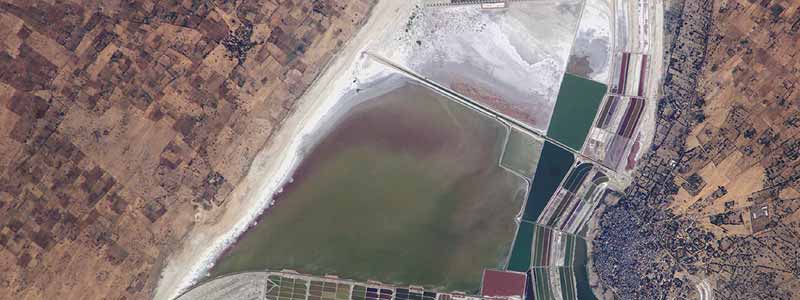
Why is the water of Sambhar Lake salty?
Sambhar lake is part of an endorheic basin i.e. a closed drainage basin that has no outflow of water. When there is no outflow of water in a water body, all the salts that are received in the water body get accumulated and the water becomes more salty. Also, Sambhar is located in a dry region of Rajasthan in which summer temperatures get very high. Unlike water, salts don’t get evaporated and remain on the surface itself. All these reasons lead to increase in salt content of the lake and thats why the water of Sambhar Lake is salty.
Tourist Attractions in Sambhar
The Sambhar Lake region, home to India’s largest inland salt lake, is a mesmerizing destination blending a stark, natural landscape with deep history.
Sambhar Salt Lake (Shakambari Jheel): The primary attraction is the vast, shimmering expanse of the white salt lake bed. It offers a surreal “white desert” experience and is a popular backdrop for photography and cinematic shoots (PK, Jodha Akbar).
Flamingo and Birdwatching: The lake is a vital Ramsar site and a winter haven for migratory birds. From November to February, thousands of spectacular Pink Flamingos, pelicans, and storks flock here, making it a birdwatcher’s paradise.
Shakambhari Mata Temple: Located on an outcrop jutting into the lake, this ancient temple is dedicated to the patron goddess of the Chauhan Rajputs. It is a major pilgrimage site and offers the best panoramic views of the entire salt lake.
Heritage Salt Works & Toy Train: Explore the colonial-era salt evaporation pans and the infrastructure built by the British. Visitors can often take a unique ride on the Heritage Toy Train that runs across the salt pans, showcasing the immense scale of the salt works.
Devayani Kund: Known as “Little Pushkar,” this sacred freshwater tank in Sambhar town is surrounded by temples and ghats, holding mythological significance from the Mahabharata era.
These sites combine to make Sambhar an unmissable, offbeat jewel of Rajasthan.
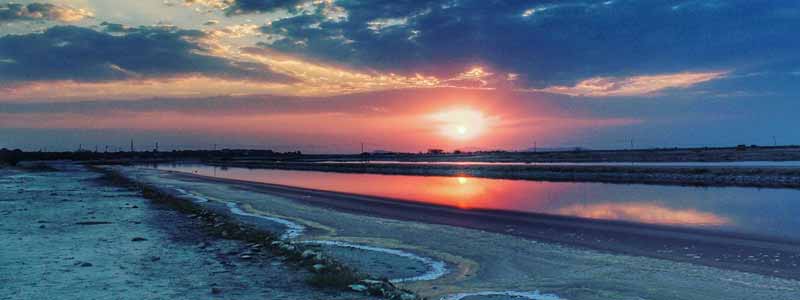
Best time to visit Sambhar Lake
October to March is the ideal season to visit Sambhar. The best time to visit Sambhar Lake would either be during the sunrise when the soft light of the rising sun casts a silvery sheen to the salt flats or during the sunset when this white desert gets sheathed in the orange glow of the golden hour.
How to reach to Sambhar Lake Town
Sambhar town is 96 km away from Jaipur city and 64 km away from Ajmer and it is located along National Highway 8 in Rajasthan. Sambhar town is accessible easily through road, rail and airways. As it is one of the tourist attractions of India, the State and Central Government always try to arrange better transport facilities to the travelers.
By Air: The Jaipur Airport, which is located in Sanganer, is 118 km away from Sambhar. The airport is well-connected with all major cities of India through important flight services. People get various modes of transport including taxis and private/public buses etc at the airport to reach to the Sambhar city.
The other airports near to Sambhar town are the following.
- Kota Airport – 206.0 km
- Jodhpur Airport – 226.3 km
By Rail: The nearest railway station to Sambhar Lake town is Sambhar Salt Lake Station, which is just 2.7 km away from the town. It is connected to Jaipur Railway station. Therefore, frequent trains are available from Jaipur to Sambhar on hourly basis. Phulera railway station, which is 6.9 km away from Sambar town, is also widely depended on by people to reach here. Other major railway stations near to Sambhar town are as follows.
- Khandel railway station – 8.7 km
- Sanodiya railway station – 13 km
- Hirnoda railway station – 13.3 km
The following are the important train services that people mainly rely on to travel to Sambhar.
Bhopal – Jodhpur Express that connects the town with Jaipur, Kota, Bhopal, Sawai Madhopur
Varanasi – Jodhpur Marudhar Express that connects the town with Lucknow, Varanasi, Jaipur, Agra etc.
Kota – Hanumangarh Express that travels from Kota Hanumangarh
By Road: There is a well-developed and maintained road network in Sambhar that is well-connected with all nearby towns. The NH-8 connects Sambhar to Madhan and it is directly connected to Jaipur. Travelers can choose the path Jaipur (NH-8) – Dudu – Naraina – Sambahr to reach the city. You also get Rajasthan roadways buses from Jaipur to Sambhar. The city has RSRTC bus stand. Other modes of road transportation are autorickshaw and Tanga (carriage).