
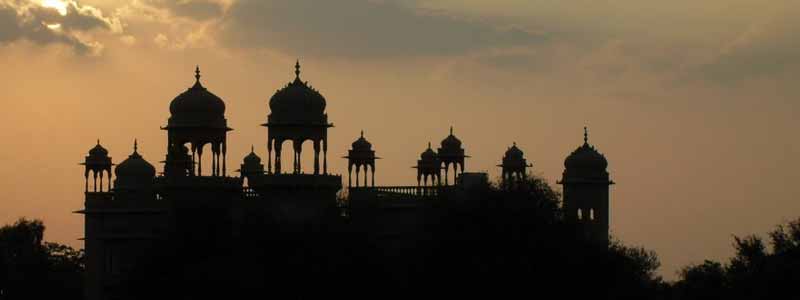


A Spiritual Journey to the Temples in Alwar, nestled in the Aravalli Hills, offers a profound spiritual journey through its ancient and architecturally significant temples. Many of these sacred sites are located near the Sariska National Park, blending devotion with nature’s tranquility.
The Pandupol Hanuman Mandir, steeped in Mahabharata legend, features a unique reclining idol of Lord Hanuman, amidst cascading waterfalls. Nearby, the ruined but revered 10th-century Neelkanth Mahadev Temple, dedicated to Lord Shiva, showcases exquisite Pratihara-style carvings reminiscent of Khajuraho.
The Bhartrihari Temple is a major pilgrimage spot, built over the Samadhi of the philosopher-king-turned-saint Baba Bhartrihari. Devotees believe the saint fulfills sincere wishes. Other notable shrines include the Naldeshwar Shrine, a cave temple to Lord Shiva, and the Tijara Jain Temple, dedicated to Chandra Prabhu.
A visit to Alwar’s temples provides a peaceful retreat, connecting pilgrims and travelers with centuries of rich history, profound spirituality, and architectural brilliance.
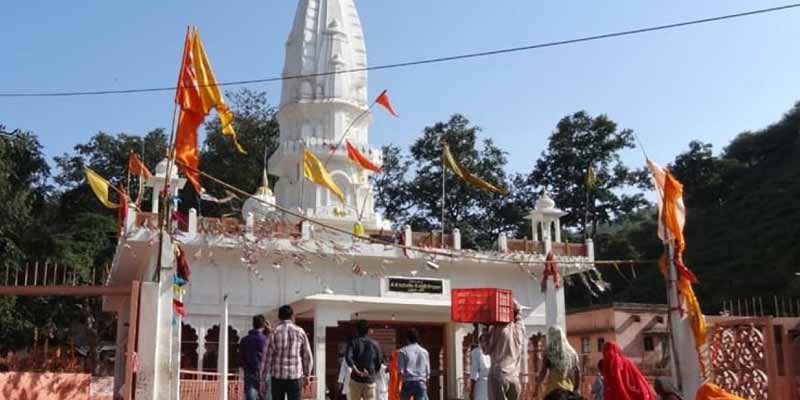
Narayani Mata Temple
A highly revered site near the Sariska National Park, the Narayani Mata Mandir in Alwar, Rajasthan, is steeped in ancient legend and cultural significance.
This 11th-century temple is uniquely associated with the Sain Samaj community, who consider the goddess their tutelary deity. The most prominent legend states that this is the site of the first sati in the region, where Narayani, after her husband was fatally bitten by a snake, was consumed by a divine fire from Lord Shiva upon her fervent prayer.
The temple’s chief attraction is an uninterrupted natural spring that flows into a marble kund (water tank), a mysterious phenomenon in the semi-arid area. Devotees consider this water as holy as the Ganga, believing a dip can wash away sins. Built in the Pratihara style of architecture, the temple, despite being ancient, remains a vibrant spiritual hub, drawing countless pilgrims to witness its unique blend of faith, history, and nature.
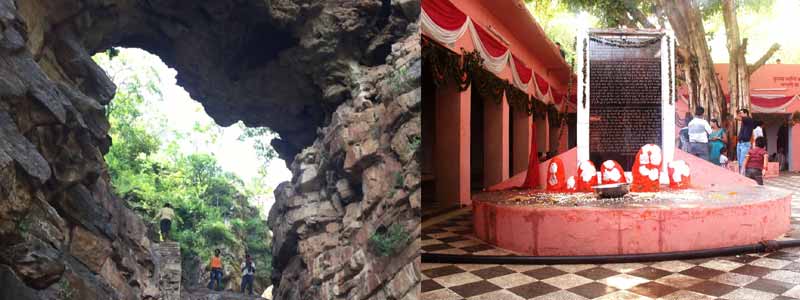
Pandupol Hanuman Mandir
The Pandupol Hanuman Mandir is a revered and ancient shrine, peacefully nestled within the lush, hilly terrain of the Sariska Tiger Reserve in Alwar, Rajasthan. It is one of the most visited pilgrimage sites in the region, dedicated to Lord Hanuman.
Legend holds immense significance here, connecting the temple to the epic Mahabharata. It is believed that the Pandavas spent a period of their exile (Agyatwaas) in this area. The name ‘Pandupol’ originates from a myth where the mighty Pandava brother, Bhima, created a passageway (Pol) through a mountain with his mace.
The temple’s unique attraction is the reclining idol (Shayan Murti) of Lord Hanuman, said to be installed by the Pandavas themselves. This posture marks the spot where Lord Hanuman, disguised as an old monkey, humbled the arrogant Bhima to teach him humility.
Adding to its charm is a picturesque 35-foot waterfall near the temple, enhancing the tranquil and spiritual atmosphere. Devotees primarily visit on Tuesdays and Saturdays, with a grand Lakhi Mela held annually, attracting thousands. Access to the temple inside the reserve is typically restricted to these two days for private vehicles.
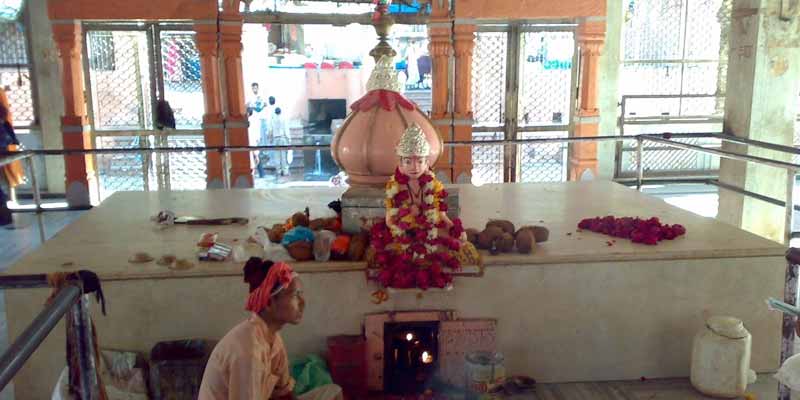
Bhartrihari Temple
Nestled in the serene Aravalli hills, about 30 km from Alwar and near the Sariska National Park, lies the revered Bhartrihari Temple. This ancient site is dedicated to Baba Bhartrihari, the legendary ruler of Ujjain who renounced his kingdom to become an ascetic under Guru Gorakhnath.
The temple is built over the Baba’s Samadhi (burial site), where he is believed to have buried himself alive after attaining enlightenment. It stands as a powerful symbol of renunciation and spiritual quest. Locals believe that the saint possessed miraculous powers and that prayers made with a pure heart are always answered.
The architecture is in traditional Rajasthani style, featuring intricate arches, spacious corridors, and beautiful mandap columns. A perpetual flame, or Dhuni, is maintained here by his followers. The temple’s most significant event is the annual Bhadrapad Mela (fair), drawing thousands of devotees to seek the Baba’s blessings amidst the lush, tranquil surroundings.
Neelkanth Mahadev Temple
The Neelkanth Mahadev Temple, situated on a secluded hill within the Sariska Tiger Reserve’s buffer zone in Alwar, is a significant spiritual and architectural marvel. Dedicated to Lord Shiva, the temple’s name, meaning “Blue-Throated,” is derived from the myth where Shiva consumed the cosmic poison to save the world.
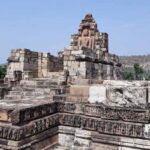
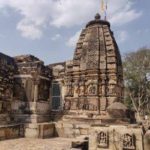
Dating back to between the 6th and 9th centuries CE, the temple was built by Maharajadhiraja Mathanadeva, a Pratihara ruler. It is a brilliant, though partly ruined, example of the Pratihara Architecture style. The remaining structure is a unique Trikuta (triple-shrine) temple featuring a central Shiva Lingam.
The temple is famed for its exquisitely intricate stone carvings, which include figures of gods, goddesses, apsaras, and mithuna (amorous couples), often drawing comparisons to the art found at Khajuraho. It is believed to have been part of a massive complex of nearly 200 temples. Despite the surrounding ruins, the Neelkanth Temple remains a vibrant pilgrimage site, especially during Maha Shivaratri, offering a profound blend of ancient history and serene natural beauty.
Naldeshwar Mahadev Temple
The Naldeshwar Mahadev Temple is a revered 18th-century shrine dedicated to Lord Shiva, nestled amidst the rocky hills and dense greenery about 24 km south of Alwar, near the Sariska National Park. It is celebrated for its unique blend of spirituality and natural beauty.
The temple is centered around a ancient Shiva Linga, believed by locals to have manifested naturally within a small cave. Legend states the temple is named after Raja Nal, a figure from the Mahabharata, who was cured of a curse after praying and bathing in the shrine’s natural spring.
Access to this serene spot is an adventure in itself, requiring a roughly 5 km trek or a climb of about 200 carved steps from the road. The surroundings feature two natural water ponds fed by water cascading from the Aravalli hills, along with small waterfalls, particularly enchanting during the monsoon season. This tranquil location offers a perfect retreat for devotees, trekkers, and nature lovers seeking peace and a connection with the divine.
Jagannath Temple
The Jagannath Temple in Alwar, dedicated to an anthropomorphic form of Lord Vishnu, stands out for its captivating medieval architecture adorned with rare floral motifs. The temple’s garbhagriha (sanctum sanctorum) uniquely houses two deities of Lord Jagannath: one fixed and one movable, accompanied by Sitaramji and Jankiji (Goddess Lakshmi).
The temple is most famous for its grand annual Rath Yatra (chariot festival), which draws devotees from across the region. Unlike the Puri tradition, the Alwar Rath Yatra is part of an annual symbolic wedding celebration between Lord Jagannath and Goddess Jankiji at Roopbas. The deities are carried on a magnificent chariot known as the Indra Vimana, once the elephant carriage of the Maharaja of Alwar. This vibrant week-long festival, steeped in local customs, transforms the old city into a hub of devotion, featuring traditional processions and cultural folk performances. The Jagannath Temple remains a cherished center of spiritual and cultural life in Alwar.
Tijara Jain Temple
The Shri Chandra Prabhu Digambar Jain Atishaya Kshetra, popularly known as the Tijara Jain Temple, is a highly revered pilgrimage site located about 55 km from Alwar, Rajasthan. It is dedicated to Bhagwan Chandraprabhu, the eighth Jain Tirthankara.
The temple’s history is marked by the miraculous discovery of its main deity. In 1956, a 15-inch white marble idol of Chandraprabhu in the Padmasana posture was unearthed during an excavation, reinforcing the belief that Tijara was once a significant Jain worship center, or Dehra. A second black stone idol was found in 1972.
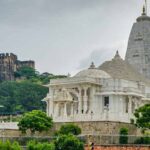
Architecturally, the temple is a splendid structure featuring a rectangular layout and a soaring sky-high pinnacle. The spacious inner hall can accommodate up to 2,000 devotees. Its interiors are beautifully adorned with intricate carvings, decorative arches, and exquisite glasswork, which depict scenes from Jain mythology. The temple is famous as an Atishaya Kshetra, a place where miracles are believed to occur, drawing thousands of devotees seeking spiritual solace and blessings.