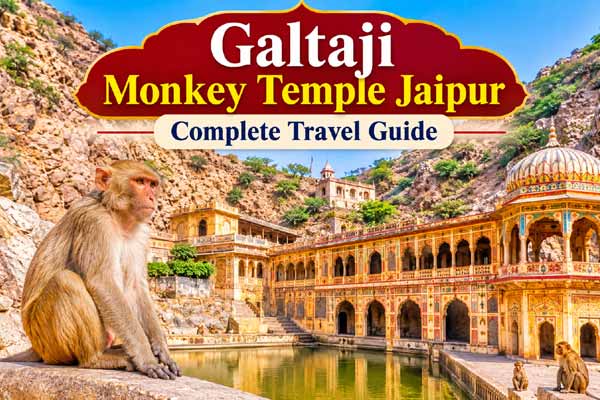
Galtaji Monkey Temple Jaipur: Complete Travel Guide, popularly known as the Monkey Temple of Jaipur, is an ancient Hindu pilgrimage site nestled in the beautiful Aravalli Hills of Rajasthan. Located approximately 10 km from Jaipur city centre, this sacred temple attracts pilgrims, tourists, photographers and nature lovers.
The temple complex is believed to have been built in the 18th century by Diwan Rao Kriparam, a courtier of Maharaja Sawai Jai Singh II. According to Hindu mythology, Saint Galav performed meditation here for many years, making this place spiritually significant.
One of the main attractions of Galtaji Monkey Temple is its seven sacred water tanks, known as kunds. Among them, Galta Kund is considered the holiest and is traditionally believed to never dry up. Natural water flows through a stone structure called Gaumukh, shaped like a cow’s mouth, into these sacred pools.
The temple features beautiful pink sandstone architecture, decorated pillars, colourful paintings, traditional pavilions and several shrines dedicated to Lord Hanuman, Lord Rama and Lord Krishna. The hilltop Surya Mandir (Sun Temple) is another popular attraction offering wonderful views of Jaipur.
As the name suggests, hundreds of monkeys live around the temple premises. Visitors can observe rhesus macaques and langurs in their natural surroundings. Avoid feeding or teasing them and keep food and personal belongings secure.
Best Time to Visit: October to March is ideal for comfortable sightseeing. Early mornings and late afternoons offer pleasant weather and beautiful photography opportunities.
Timings: Generally 5:00 AM to 9:00 PM; confirm locally before visiting. Entry is generally free.
Visitors can reach Galtaji by taxi, auto-rickshaw or private car from Jaipur. Wear comfortable footwear and modest clothing while visiting this peaceful religious destination.
Galta Ji Temple has a long religious history associated with Saint Galav, who is believed to have performed deep meditation and penance at this location. According to Hindu traditions, the sacred springs appeared as a blessing after his devotion.
The present temple complex was largely developed during the 18th century by Diwan Rao Kriparam, a courtier of Maharaja Sawai Jai Singh II. The architecture reflects traditional Rajasthani design, with beautifully decorated walls, pillars, domes, pavilions and courtyards.
Over the centuries, Galta Ji became an important pilgrimage centre, attracting devotees who visit its temples and sacred water tanks. The site is also associated with the Ramanandi Vaishnava religious tradition.
2. Religious Importance of Galta Ji Temple
Galta Ji is an important Hindu pilgrimage destination dedicated to various Hindu deities. The complex contains several shrines associated with Lord Rama, Lord Krishna, Lord Hanuman and Surya Dev.
Devotees visit the temple to offer prayers, participate in religious rituals and take holy dips in the sacred kunds. The natural water springs are considered spiritually significant, and the temple becomes especially busy during important Hindu festivals.
3. Seven Sacred Kunds of Galta Ji
One of the main attractions of Galta Ji Temple is its series of sacred water tanks, known as kunds. These tanks receive water from natural springs flowing through the surrounding hills.
The most famous is Galta Kund, which is traditionally believed to never dry up.
The kunds are important for religious bathing and traditional ceremonies. During festivals, many devotees gather here to take a holy dip and offer prayers.
4. Why Is Galta Ji Temple Called the Monkey Temple?
Galta Ji Temple is popularly known as the Monkey Temple because hundreds of monkeys live around the temple complex and nearby hills.
Visitors can commonly see rhesus macaques and langurs sitting near the temples, walking around the kunds and moving across the surrounding rocky areas.
The monkeys are one of the main attractions for tourists and wildlife photographers. However, visitors should avoid teasing them or carrying food openly because they may grab bags, sunglasses, mobile phones and other belongings.
5. Architecture of Galta Ji Temple
The architecture of Galta Ji Temple is a beautiful example of traditional Rajasthani craftsmanship. Built mainly using pink and honey-coloured sandstone, the complex resembles a royal palace more than an ordinary temple.
Its main architectural highlights include: – Beautiful sandstone gateways. – Decorative pillars and arched corridors. – Traditional domes and chhatris. – Colourful wall paintings and frescoes. – Spacious courtyards and temple pavilions. – Ancient shrines and sacred water tanks.
The combination of historical architecture and natural surroundings makes this temple a special attraction in Jaipur.
6. Sun Temple (Surya Mandir) Near Galta Ji
The Sun Temple (Surya Mandir) is a beautiful hilltop shrine located near Galtaji Temple in Jaipur, Rajasthan. Dedicated to Lord Surya, the Hindu Sun God, this temple is situated on the Aravalli Hills and offers breathtaking panoramic views of Jaipur city. Visitors can enjoy a peaceful atmosphere, scenic surroundings and beautiful sunrise and sunset views. Reaching the temple involves a short uphill walk. It is a popular spot for photography, spiritual visits and nature lovers exploring the Galtaji Temple complex.
7. Best Time to Visit Galta Ji Temple Jaipur
The best time to visit Galta Ji Temple is from October to March, when Jaipur experiences pleasant weather. – Winter (October–March): Ideal for sightseeing, photography and temple visits. – Summer (April–June): Visit early in the morning to avoid high temperatures. – Monsoon (July–September): The surrounding hills become greener, but pathways may become slippery.
For a comfortable visit, plan your trip early in the morning or during the late afternoon.
8. Galta Ji Temple Jaipur Timings
Galta Ji Temple in Jaipur generally remains open daily from 5:00 AM to 9:00 PM. Early morning is the best time to visit because the weather is pleasant, the temple atmosphere is peaceful, and visitors can enjoy the beautiful surroundings. Late afternoon is also suitable for sightseeing and photography. Visitors should allow around 1–2 hours to explore the temple complex, sacred kunds and nearby shrines. Timings may vary during festivals and special occasions, so it is advisable to confirm locally before planning your visit.
9. Galta Ji Temple Jaipur Entry Fee
Entry to the Galta Ji Temple complex is generally free for visitors. Voluntary donations may be offered at the shrines. Photography charges may apply at certain locations, so check locally before taking photographs.
10. How to Reach Galta Ji Temple Jaipur
Galta Ji Temple is situated in the eastern part of Jaipur, surrounded by the Aravalli Hills.
By Air: Jaipur International Airport is the nearest airport. Visitors can hire a taxi or private car to reach the temple. By Train: Jaipur Junction is the nearest major railway station. Taxis and auto-rickshaws are available for onward travel. By Road: Visitors can reach Galta Ji by private taxi, auto-rickshaw or local transport from different parts of Jaipur. By Private Car: Hiring a private car is a convenient option for visitors who want to combine Galta Ji with other Jaipur sightseeing attractions.
11. Places to Visit Near Galta Ji Temple
Jaipur has several famous historical monuments, temples and scenic attractions near Galta Ji Temple. Visitors can include these places in their sightseeing tour.
1. Surya Mandir (Sun Temple) – Enjoy panoramic views of Jaipur from this hilltop temple. 2. Sisodia Rani Garden – Beautiful gardens decorated with fountains and traditional paintings. 3. Moti Dungri Ganesh Temple – A famous Hindu temple dedicated to Lord Ganesha. 4. Birla Mandir – Admire beautiful white marble architecture. 5. Hawa Mahal – Visit Jaipur’s iconic Palace of Winds. 6. City Palace Jaipur – Explore royal courtyards, museums and historic architecture. 7. Albert Hall Museum – Discover Rajasthan’s art, history and cultural collections.
These attractions can be included in a Jaipur sightseeing tour.
12. Things to Do at Galta Ji Temple
Galta Ji Temple offers a combination of spiritual activities, historic architecture and natural beauty. Popular things to do include:
1. Visit the ancient Galta Ji Temple and its beautiful shrines.
2. Take a holy dip in the sacred Galta Kund.
3. Seek blessings at the Lord Hanuman Temple.
4. Visit the hilltop Sun Temple (Surya Mandir).
5. Admire the traditional Rajasthani architecture and pink sandstone structures.
6. Observe monkeys and langurs around the temple complex.
7. Enjoy panoramic views of Jaipur from the surrounding hills.
8. Capture beautiful photographs of temples, kunds and landscapes.
9. Explore the peaceful surroundings of the Aravalli Hills.
10. Attend religious rituals and prayers during special festivals.
13. Travel Tips for Visiting Galta Ji Temple
Wear comfortable walking shoes.
Dress respectfully when visiting the temples.
Keep your mobile phone and sunglasses secure.
Avoid carrying food openly near monkeys.
Do not tease or disturb the animals.
Follow temple rules and remove footwear where required.
Avoid littering around the kunds and temple premises.
Carry drinking water, especially during summer.
Respect devotees performing religious rituals.
Be careful around water tanks and steep pathways.
14. Photography at Galtaji Monkey Temple
Galtaji Monkey Temple Jaipur is a wonderful destination for photography lovers. The beautiful pink sandstone temples, ancient architecture, sacred water kunds, colourful walls and Aravalli Hills provide excellent photography opportunities. The hilltop Sun Temple offers stunning panoramic views of Jaipur, especially during sunrise and sunset. Visitors can also capture photographs of monkeys and langurs in their natural surroundings from a safe distance. The best time for photography is early morning or late afternoon when natural lighting creates beautiful pictures. Always respect religious activities and ask permission before photographing worshippers.
15. How Much Time Is Required to Visit Galtaji?
Visitors generally need around 1.5 to 2 hours to explore Galtaji Temple in Jaipur comfortably. This time is sufficient to visit the main temple complex, sacred Galta Kund, Hanuman Temple, different shrines and beautiful architectural structures. If you also plan to visit the hilltop Sun Temple (Surya Mandir), enjoy panoramic city views and take photographs, allow approximately 2.5 to 3 hours. Early morning is recommended for a peaceful visit and pleasant weather.
16. One-Day Jaipur Sightseeing Itinerary Including Galta Ji Temple
Jaipur offers a wonderful combination of historic forts, royal palaces, beautiful temples and traditional markets. A one-day sightseeing tour including Galta Ji Temple (Monkey Temple) allows visitors to explore some of the city’s most famous attractions in a single day.
Morning (7:00 AM – 10:00 AM): Galta Ji Temple and Sun Temple
Start your day early with a visit to Galta Ji Temple, situated in the Aravalli Hills. Visit the sacred water kunds, ancient shrines and beautiful pink sandstone architecture. You can also visit the nearby Sun Temple for panoramic views of Jaipur.
Late Morning (10:30 AM – 1:00 PM): Amber Fort and Jal Mahal
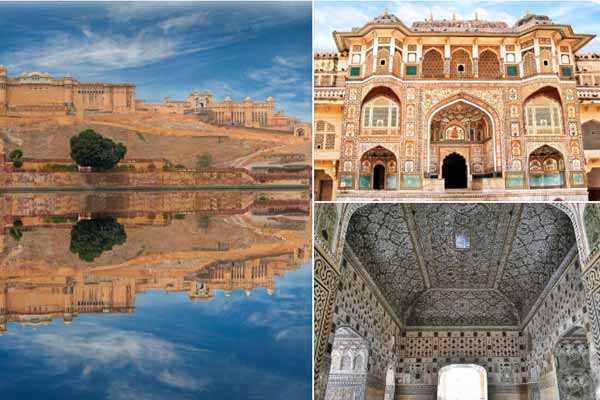
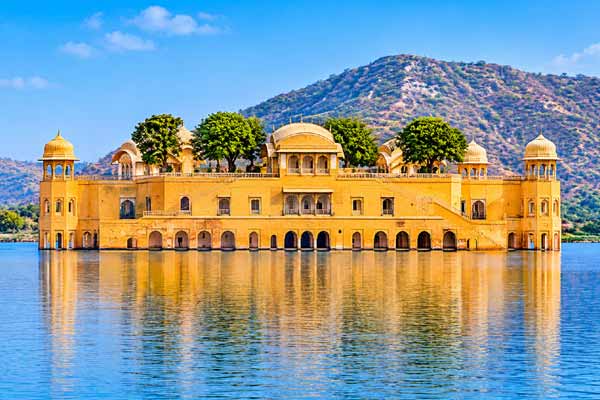
Proceed towards Amber Fort, a magnificent hilltop palace famous for its royal courtyards, artistic architecture and Sheesh Mahal. On your way back, stop at Jal Mahal to enjoy photography and views of the beautiful palace surrounded by Man Sagar Lake.
Afternoon (1:00 PM – 3:30 PM): City Palace and Jantar Mantar
Enjoy lunch at a local restaurant serving traditional Rajasthani cuisine. After lunch, visit City Palace to admire royal architecture, museums and historic courtyards. Next, explore Jantar Mantar, a UNESCO World Heritage Site featuring fascinating astronomical instruments.
Evening (3:30 PM – 7:00 PM): Hawa Mahal and Albert Hall Museum
Visit Hawa Mahal for photographs of its iconic pink sandstone façade. Continue to Albert Hall Museum to admire its impressive architecture and collections.
Night (7:00 PM onwards): Shopping and Dinner
Finish your Jaipur sightseeing with shopping at Johari Bazaar and Bapu Bazaar. Enjoy traditional Rajasthani food before returning to your hotel.
17. Why Visit Galta Ji Temple During Makar Sankranti?
Visiting Galta Ji Temple Jaipur during Makar Sankranti is a special spiritual experience. This Hindu festival, celebrated in January, marks the Sun’s transition into Capricorn (Makar Rashi). On this auspicious occasion, many devotees visit the temple to offer prayers to Lord Surya and take a holy dip in the sacred Galta Kund. The temple attracts pilgrims from Jaipur and nearby regions who come to seek blessings, perform religious rituals and celebrate the festival. The festive atmosphere, traditional customs and beautiful Aravalli surroundings make Makar Sankranti an excellent time to witness Jaipur’s religious traditions.
18. Frequently Asked Questions About Galta Ji Temple Jaipur
Q1. Where is Galtaji Monkey Temple located?
Galtaji Monkey Temple is located on Galta Road in the eastern part of Jaipur, Rajasthan, surrounded by the Aravalli Hills.
Q2. Why is Galtaji Temple famous?
It is famous for its ancient temples, sacred kunds, natural springs, beautiful architecture and large population of monkeys.
Q3. What are the opening timings of Galtaji Temple?
The generally published visiting timings are 5:00 AM to 9:00 PM. Timings may change during special occasions.
Q4. Is there an entry fee for Galtaji Temple?
Normal temple entry is generally free. Donations are voluntary, and visitors should check locally about any photography charges.
Q5. How many kunds are there at Galtaji?
The complex is traditionally associated with seven sacred kunds, with Galta Kund being the most revered.
Q6. What is the best time to visit Galtaji Temple?
October to March is the best season because of Jaipur’s pleasant winter weather. Early mornings are ideal for sightseeing.
Q7. Can visitors see monkeys at Galtaji Temple?
Yes, visitors can see many monkeys, particularly rhesus macaques and langurs, around the temple complex.
Q8. Is Galtaji Temple suitable for family visits?
Yes, families can visit the temple. However, children should be supervised carefully around monkeys and water tanks.
Q9. Is photography allowed at Galtaji Temple?
Photography is generally possible in open areas. Visitors should respect restrictions inside individual shrines and avoid disturbing devotees.
Q10. Can Galtaji Temple be covered in a Jaipur one-day tour?
Yes, Galtaji can easily be included in a one-day Jaipur sightseeing tour along with Hawa Mahal, City Palace, Jantar Mantar and other attractions.