
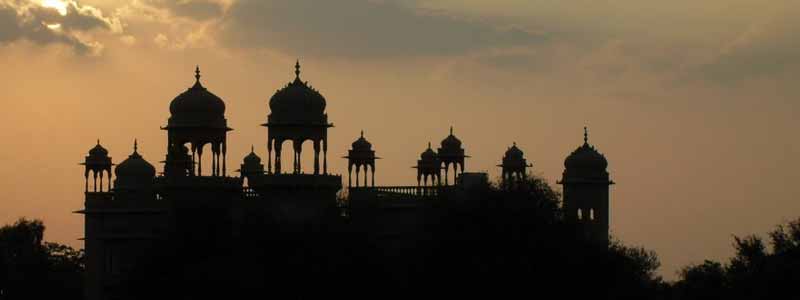
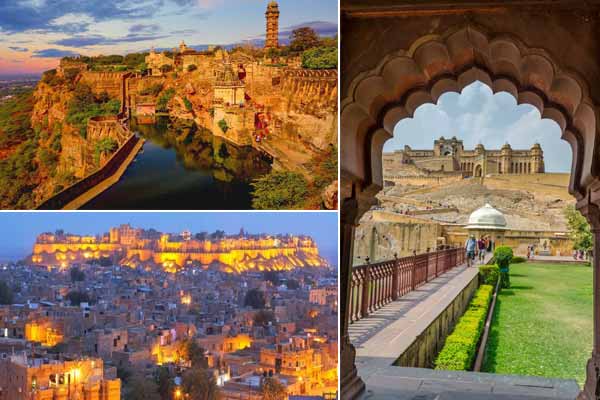

Best Heritage Sites to Visit in Rajasthan is one of India’s most famous destinations for history, royal architecture, and cultural heritage. The state is known for its magnificent forts, grand palaces, ancient temples, and beautiful havelis that reflect the rich traditions of Rajput kings and royal families. Visiting the best heritage sites in Rajasthan offers an opportunity to learn about the region’s history, architecture, and traditional lifestyle.
One of the most popular heritage attractions is Amber Fort in Jaipur, famous for its impressive courtyards, artistic gateways, and beautiful mirror work. Jaipur is also home to City Palace, Hawa Mahal, and Jantar Mantar, which showcase the city’s royal history and architectural excellence.
In Jodhpur, Mehrangarh Fort stands high above the Blue City and offers magnificent views of the surrounding houses. Umaid Bhawan Palace is another remarkable attraction known for its grand architecture. Udaipur attracts visitors with City Palace, which overlooks Lake Pichola and displays the elegance of Mewar’s royal heritage.
History lovers should also visit Chittorgarh Fort, a UNESCO World Heritage Site and an important symbol of Rajput courage. Kumbhalgarh Fort, famous for its massive defensive walls, is another remarkable historical destination. In Jaisalmer, Jaisalmer Fort stands out for its golden sandstone architecture and living heritage.
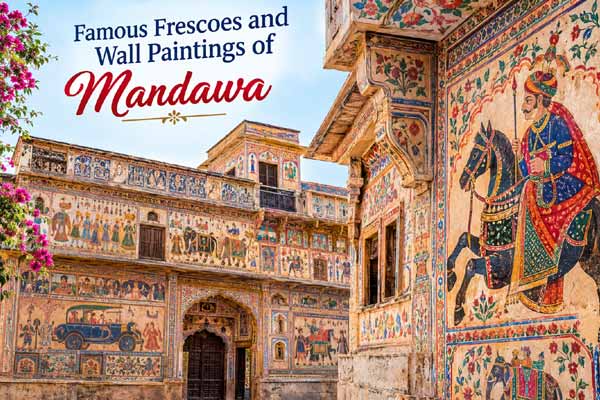
Other notable attractions include Ranthambore Fort, Bikaner Junagarh Fort, and the beautifully decorated havelis of Mandawa and Nawalgarh in the Shekhawati region.
The best time to explore Rajasthan’s heritage sites is from October to March, when the weather is generally pleasant for sightseeing. Visitors can plan a memorable journey through these historic destinations by including forts, palaces, temples, and traditional towns in their itinerary. Rajasthan’s heritage sites provide a wonderful glimpse into India’s royal past and timeless architectural beauty.
Explore the Top Heritage Sites in Rajasthan
Let’s dive into the most iconic heritage sites in Rajasthan, where history comes alive through majestic forts, royal palaces, and ancient cities:
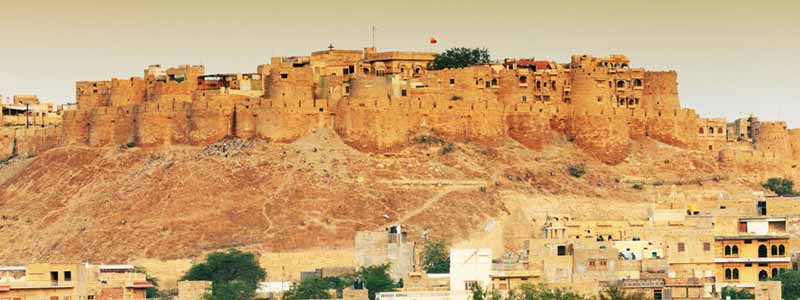
Jaisalmer Fort: The Golden Marvel of Rajasthan
Jaisalmer Fort is one of the most remarkable heritage attractions in Rajasthan, located in the heart of Jaisalmer, popularly known as the Golden City. Built from yellow sandstone, the fort glows with a golden appearance under the sunlight, blending beautifully with the surrounding Thar Desert. Unlike many other forts in India, Jaisalmer Fort is still inhabited, with families, shops, temples, guesthouses, and traditional homes located within its ancient walls. Visitors can walk through its narrow lanes, admire traditional architecture, explore local handicraft shops, and enjoy views of the golden city. The fort is an important destination for history lovers, architecture enthusiasts, and travellers interested in Rajasthan’s royal heritage.
History : Jaisalmer Fort was founded in 1156 AD by Rawal Jaisal, a Rajput ruler of the Bhati dynasty. Its strategic position along important trade routes helped Jaisalmer develop into a prosperous trading centre connecting India with regions of Central Asia and beyond. Merchants transported valuable goods through the desert, contributing to the city’s wealth and cultural development. Over the centuries, the fort witnessed battles, political changes, and periods of siege. Its massive sandstone walls, defensive gates, palaces, and Jain temples reflect the architectural skills of its builders. The fort’s historic significance and living urban character contributed to its inclusion in the UNESCO World Heritage listing of the Hill Forts of Rajasthan in 2013.
Best Time to Visit : The best time to visit Jaisalmer Fort is from October to March, when the weather is generally pleasant for sightseeing and walking through the historic lanes. Winter mornings and late afternoons are particularly suitable for exploring the fort and photographing its golden sandstone buildings. The summer months from April to June can be extremely hot, making outdoor visits uncomfortable during the afternoon. The monsoon season is generally dry compared with many other parts of India, although weather conditions can vary. Visitors planning a winter trip can also consider the Jaisalmer Desert Festival, whose dates vary each year.
How to Reach : Jaisalmer Fort is located in central Jaisalmer and is easily accessible from different parts of the city. Jaisalmer Railway Station connects the city with several major destinations, including Jodhpur and other railway hubs. Jaisalmer Airport offers limited flight connections, which can vary by season. Travellers can also reach the city by road from Jodhpur, Bikaner, Jaipur, and other Rajasthan destinations using buses, taxis, or private vehicles. From the railway station or bus stand, visitors can take an auto-rickshaw or taxi to the fort area. Since the fort has narrow lanes, walking is the best way to explore its interior.
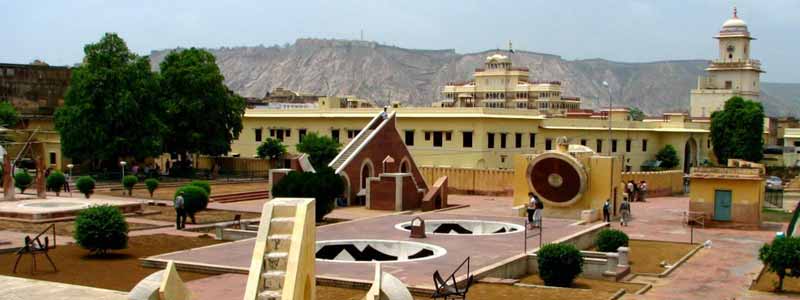
Jantar Mantar, Jaipur: A Marvel of Ancient Astronomy
Jantar Mantar in Jaipur is one of Rajasthan’s most important historical and scientific attractions. This remarkable astronomical observatory features a collection of large stone and masonry instruments designed to measure time, observe celestial bodies, and calculate astronomical positions. Located near Jaipur’s City Palace, it demonstrates how scientific knowledge was applied in India long before modern electronic equipment. The observatory attracts history enthusiasts, students, architecture lovers, and visitors curious about traditional astronomy. Its enormous geometric structures are both practical scientific instruments and striking examples of architectural ingenuity. Jantar Mantar is recognised as a UNESCO World Heritage Site and remains an essential stop on a Jaipur heritage tour.
History : Jantar Mantar was built in the early 18th century by Maharaja Sawai Jai Singh II, the founder of Jaipur and a ruler with a strong interest in astronomy and mathematics. Construction began in 1728, and the observatory formed part of his wider effort to improve astronomical calculations and calendar-making. Jai Singh II commissioned several observatories across India, including those in Delhi, Ujjain, Varanasi, and Mathura. The Jaipur observatory became the most extensive and best-preserved of these historic complexes. Its instruments were designed to measure solar time, track celestial movements, and determine the positions of stars and planets. Jantar Mantar was inscribed on the UNESCO World Heritage List in 2010 because of its outstanding contribution to the history of astronomy and scientific architecture.
Best Time to Visit : The best time to visit Jantar Mantar is from October to March, when Jaipur’s weather is generally comfortable for outdoor sightseeing. Morning visits are particularly enjoyable because temperatures are usually cooler and visitors can examine the instruments at a relaxed pace. Clear skies can also make it easier to understand the observatory’s relationship with sunlight and celestial observation. During the summer months, temperatures can rise significantly, so early visits are advisable. A guide can help explain how the instruments work and why their unusual shapes were important for astronomical measurements.
How to Reach : Jantar Mantar is situated in the old city of Jaipur, close to the City Palace and Hawa Mahal. Jaipur International Airport serves domestic and selected international routes, while Jaipur Junction connects the city with major destinations across India. Visitors arriving by train, bus, taxi, or private vehicle can travel to the old city and reach the observatory by local transport. Auto-rickshaws, app-based taxis, and local cabs are convenient options. Because Jantar Mantar is near several major attractions, visitors can combine it with a walking or short-drive heritage tour of Jaipur.
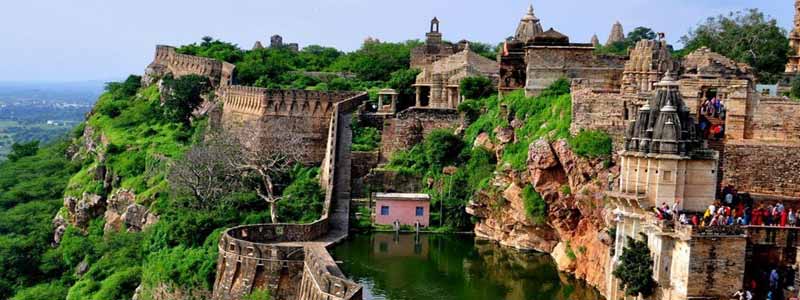
Chittorgarh Fort: A Testament to Triumph and Tragedy
Chittorgarh Fort is one of the largest and most historically significant forts in Rajasthan. Situated on a hill overlooking Chittorgarh city, this impressive heritage complex represents the courage, honour, and sacrifice associated with Rajput history. Its extensive grounds contain historic palaces, temples, reservoirs, gateways, and memorial towers. Important attractions include Vijay Stambh, Kirti Stambh, Rana Kumbha Palace, Padmini Palace, and Gaumukh Reservoir. The fort offers visitors an opportunity to understand the political history, architectural traditions, and cultural heritage of the Mewar kingdom. Its dramatic setting and remarkable monuments make it an important destination for heritage tourism in Rajasthan.
History : The history of Chittorgarh Fort stretches back many centuries, and the exact date of its earliest construction remains uncertain. It became a major stronghold of the Mewar rulers and witnessed several important battles. The fort suffered major attacks in 1303, 1535, and 1567–1568, associated respectively with Alauddin Khalji, Bahadur Shah of Gujarat, and Mughal Emperor Akbar. These conflicts became central to the historical memory and legends of Mewar. Maharana Kumbha contributed significantly to the fort’s architectural development, including the construction of Vijay Stambh, the Tower of Victory, in the 15th century. The fort’s monuments preserve stories of royal life, military resistance, religious traditions, and sacrifice. It is part of the UNESCO-listed Hill Forts of Rajasthan.
Best Time to Visit : The best time to visit Chittorgarh Fort is from October to March, when temperatures are generally more comfortable for exploring its large area. Early mornings and late afternoons are suitable for visiting the monuments, taking photographs, and enjoying the views from the fort walls. Since the complex covers an extensive area, visitors should allow several hours for sightseeing and wear comfortable walking shoes. Summer afternoons can be very hot, so it is advisable to carry drinking water and avoid prolonged exposure to direct sunlight.
How to Reach : Chittorgarh Fort is located near Chittorgarh city in southern Rajasthan. Chittorgarh Railway Station connects the city with destinations such as Jaipur, Udaipur, Ajmer, Kota, and Delhi. Regular buses and taxis are available from nearby cities. The nearest major airport is Maharana Pratap Airport near Udaipur, approximately 90 kilometres away. From Chittorgarh city, visitors can hire a taxi or use local transport to reach the fort entrance. A private vehicle is convenient for visiting the various monuments spread throughout the complex.
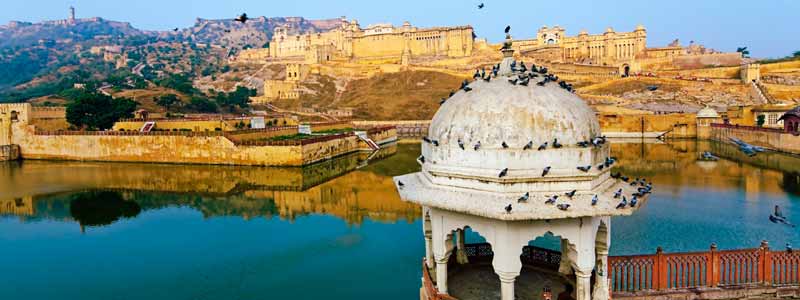
Amer Fort: Where Cultures Converge
Amer Fort, also known as Amber Fort, is a magnificent historical monument situated on a hill approximately 11 kilometres from Jaipur. Built with pale yellow and pink sandstone alongside white marble, the fort is admired for its grand courtyards, ornate gateways, decorative halls, and intricate architectural details. Its design combines Rajput traditions with Mughal influences, creating a distinctive royal appearance. Major attractions within the complex include Diwan-e-Aam, Sheesh Mahal, Jaleb Chowk, and the palace courtyards. Maota Lake, located below the fort, adds to the beauty of its surroundings. Amer Fort is a UNESCO World Heritage Site and one of the most popular heritage attractions in Jaipur.
History : Amer Fort developed as the principal residence of the Kachwaha Rajput rulers before the capital was shifted to Jaipur. Maharaja Man Singh I began the construction of the present palace complex in 1592, and later rulers expanded and modified it. The fort served as a royal residence and a centre of administration, reflecting the political influence and artistic interests of the ruling family. Its architecture reveals the interaction of Rajput and Mughal styles through decorative arches, painted surfaces, marble work, and elaborate mirror designs. The Sheesh Mahal is particularly admired for its reflective decoration and detailed craftsmanship. Today, Amer Fort preserves the history of the former kingdom of Amber and forms part of the UNESCO-listed Hill Forts of Rajasthan.
Best Time to Visit : The best time to visit Amer Fort is from October to March, when the weather in Jaipur is generally pleasant for walking around the palace and its courtyards. Morning visits are recommended to avoid the midday heat and allow sufficient time to appreciate the architecture. The monsoon season can also bring attractive views of the surrounding hills, although rain may affect outdoor sightseeing. During summer, visitors should plan an early start, carry water, and wear comfortable footwear. Allow around two to three hours to see the main sections of the fort at a relaxed pace.
How to Reach : Amer Fort is located about 11 kilometres from central Jaipur and is accessible by taxi, auto-rickshaw, private car, and local bus. Jaipur International Airport is the nearest major airport, while Jaipur Junction is the principal railway station. Travellers arriving by train or plane can hire a taxi to reach the fort. Local buses also operate between parts of Jaipur and the Amer area. Visitors staying in the old city can combine Amer Fort with nearby attractions such as Jaigarh Fort and Jal Mahal, depending on the available time.
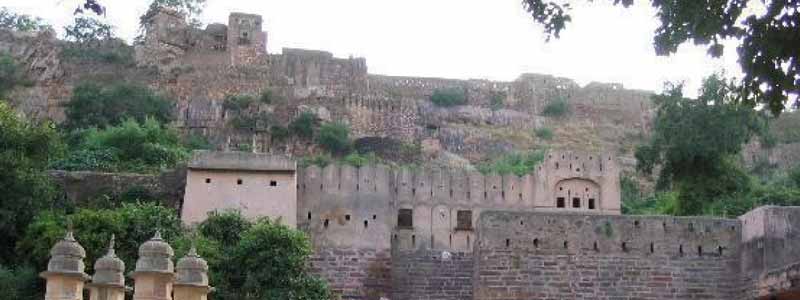
Ranthambore Fort: A Citadel of Rajasthani Heritage
Ranthambore Fort is a remarkable historical landmark located within Ranthambore National Park near Sawai Madhopur. Surrounded by forested hills and rugged landscapes, the fort offers a fascinating combination of history, architecture, and natural scenery. Its stone walls, massive gateways, temples, ancient reservoirs, and ruined structures reflect its importance as a defensive stronghold. The Trinetra Ganesh Temple is one of its best-known attractions and draws devotees throughout the year. Visitors can walk through the historic complex, admire its old architectural features, and enjoy panoramic views of the surrounding forest. The fort is part of the UNESCO-listed Hill Forts of Rajasthan and is an important heritage destination for travellers visiting the Ranthambore region.
History : Ranthambore Fort is associated with the Chauhan rulers and is believed to have been established around the 10th century. Its elevated position made it strategically valuable for controlling the surrounding region and defending against invading armies. The fort witnessed repeated military conflicts and became especially prominent during the reign of Rao Hamir Dev, who resisted the forces of Alauddin Khalji. The conflict culminating in 1301 became one of the best-known episodes in the fort’s history. Over the following centuries, control of the fort changed between different regional and imperial powers. Its surviving temples, gateways, water tanks, and defensive walls reveal the importance of the site as both a military stronghold and a centre of religious life.
Best Time to Visit : The best time to visit Ranthambore Fort is generally from October to March, when the weather is more comfortable for walking and sightseeing. Winter mornings offer pleasant conditions for exploring the fort and enjoying views of the surrounding landscape. The monsoon season brings greenery to the hills, although rain can make paths slippery. Summer visits are possible, but the heat can be intense, particularly around midday. Visitors should check local access arrangements before travelling because entry to the fort involves routes within the national park area, where access conditions may vary.
How to Reach : Ranthambore Fort is located near Sawai Madhopur, which is connected by rail with Jaipur, Delhi, and other major cities. Sawai Madhopur Railway Station is the most convenient railhead for most visitors. Jaipur International Airport is a major airport option for travellers arriving by air, followed by a road journey to Sawai Madhopur. From the town, taxis and other local transport can take visitors towards the Ranthambore area. Since the fort lies within the national park landscape, visitors should confirm the current entry route, timings, and local requirements before setting out.
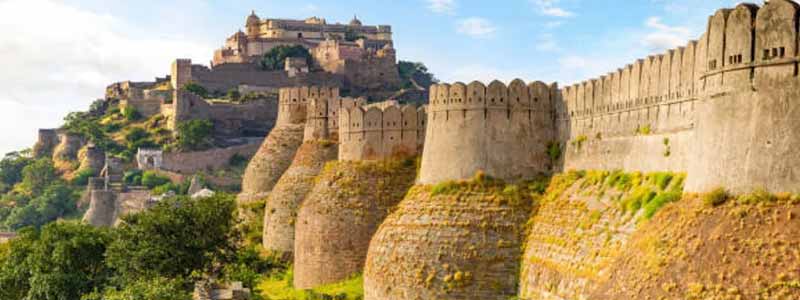
Kumbhalgarh Fort: A Monument of Majestic Grandeur
Kumbhalgarh Fort is one of Rajasthan’s most impressive historic fortifications, situated in the Aravalli Hills in Rajsamand district. Known for its extensive defensive walls, commanding hilltop position, and magnificent palace structures, the fort offers an outstanding view of the surrounding countryside. Its large enclosure contains numerous temples, gateways, ruined buildings, and historic water structures. Badal Mahal, also known as the Palace of Clouds, is among its most notable attractions. Kumbhalgarh is celebrated for its military architecture and its association with the history of Mewar. It is part of the UNESCO World Heritage-listed Hill Forts of Rajasthan and is an excellent destination for travellers interested in historic architecture, scenic landscapes, and Rajput heritage.
History : Kumbhalgarh Fort was built during the 15th century under Rana Kumbha, one of the most influential rulers of Mewar. Its location among rugged hills provided natural protection, making it a strategic refuge during periods of conflict. The fort is also traditionally associated with the birth of Maharana Pratap, the celebrated ruler of Mewar. Its extensive fortifications were designed to protect the settlement and its inhabitants, while its temples and palace buildings supported religious and royal life. Although the fort remained difficult to capture, it experienced military conflict and was eventually modified and renovated by later rulers. Its walls, often described as extending for approximately 36 kilometres, are among the most remarkable examples of historic defensive architecture in India.
Best Time to Visit : The best time to visit Kumbhalgarh Fort is from October to March, when temperatures are generally suitable for exploring its extensive grounds. Winter is particularly pleasant for walking along the fort’s pathways, visiting temples, and enjoying views of the Aravalli landscape. The monsoon season offers greener surroundings and beautiful scenery, although rain can make some paths slippery. Summer temperatures can be high, so early morning visits are advisable. Visitors should wear sturdy walking shoes because the complex includes uneven stone paths, slopes, and steps.
How to Reach : Kumbhalgarh Fort is located in Rajsamand district, approximately 85–90 kilometres from Udaipur, depending on the route. Udaipur is the most convenient major city for reaching the fort, with an airport and railway connections. From Udaipur, travellers can hire a taxi or arrange a private vehicle for the drive through the Aravalli region. Bus connections may also be available to nearby towns, but a taxi is generally more convenient for reaching the fort entrance. Visitors travelling from Jodhpur or other Rajasthan destinations can plan a road journey as part of a wider heritage tour.
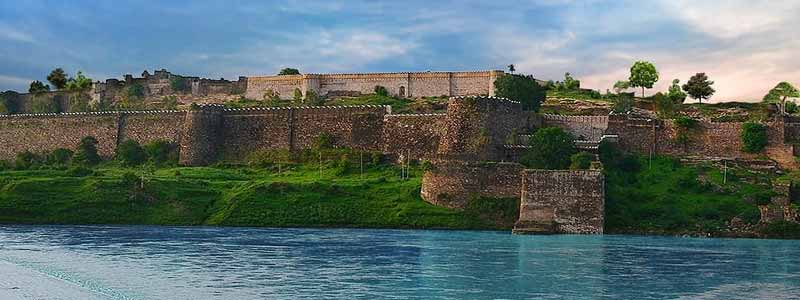
Gagron Fort, Jhalawar: A Citadel of Rajput Resilience
Gagron Fort is a distinctive historical monument located near Jhalawar in southeastern Rajasthan. Unlike many forts built primarily on hilltops, Gagron is a famous example of a hill-and-water fort, surrounded by the waters of the Ahu and Kali Sindh rivers on three sides, with hills and natural terrain providing additional protection. Its location creates a striking landscape, especially during the monsoon season. The fort’s historic gateways, defensive walls, and surviving structures reflect its military importance and architectural character. Gagron Fort is part of the UNESCO World Heritage-listed Hill Forts of Rajasthan. Nearby religious and cultural sites, including the mausoleum of Sufi saint Mitheshah, add to the heritage significance of the area.
History : Gagron Fort has a long history associated with regional Rajput rulers, particularly the Khichi Chauhans. Its natural defences made it an important strategic stronghold in the region. The fort witnessed several conflicts, including the defeat of its ruler Achaldas Khichi by the forces of Malwa ruler Hoshang Shah in the 15th century. Historical accounts and local traditions associate the site with stories of warfare, sacrifice, and changing regional powers. Over time, the fort came under different rulers, reflecting the political struggles of the region. Its distinctive position between rivers and hills makes it an important example of how natural geography was used to strengthen medieval fortifications. The fort’s heritage value was recognised through its inclusion in the UNESCO listing of the Hill Forts of Rajasthan in 2013.
Best Time to Visit : The best time to visit Gagron Fort is from October to March, when the weather is generally comfortable for exploring the historic site. The monsoon season, from July to September, can also be attractive because the rivers and surrounding landscape become greener and more scenic. However, visitors should take extra care near riverbanks during periods of heavy rainfall and check local conditions before travelling. Winter mornings and late afternoons are suitable for photography and sightseeing. The fort’s river setting makes it particularly appealing to visitors interested in heritage architecture and natural landscapes.
How to Reach : Gagron Fort is located near Jhalawar in southeastern Rajasthan. Kota is a useful railway gateway for reaching the region, and road connections link Jhalawar with Kota and other towns in Rajasthan. The nearest convenient airport options include Indore and Jaipur, although both require a substantial road journey. From Jhalawar town, visitors can hire a taxi or local vehicle to reach the fort. Travellers planning a visit should check local transport and access conditions in advance, especially during the monsoon season. The fort can be combined with other attractions in the Jhalawar region, including historic temples and the town’s heritage sites.