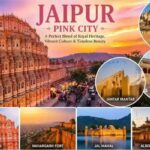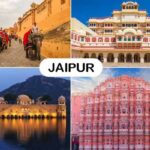

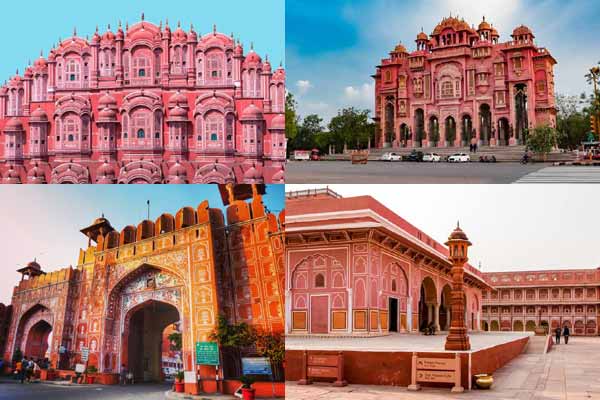

Why Jaipur is famous as the Pink City of India?, the capital of Rajasthan, is widely known as the Pink City of India because of the distinctive pink-colored buildings found throughout its old walled city. The story behind this name dates back to the 19th century and reflects Jaipur’s royal traditions and warm hospitality.
In 1876, the Prince of Wales, later known as King Edward VII, was scheduled to visit Jaipur. To welcome the royal guest, the then ruler Maharaja Sawai Ram Singh II ordered that the entire city be painted in a terracotta pink color. In Indian culture, pink symbolizes hospitality and friendliness, making it the perfect choice to greet visitors.
All buildings in the old city, including homes, shops, markets, and palaces, were painted pink. The uniform color created a stunning visual identity that impressed visitors and travelers. Over time, this color became an important part of Jaipur’s character and heritage.
Today, the pink shade is still maintained in the historic areas by local regulations. Famous landmarks like Hawa Mahal and City Palace beautifully reflect this tradition. Because of its unique architecture and historic charm, Jaipur proudly continues to be known around the world as the Pink City of India.
Why Jaipur is known as Pink City?
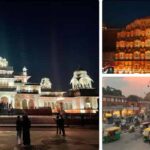
You’ll notice that most buildings in Jaipur have “pink” terracotta-colored walls as soon as you arrive. The hue is symbolic of the history and culture of the city. Going back in time, in 1876, during his tour of India, Prince Albert visited Jaipur while the Maharaja Sawai Ram Singh was in charge. Maharaja devised an extraordinary scheme in an effort to impress the Prince. A sizable performance hall was built by the Maharaja and was given the name Prince Albert Hall Museum. Then he made the decision to repaint the entire city in terracotta pink in order to improve its appearance. In every weather, the colour was resilient and since then Jaipur is also known as ‘The Pink city’ of India.
he hue is a symbol of hospitality. The Maharaja Sawai Ram Singh’s queen adored the hue and requested that the Maharaja make it a law that all homes in Jaipur must be painted pink and that the use of any other colour be forbidden. The law was passed in 1877 and is still in force today. The distinct vibes and flavours of Pink City Jaipur perfectly complement one another and provide a wholly unique exposure. The Pink City’s most memorable vacation is to Jaipur because of all the forts, museums, restaurants, monuments, shopping, and other attractions.
The best months to visit the pink city are from October to March. The visitors can explore the area without feeling the intense heat of the sun during these months due to the good weather.
History of Jaipur
In this context, there are several theories. So far, the most popular one has its roots in colonial rule. In the year 1876, Prince Albert was scheduled to travel to India. In his amazing spirit of hospitality, Maharaja Sawai Ram Singh II, the king of Jaipur at the time, had the entire city painted pink terracotta in honor of the royal visitor. Pink was once thought to be the color of hospitality. Since then, all structures and residences have been mandated to be painted pink. In some areas, the law is still being followed. According to historical traditions, the city was originally painted white before tinted pink.
When you arrive in Jaipur, you will see that most of the buildings have walls painted in a “pink” terracotta tint. The color is reminiscent of the city’s history and culture. Going back in time, when Maharaja Sawai Ram Singh was in power and when Prince Albert visited Jaipur in 1876 as part of his India trip. The Maharaja wanted to impress the Prince, so he devised a bold tactic.
The Maharaja built a big music hall, which he called after the Prince Albert Hall Museum. Then he wanted to repaint the entire city to make it more attractive, and he chose terracotta pink to do it. In all weather situations, the color remained vibrant.
The Pink Architecture of the Old City
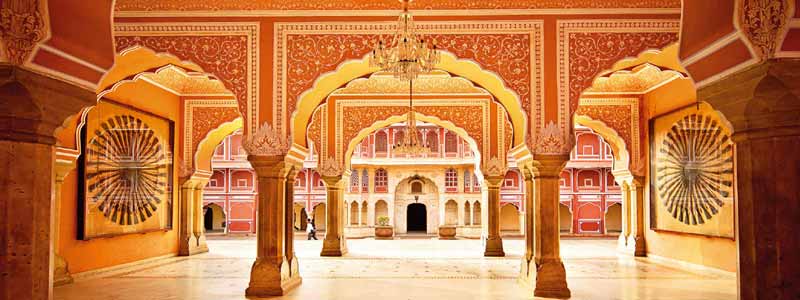
The most famous pink structures are located in the walled city of Jaipur, which is surrounded by historic gates and fortified walls.
The architecture of the old city combines Rajput, Mughal, and Hindu architectural styles. Decorative balconies, arched windows, carved doors, and latticed screens give the buildings a unique elegance.
Some of the most iconic pink monuments include:
Hawa Mahal
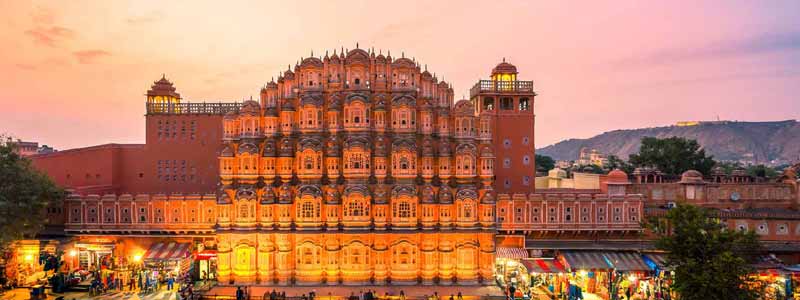
One of the most recognizable buildings in India is Hawa Mahal, also known as the Palace of Winds.
Built in 1799, this five-storey palace features 953 small windows called “jharokhas.” The pink sandstone façade resembles a honeycomb structure and allowed royal women to observe street festivals without being seen.
Hawa Mahal perfectly represents Jaipur’s pink architecture and has become a global symbol of the city.
City Palace
Another stunning attraction is the City Palace Jaipur, located in the heart of the old city.
This royal complex blends pink and white marble architecture, with beautiful courtyards, museums, gates, and gardens. Parts of the palace are still used by the royal family of Jaipur today.
Jantar Mantar
Close to the City Palace lies the world-famous Jantar Mantar Jaipur, an astronomical observatory built by Maharaja Sawai Jai Singh II.
It features massive instruments used to measure time, track celestial bodies, and observe astronomical events. Today it is recognized as a UNESCO World Heritage Site.
The Vibrant Markets of the Pink City
Jaipur is also famous for its lively bazaars, which are filled with colors, crafts, and traditional products.
Some of the most popular markets include:
- Johari Bazaar – famous for precious gemstones and jewelry
- Bapu Bazaar – known for textiles, handicrafts, and leather products
- Tripolia Bazaar – popular for traditional bangles and brass items
Walking through these markets allows visitors to experience the lively atmosphere of the Pink City while surrounded by historic pink buildings.
Festivals and Culture in Jaipur
Jaipur’s cultural life is vibrant and colorful. Throughout the year, the city hosts several festivals that celebrate Rajasthan’s traditions.
Popular celebrations include:
- Teej Festival
- Gangaur Festival
- Jaipur Literature Festival
During these festivals, the pink streets of the old city come alive with music, processions, decorated elephants, folk dancers, and traditional performances.
These events give visitors a chance to experience Jaipur’s rich cultural heritage.
How to reach Jaipur
Reaching Jaipur is easy as the city is well connected by air, rail, and road to major destinations across India. The city’s airport, Jaipur International Airport, is about 13 km from the city center and offers regular domestic and international flights from cities like Delhi, Mumbai, and Dubai.
Travelers can also arrive by train at Jaipur Junction Railway Station, one of the busiest railway stations in North India with frequent trains from Delhi, Agra, Jodhpur, and Udaipur.
For road travelers, Jaipur is connected through excellent highways such as National Highway 48, making it an easy drive from Delhi in about 5–6 hours by car or bus.