
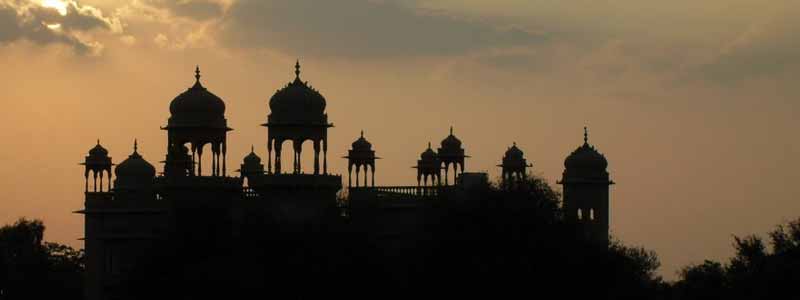

Chand Baori Stepwell (Abhaneri) Located in the village of Abhaneri, Rajasthan, Chand Baori is one of the oldest, deepest, and most visually spectacular stepwells in the world. Built in the 9th century by King Chanda of the Nikumbha dynasty, it was designed to serve a dual purpose: providing a reliable water source in the arid desert climate and offering a cool retreat for the community during scorching summers.
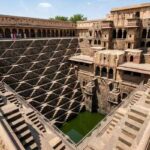
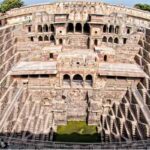
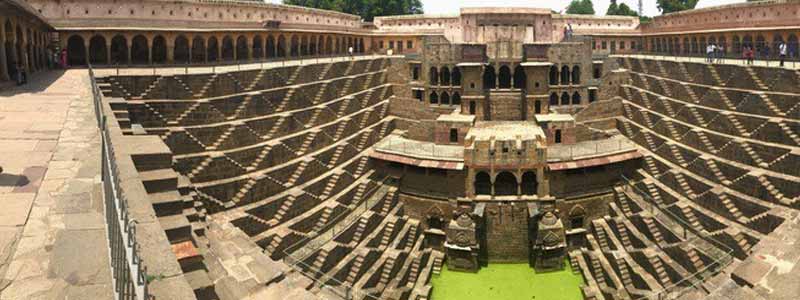
The structure is an architectural marvel of mathematical precision. It descends approximately 30 meters (100 feet) into the ground across 13 levels. What makes it iconic are the 3,500 narrow steps arranged in a perfect symmetrical pattern. This “upside-down pyramid” design creates a mesmerizing play of light and shadow that has made it a favorite for photographers and filmmakers alike.
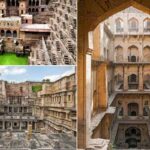
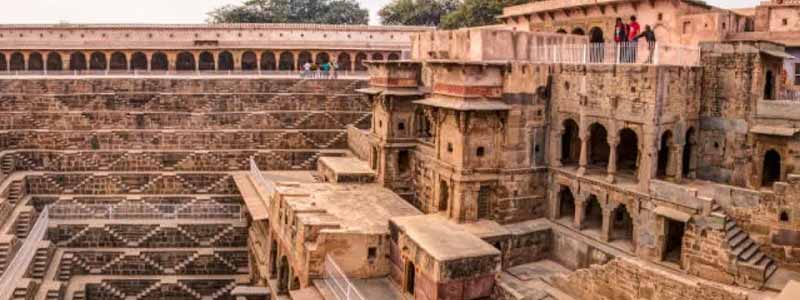
Adjoining the steps is a multi-story pavilion featuring exquisite carvings of Hindu deities, including Ganesha and Durga. Opposite the well stands the Harshat Mata Temple, which dates back to the same era. Despite being over a thousand years old, the geometric harmony of Chand Baori remains intact, standing as a testament to the advanced engineering and artistic brilliance of ancient India.
History of Abhaneri Step Well (Chand Baori)
The Abhaneri Step Well, also known as Chand Baori, was built in the 9th century by King Chanda of the Nikumbha Dynasty. Located in the village of Abhaneri (originally called Abha Nagari, meaning “city of brightness”), the stepwell reflects the ingenuity of ancient Rajasthani architecture in addressing water scarcity.
During that era, Rajasthan’s desert climate made water conservation a necessity. Chand Baori was constructed not only to store rainwater but also to provide a cool retreat during scorching summers. Its unique design allowed villagers to descend through 3,500 narrow steps across 13 stories to fetch water, even when the water level was low.
The stepwell also played a cultural role, as it was built near the Harshat Mata Temple, symbolizing the connection between water and fertility in Hindu tradition. Over centuries, it became a center of community life, where locals gathered for festivals, rituals, and daily activities.
Today, Chand Baori stands as one of the oldest and most iconic stepwells in India, admired for its historical significance and architectural brilliance.
Architecture & Design of Chand Baori
The Chand Baori stepwell is a masterpiece of symmetry and precision, showcasing the brilliance of ancient Indian engineering. With a depth of about 20 meters (65 feet), it is considered one of the deepest stepwells in the world.
The structure features 3,500 narrow steps arranged in a perfect geometric pattern across 13 levels, forming a mesmerizing crisscross design. The steps are so precisely aligned that they create a stunning visual effect, making Chand Baori a favorite subject for photographers and architecture lovers.
Unlike many stepwells that were purely functional, Chand Baori combines practicality with aesthetics. The wide open square at the top narrows as it descends, ensuring water conservation while keeping the base naturally cooler by almost 5–6 degrees lower than the outside temperature.
On one side of the stepwell stands a multi-storied pavilion with carved balconies and galleries, once used by the royal family and priests during rituals. This blend of Hindu and Mughal architectural influences gives Chand Baori its distinctive charm.
The design was not just about storing water, it was about creating a community space, a retreat during summer, and a reflection of the artistic vision of Rajasthan’s rulers.

Places to visit near Chand Baori Abhaneri
Chand Baori in Abhaneri is not only a remarkable architectural wonder but also a great starting point to explore several interesting destinations nearby. Visitors can easily combine history, culture, spirituality, and nature while traveling around this region of eastern Rajasthan.
Harshat Mata Temple (Abhaneri)
Located right next to Chand Baori, the Harshat Mata Temple is dedicated to the goddess of joy and happiness. Built in the 9th century, the temple showcases beautiful stone carvings that reflect early medieval Indian art. Though partially ruined, it remains an important historical and religious site and complements a visit to the stepwell perfectly.
Bandikui
About 20 km from Abhaneri, Bandikui is a small town known mainly for its railway junction. While modest, it offers a glimpse into local Rajasthani life, bustling markets, and traditional eateries. It is also a convenient stop for travelers arriving by train.
Dausa
Situated around 30 km away, Dausa is a historic town surrounded by hills and forests. It is believed to have connections with the epic Mahabharata. Visitors can explore local temples, old structures, and enjoy the scenic landscape. Dausa also serves as a good base for exploring nearby rural areas.
Bhangarh Fort
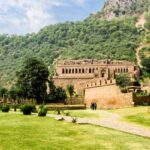
Approximately 60 km from Abhaneri, Bhangarh Fort is one of the most famous forts in Rajasthan. Known for its impressive ruins, grand gateways, temples, and palaces, the fort is surrounded by the Aravalli hills. It attracts history lovers, photographers, and adventure seekers alike. Daytime visits are popular for exploring its architecture and panoramic views.
Mehndipur Balaji Temple
Located about 65 km away, Mehndipur Balaji Temple is a well-known pilgrimage site dedicated to Lord Hanuman. Devotees from across India visit this temple throughout the year. The atmosphere is vibrant, and the rituals offer a unique cultural experience.
Entry Timings, Fees & Best Time to Visit Chand Baori
Timings:
Chand Baori is open every day from 8:00 AM to 6:00 PM, including weekends and public holidays.
Entry Fees:
As of 2025, there is no entry fee to visit Chand Baori. This makes it one of the few major attractions in Rajasthan that’s accessible without a ticket.
Best Time to Visit:
- October to March is ideal, when the weather is cooler and more comfortable.
- July to September offers a unique charm with overcast skies, though steps can become slippery after rain.
- Avoid May and June unless you can handle the extreme summer heat.
Pair your visit with our guide to Rajasthan in the monsoon for more rainy season travel ideas.
Best Time to Visit Chand Baori Stepwell (Abhaneri)
The ideal time to visit Chand Baori is during the cooler months of October to March. During this period, the weather is pleasant, making it comfortable for sightseeing and exploration. The summer months can be extremely hot, with temperatures often exceeding 40°C (104°F), which can be uncomfortable for outdoor activities.
How to reach Chand Baori Stepwell (Abhaneri)
Chand Baori Stepwell is located in Abhaneri village, Rajasthan, about 95 km from Jaipur.
By Road:
The most convenient way is by road from Jaipur. Drive via NH21 toward Dausa, then take the road to Abhaneri. The journey takes about 2–3 hours. Taxis and private cabs are easily available from Jaipur.
By Train:
The nearest railway station is Bandikui Junction, around 20 km from Abhaneri. It is well connected to Jaipur, Delhi, and Agra. From Bandikui, you can hire a taxi or auto-rickshaw.
By Bus:
Buses run from Jaipur or Dausa to nearby towns like Sikandra. From there, local transport can take you to Abhaneri.
By Air:
The nearest airport is Jaipur International Airport, followed by a road journey.
Visiting in the morning is ideal for comfortable weather and better views.