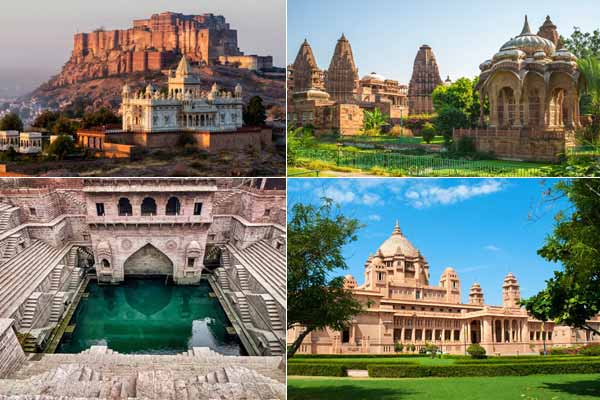
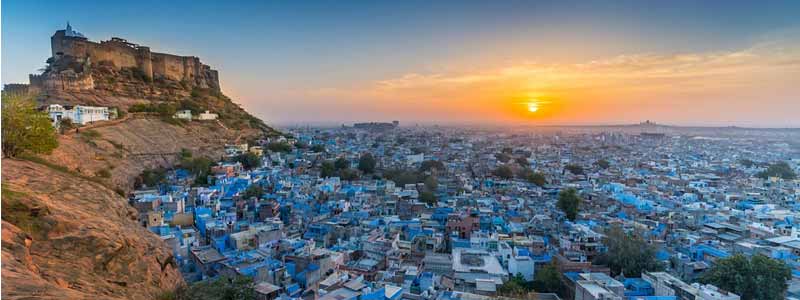
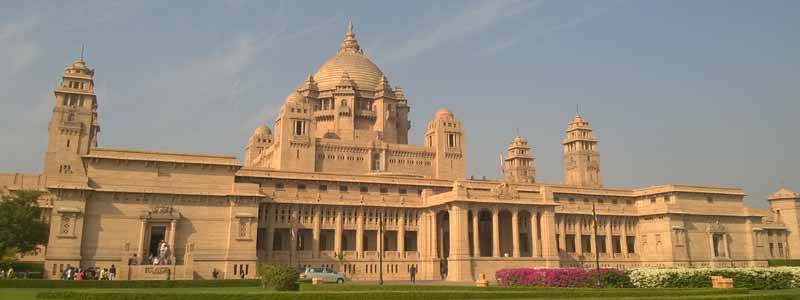
Best Historical Landmarks to Visit in Jodhpur, famously known as the Blue City, is home to some of Rajasthan’s most captivating historical landmarks. The towering Mehrangarh Fort stands as the city’s crown jewel, offering panoramic views of blue-washed houses and displaying royal palaces, courtyards, and a museum filled with artifacts from the Marwar kingdom. At its foothill lies the serene Jaswant Thada, a marble cenotaph built in memory of Maharaja Jaswant Singh II, admired for its intricate carvings and peaceful lakeside setting. Another must-visit is the grand Umaid Bhawan Palace, an architectural blend of Art Deco and Indo-Saracenic styles, part of which now houses a museum showcasing royal heritage.
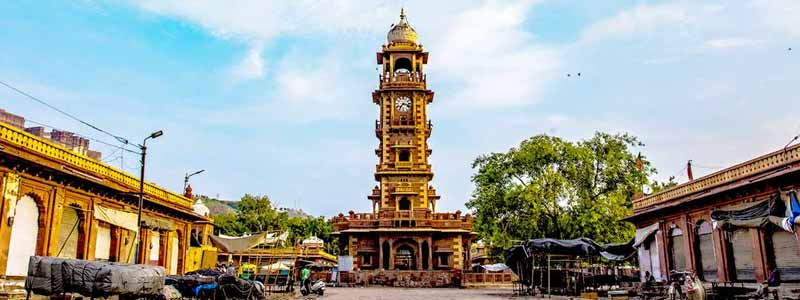
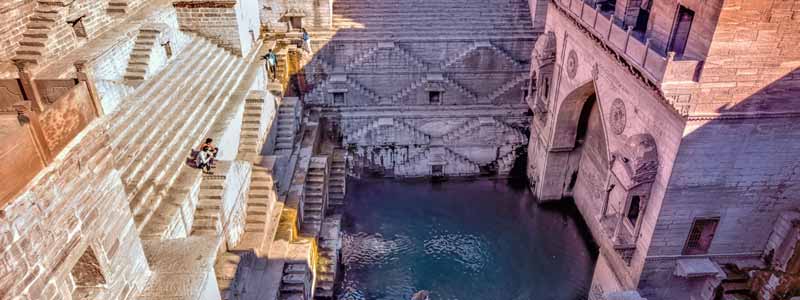
In the old city, the bustling Ghanta Ghar (Clock Tower) and the colorful Sardar Market reflect Jodhpur’s historic trading culture. Nearby, the restored Toorji Ka Jhalra stepwell highlights traditional water-harvesting architecture with its striking geometric steps. Visitors should also explore Mandore Gardens, the ancient capital of Marwar, known for its royal cenotaphs and lush pathways. Together, these iconic sites offer a rich and immersive experience of Jodhpur’s history, culture, and architectural legacy.
The Mehrangarh Fort is a mighty fort and one of the best historical places in Jodhpur because of its enormity. The Fort accommodates numerous mahals inside it and was once the royal abode of Rao Jodha. This red sandstone beauty standing tall at hundred feet above the skyline of the city was built during 1460 AD.
It has thick and huge walls that have intricate carvings and are well ornamented. This colossal structure serves a museum now and displays precious and fascinating artworks that have great historical relevance.
Another fun fact about this Fort that makes it a go-to on the list of the tourists is that parts of the Hollywood film, The Dark Knight, were short here. Make sure you are making your bookings during the annual festival of World Sufi Spirit in February and International Folk Festival in October to make the most of the Fort.
Traveler Information
Mehrangarh is more than just a fort—it is a sprawling complex filled with palaces, courtyards, and museums. Each structure within its walls has a story to tell:
Moti Mahal – The Hall of Pearls, once used for royal audiences.
Phool Mahal – A luxurious entertainment room adorned with gold filigree and delicate paintings.
Sheesh Mahal – Featuring intricate mirror work, showcasing the artistic excellence of its time.
Takhat Vilas – Known for unique modern-era paintings and vibrant combinations of colors.
The fort’s museum is among the best in India, exhibiting weapons, royal cradles, palanquins, manuscripts, and costumes. Walking along its ramparts gives you spectacular panoramic views of Jodhpur’s blue houses, lending the city its poetic nickname. The fort’s evening illuminations and folk performances add yet another layer to its grandeur.
Best Historical Landmarks to Visit in Jodhpur
Jaswant Thada – A Marble Symphony of Peace
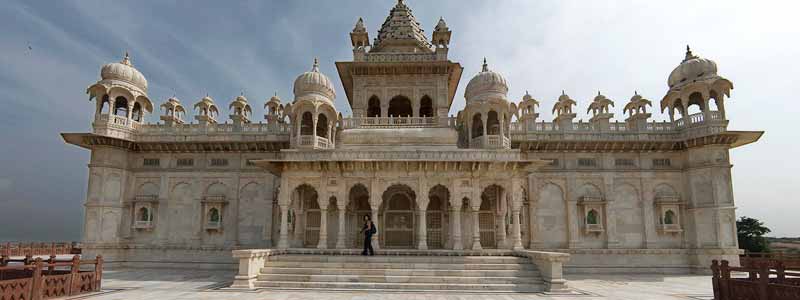
The Jaswant Thada is an exquisite white marble cenotaph, often affectionately dubbed the “Taj Mahal of Marwar.” It was commissioned in 1899 by Maharaja Sardar Singh in honour of his father, Maharaja Jaswant Singh II, a revered ruler known for his governance and economic reforms.
This serene memorial is constructed entirely from finely carved, polished Makrana marble (the same material as the Taj Mahal). The stone is so thin and translucent that it emits a soft, warm glow when illuminated by the sunlight, creating an ethereal and peaceful ambiance.
The complex, which also features beautifully carved chhatris (smaller cenotaphs) and a tranquil garden surrounding a small lake, serves as the royal cremation ground for the Marwar Rathore dynasty. It stands in stark, delicate contrast to the imposing, rugged Mehrangarh Fort nearby, symbolizing the spiritual and commemorative side of the royal lineage.
Traveler Information
The structure is made of thin, polished marble sheets that glow when sunlight passes through them.
Beautifully carved lattice screens and decorative motifs.
Portraits of various Rathore rulers inside the memorial hall.
A picturesque lake that reflects the monument, making it a photographer’s delight.
While Mehrangarh showcases power and grandeur, Jaswant Thada captures the softer, contemplative side of Jodhpur’s royal history.
The Umaid Bhawan Palace is a magnificent symbol of 20th-century royal India, built between 1929 and 1943 by Maharaja Umaid Singh. It holds the distinction of being one of the largest private residences globally.
Uniquely, its construction was initiated primarily as a famine relief project, employing thousands of people during a prolonged drought in Marwar. The architecture, designed by H.V. Lanchester, beautifully fuses Indo-Saracenic, Classical Revival, and Art Deco styles, utilizing the local golden-yellow Chittar sandstone.
Today, the palace operates in three distinct parts: a luxurious Taj Heritage Hotel, the private residence of the current royal family, and a museum open to the public. It stands proudly on Chittar Hill, offering guests and visitors an unparalleled glimpse into the opulent lifestyle and enduring legacy of Jodhpur’s Rathore dynasty.
Traveler Information
The architecture blends Art Deco, Indo-Saracenic, and Classical Revival styles.
It is divided into three parts: a royal residence, a heritage hotel, and a museum.
The museum showcases vintage clocks, royal photographs, weapons, and a large collection of classic cars.
The palace gardens and massive central dome make it one of the most visually impressive structures in India.
Even if you’re not staying in the hotel, a visit to the museum and the palace grounds offers a wonderful insight into the lifestyle of modern-era Jodhpur royalty.
Best Historical Landmarks to Visit in Jodhpur
Mandore Gardens – Gateway to the Ancient Capital
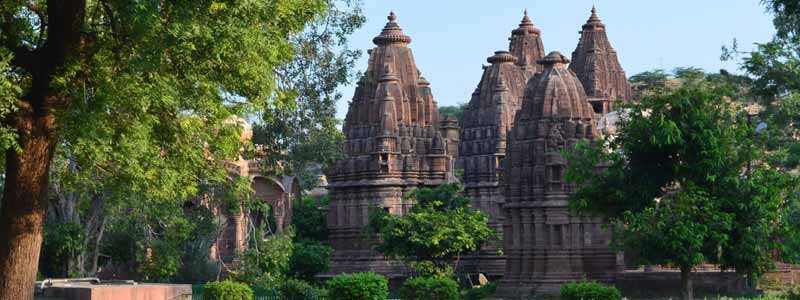
Mandore Gardens, located about 9 kilometers from Jodhpur, was once the ancient capital of the Marwar kingdom before Rao Jodha founded Jodhpur in 1459. The gardens today are a serene blend of history, architecture, and natural beauty, making them a fascinating destination for both history enthusiasts and nature lovers. Spread over several acres, Mandore Gardens feature royal cenotaphs, locally known as chhatris, which are intricately carved memorials built for the rulers of Marwar. These cenotaphs showcase exquisite Rajput architectural styles with elaborate domes, pillars, and ornate carvings.
Within the gardens, visitors can also explore the Hall of Heroes, dedicated to folk heroes, and the Shrine of 33 Crore Gods, reflecting the region’s rich religious heritage. Lush trees, flowering plants, and shaded pathways make the gardens a peaceful escape from the city’s bustle. A visit to Mandore Gardens offers a glimpse into the royal past of Marwar while providing a tranquil setting for walking, photography, and cultural exploration.
Traveler Information
Royal Cenotaphs: Unlike the cenotaphs of other Rajput cities, these are built as temples with elaborate spires and intricately carved corridors.
Hall of Heroes: Featuring sculptures of local deities and folk heroes.
Shrine of 33 crore gods: A fascinating structure adorned with icons representing divine beings.
Ruins of the old Mandore fort that echo stories of the region’s early history.
Strolling through these gardens is like flipping through a forgotten chapter of Rajasthan’s past, blending mythology, history, and nature.
Best Historical Landmarks to Visit in Jodhpur
Ghanta Ghar & Sardar Market – A Living Historical Landmark
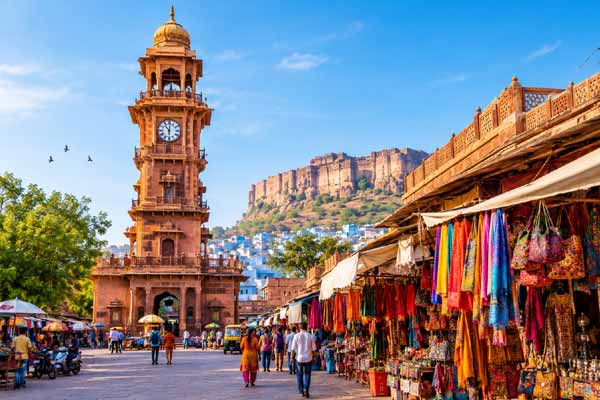
The Ghanta Ghar, or Clock Tower, is one of Jodhpur’s most recognizable landmarks, situated in the bustling heart of the old city. Built by Maharaja Sardar Singh in the late 19th century, the tower not only served as a timekeeping structure but also became a central gathering point for locals and travelers. Its historical significance is complemented by its vibrant surroundings, making it a lively hub of activity and culture.
Adjacent to the Clock Tower is the famous Sardar Market, a colorful and chaotic marketplace where visitors can experience the city’s traditional commerce. The market offers a wide array of goods, including handicrafts, spices, textiles, traditional Rajasthani jewelry, and leather items, making it a treasure trove for shoppers. The blend of historical architecture, local culture, and energetic street life provides an authentic glimpse into Jodhpur’s heritage.
A visit to Ghanta Ghar and Sardar Market combines history, shopping, and the pulsating energy of the Blue City, creating an unmissable experience for travelers.
Traveler Information
The clock tower is a prominent landmark that continues to operate as a gathering point.
The surrounding market is one of Jodhpur’s oldest commercial zones.
You can shop for spices, handicrafts, mojari footwear, bandhej textiles, brass items, and antique jewelry.
The atmosphere is energetic and colorful, offering an authentic glimpse into Jodhpur’s everyday life.
While the clock tower may seem modest compared to the city’s grand monuments, it represents a crucial part of Jodhpur’s historical trading identity.
Best Historical Landmarks to Visit in Jodhpur
Toorji Ka Jhalra – The Queen’s Stepwell
Toorji Ka Jhalra, located in the heart of Jodhpur’s old city, is one of the most iconic and beautifully restored stepwells in Rajasthan. Built in the 1740s by the consort of Maharaja Abhay Singh, this stepwell served as a vital water source for the local community and is a striking example of traditional Rajasthani water-harvesting architecture. Stepwells like Toorji Ka Jhalra were not just functional; they were also social hubs where people gathered, exchanged news, and sought respite from the desert heat.
The structure features symmetrical sandstone steps descending deep into the earth, framed by elegant arches and intricately carved niches. In recent years, the area around the stepwell has been revitalized with vibrant murals, cafés, and handicraft shops, creating a lively cultural atmosphere. Visitors can admire its geometric beauty, learn about its historical significance, or simply enjoy a peaceful moment by the cool water.
Toorji Ka Jhalra perfectly combines Jodhpur’s architectural heritage, history, and community life, making it a must-visit landmark in the Blue City.
Traveler Information
Dramatic geometric staircases descending deep into the earth.
Beautiful sandstone carvings and arches.
A revitalized area surrounded by cafés, handicraft stores, and murals.
A serene atmosphere ideal for photography and quiet reflection.
Once forgotten, the stepwell has been restored to its former glory and now adds charm to the old city.
Best Historical Landmarks to Visit in Jodhpur
Rao Jodha Desert Rock Park – Reclaiming History Through Nature
Rao Jodha Desert Rock Park, located at the base of the majestic Mehrangarh Fort, is a unique blend of natural heritage and historical significance. Established in 2006, the park was created to restore the native desert ecosystem around the rocky hills that surround the fort, which had been degraded over centuries due to urban development. The park not only highlights the region’s geology but also preserves over 80 species of native plants, including shrubs, succulents, and flowering desert vegetation.
Visitors can explore well-marked walking trails that wind through volcanic rock formations dating back millions of years, offering stunning views of Mehrangarh Fort and the city below. Informational displays along the trails explain the geological history, flora, and conservation efforts, making it both an educational and recreational destination. The park’s serene environment is perfect for nature lovers, photographers, and those seeking a quiet escape while still being close to Jodhpur’s historic center.
Traveler Information
Over 80 species of native desert plants bloom across the landscape.
The park features volcanic rock formations formed millions of years ago.
Well-marked walking trails offer unique vantage points of Mehrangarh Fort.
Interpretive signs help visitors understand the region’s geology and flora.
This park is perfect for history lovers who also appreciate nature and the ancient landscapes that shaped Jodhpur’s fortifications.
Chamunda Mata Temple – Divine Protector of Jodhpur
Chamunda Mata Temple, located within the towering walls of Mehrangarh Fort, is one of Jodhpur’s most revered spiritual landmarks. The temple is dedicated to Chamunda Devi, whom Rao Jodha—the founder of Jodhpur—brought to the fort in 1460 to serve as the royal family’s protective deity. Since then, Chamunda Mata has been deeply respected by the rulers of Marwar as well as the local community, making the temple an essential part of the city’s cultural and religious identity.
Perched on the fort’s edge, the temple offers a serene environment filled with the scent of incense, the sound of bells, and panoramic views of the Blue City stretching below. Its elevated location makes it a favored spot for watching sunrises and sunsets over Jodhpur’s historic landscape. During festivals such as Dussehra, the temple becomes a vibrant center of devotion, drawing thousands of worshippers.
A visit to Chamunda Mata Temple not only provides spiritual peace but also connects visitors to the enduring faith and royal heritage that define Mehrangarh Fort and the city of Jodhpur.
Traveler Information
Local worshippers visit the temple daily, creating a vibrant spiritual atmosphere.
The temple courtyard offers some of the best panoramic views of the blue city.
During festivals like Dussehra, thousands of devotees gather here to celebrate.
This temple, though small, carries immense religious and historical importance, completing the cultural fabric of the fort.
Mahamandir Temple – A Marvel of Pillared Architecture
Mahamandir Temple, located about two kilometers from Jodhpur’s city center, is one of the region’s most fascinating architectural and spiritual landmarks. Built in 1812, this temple is dedicated to Lord Shiva and is renowned for its impressive design, which features 84 intricately carved pillars. Each pillar is adorned with exquisite stone carvings depicting yogic postures, mythological scenes, floral patterns, and symbolic motifs that highlight the exceptional craftsmanship of Jodhpur’s artisans.
The temple’s large courtyard adds to its grandeur, creating a peaceful and sacred ambiance ideal for meditation, prayer, and quiet reflection. Unlike the more crowded tourist spots in the city, Mahamandir Temple offers a serene, almost untouched atmosphere, allowing visitors to appreciate its architectural beauty at leisure. Surrounding the main temple are several smaller shrines and historical structures that contribute to the site’s cultural significance.
A visit to Mahamandir Temple provides a meaningful glimpse into Jodhpur’s spiritual heritage, making it a must-see for history lovers, architecture enthusiasts, and those seeking a calming retreat away from the bustle of the Blue City.
Traveler Information
Showcases the craftsmanship and artistic traditions of Jodhpur’s stone carvers.
A peaceful environment away from the city crowds.
Historical inscriptions add to its cultural significance.
For travelers who enjoy exploring hidden gems, this temple is a rewarding find.
Balsamand Palace and Lake – A Royal Retreat
Balsamand Palace and Lake, located just a few kilometers from Jodhpur’s main city, offer a peaceful and scenic retreat from the hustle and bustle of the Blue City. The lake was originally constructed in the 12th century as a water reservoir to serve the people of Mandore, while the grand Balsamand Palace was built later in the 17th century by Maharaja Jaswant Singh I as a luxurious summer residence for the royal family. Crafted from striking red sandstone, the palace stands majestically along the lake’s edge, surrounded by lush gardens, fruit orchards, and pathways shaded by neem and mango trees.
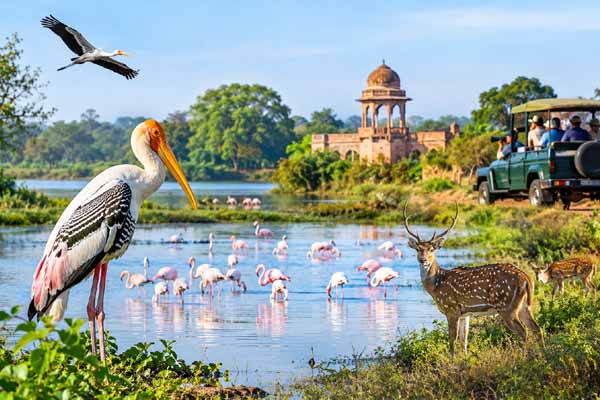
Today, Balsamand Palace operates as a heritage hotel, allowing visitors to experience royal-style hospitality. Even for those not staying inside, the area remains a serene escape ideal for leisurely walks, birdwatching, and photography. With its calm waters, vibrant greenery, and rich historical charm, Balsamand Palace and Lake offer a perfect blend of nature and heritage in Jodhpur.
Traveler Information
Traditional red sandstone architecture typical of Marwar.
Beautiful gardens filled with peacocks and native flora.
Scenic lake views that reflect the palace in calm waters.
Though now functioning partly as a heritage hotel, the palace still retains its royal charm and is a peaceful spot to unwind.
Kaylana Lake – An Engineering Landmark
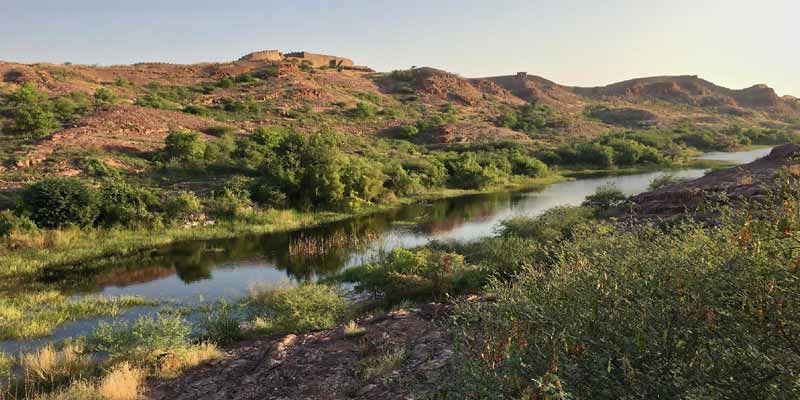
Kaylana Lake, located on the western edge of Jodhpur, is one of the city’s most serene and historically significant water bodies. Built in 1872 by Pratap Singh, the lake was designed as a crucial water reservoir to meet the demands of the growing city, especially in the harsh desert climate of Marwar. Surrounded by rugged hills and sparse vegetation, the lake offers a refreshing contrast to Jodhpur’s bustling streets and grand sandstone architecture.
Kaylana Lake spans a vast area and is fed by the Hathi Nehar canal, making it an essential source of drinking water for the region. Over the years, it has also evolved into a popular leisure spot for both locals and tourists. Visitors often come here to enjoy peaceful boat rides, birdwatching, or simply to relax by the calm waters during sunset. The golden hues reflecting on the lake in the evening create a picture-perfect moment, making Kaylana Lake an ideal destination for nature lovers and photography enthusiasts exploring Jodhpur.
Traveler Information
Its construction reflects the ingenious water-management strategies of the Marwar rulers.
The lake is a popular spot for evening strolls, boating, and bird-watching.
Surrounded by rugged hills, it adds a natural dimension to Jodhpur’s heritage.
Kaylana Lake complements the city’s historical narrative by highlighting the practical necessities that shaped royal life.