Discover Bagru Block Printing: A Unique Cultural Workshop in Jaipur
rtp123
Discover Bagru Block Printing A Unique Cultural Workshop in Jaipur, the celebrated “Pink City” of India, is more than just a collection of majestic forts and palaces; it is a living canvas of ancient craftsmanship. Among its many vibrant artistic traditions, Bagru block printingstands out as a profound expression of heritage, skill, and sustainable creativity. Practiced by the revered Chippa community for centuries in the small, eponymous town of Bagru, located just 30 kilometers from Jaipur, this art form offers a mesmerizing glimpse into a world where design is drawn directly from nature and printed by hand.
A Bagru block printing workshop is not just a tourist activity; it’s an immersive cultural experience that allows visitors to participate in a craft that has sustained families and adorned royalty for over 350 years. It is an invitation to feel the rhythm, smell the earth, and contribute to the preservation of a precious legacy.
Discover Bagru Block Printing A Unique Cultural Workshop in Jaipur
History of Bagru Block Printing
The history of Bagru block printing can be traced back to the 17th century when it was first introduced in Bagru. The printing technique was initially used to print designs onto cotton fabric, which was then used to make turbans for men. As the popularity of Bagru block printing grew, it began to be used to print designs onto a variety of fabrics, including silk and chiffon.
The popularity of Bagru block printing declined in the 20th century with the advent of machine-made textiles. However, in recent years, there has been a revival of interest in traditional crafts, and Bagru block printing has once again become popular.
Discover Bagru Block Printing A Unique Cultural Workshop in Jaipur
The Timeless Art of the Chippa Community
The origins of Bagru block printing are deeply rooted in the history of the Chippa community, whose name literally means “to print.” They migrated to the area centuries ago, drawn by the unique environmental conditions: the soft water of the Sanjaria River and the clay-rich soil were perfectly suited for their natural dyeing and printing techniques.
Unlike the delicate floral motifs of its contemporary, Sanganeri printing, Bagru is defined by its bold, earthy aesthetic. The traditional designs feature geometric patterns, intricate lattices, and nature-inspired motifs like the gainda (marigold), gulab (rose), and bel (vines), which hold deep symbolic significance within the local culture. The core distinction, however, lies in its steadfast commitment to natural dyes and the use of the ancient mud-resist technique.
The craft has weathered the storms of modernization and the rise of synthetic dyes, largely due to the dedication of artisans who refuse to abandon the slow, time-honored process. In 2024, the craft received the coveted Geographical Indication (GI) tag, a crucial step in protecting its authenticity and ensuring that the tradition is carried forward for future generations.
Discover Bagru Block Printing A Unique Cultural Workshop in Jaipur
What is Block Printing and Why is it Special in Jaipur?
Block printing is a centuries-old textile technique where wooden blocks are hand-carved with intricate patterns and then used to stamp designs on fabrics. Jaipur is world-renowned for two distinct types:
Bagru block printing – Known for its use of natural dyes and earthy, geometric motifs. The technique involves eco-friendly dyeing methods using turmeric, indigo, madder, and more. The mud-resist printing technique, locally called “dabu,” is central to Bagru printing.
Sanganeri block printing – Celebrated for its delicate floral patterns, fine detailing, and white backgrounds on cotton fabrics. This style often features motifs of lotus flowers, vines, and peacocks, reflecting Mughal influences.
The Jaipur block printing for tourists offers a rare chance to witness this traditional process from start to finish, guided by master artisans. You gain insight not only into the printing but also the community and values that keep these traditions alive.
The Seven Steps to a Bagru Masterpiece
The creation of a single Bagru print is a labor of love, a methodical process demanding skill, patience, and a deep understanding of natural chemistry. The typical printing process can take anywhere from four to fourteen days, a testament to the term “slow fashion.”
1. Preparing the Fabric
The journey begins with the fabric, usually cotton. It must first be meticulously washed to remove all starch and impurities. Following this, the cloth is treated with harda (myrobalan fruit), a crucial natural mordant that acts as a primer. This step allows the natural dyes to bind to the fiber and gives the cloth a characteristic yellowish tint, which will later fade but ensure the colors remain vibrant and long-lasting.
2. Carving the Blocks
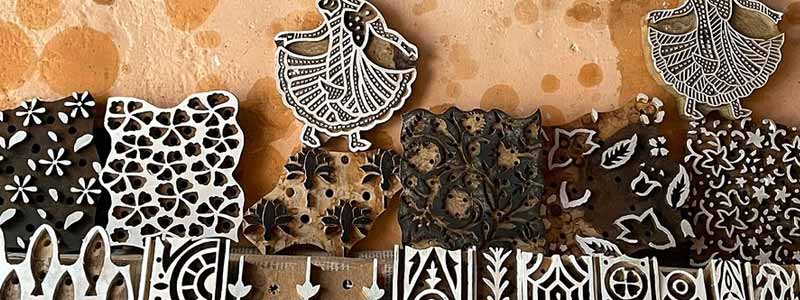
The soul of Bagru printing resides in the hand-carved wooden blocks, often made from sheesham (Indian rosewood). The block-makers, a distinct set of artisans, carve the intricate designs onto the wood. A single motif might require a set of three to four blocks—a rekh (outline block), a gadh (filler or background block), and a datta (detailing block)—each requiring several days of meticulous carving.
3. Mixing the Natural Dyes
A true Bagru artisan is a natural chemist. The dyes are exclusively derived from organic sources:
Black (Syahi) is achieved by fermenting rusted iron filings and jaggery.
Red comes from madder root and alum.
Blue is famously dyed using indigo, fermented in deep vats (Naand) for months.
Yellow is extracted from turmeric or pomegranate rinds.
Bagru is most famous for the Dabu (resist) printing style, where a thick paste of black clay, wheat powder, guar gum, and lime water is applied to the fabric using a block. This mud-paste acts as a protective shield for the fabric underneath. Sawdust is sprinkled over the wet paste to prevent smudging before the cloth is left to dry under the hot sun.
5. Printing the Fabric
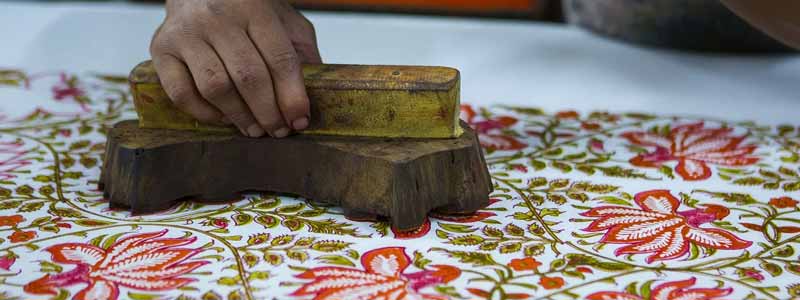
In a direct printing workshop, the artisan dips the carved block into the natural dye tray. The block is then carefully aligned and stamped onto the fabric with a firm, rhythmic thump. This manual stamping requires exceptional precision to ensure the repeated pattern is perfectly seamless across the entire length of the textile.
6. Dyeing and Drying
After the printing stage, the fabric is dipped into large vats of natural dye, such as the deep blue of indigo. The areas covered by the Dabu mud resist the color, preserving the original fabric color or the already printed designs. The cloth is then rinsed and laid flat in the open courtyards to dry, a vibrant tapestry stretched out under the Rajasthani sky.
7. The Final Wash
The final step involves a thorough washing and often a gentle boiling with natural ingredients to fix the color and wash away the protective mud-paste. It is at this stage that the magical design hidden beneath the Dabu is fully revealed—a testament to the power of nature and the patience of the human hand.
Experience the Workshop: From Traveler to Artisan
Stepping into a block printing workshop in Bagru is an assault on the senses—the earthy scent of the dyes, the visual delight of multicolored fabrics drying on the rooftops, and the meditative thump-thump-thump of the wooden blocks.
In a typical two to four-hour workshop, you move from a curious visitor to a hands-on apprentice. Under the guidance of a master Chippa artisan, you get to choose your own blocks and colors, mix a natural dye, and embark on the painstaking task of printing your own scarf, tote bag, or length of fabric. The struggle to precisely align the patterns instills a profound appreciation for the decades of practice embodied by your teacher.
This experience offers a powerful way to connect with the local community, supporting their livelihood and contributing to the sustainability of a craft that is truly a gem of Indian culture. It is a moment of creation, a step back in time, and a souvenir more meaningful than any store-bought item: a handcrafted piece that carries the rhythm of the printing table and the soul of the artisan.