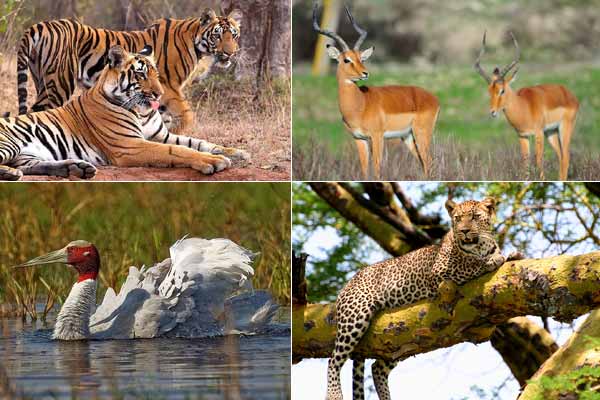
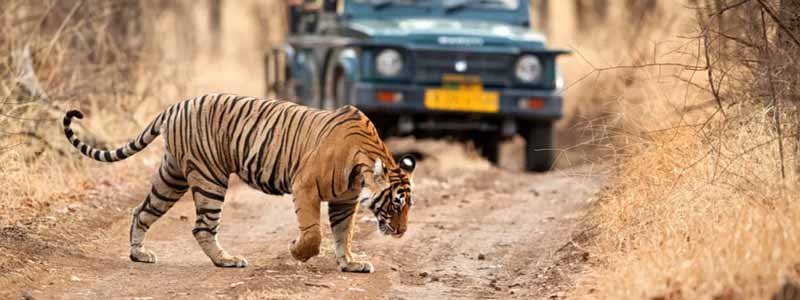
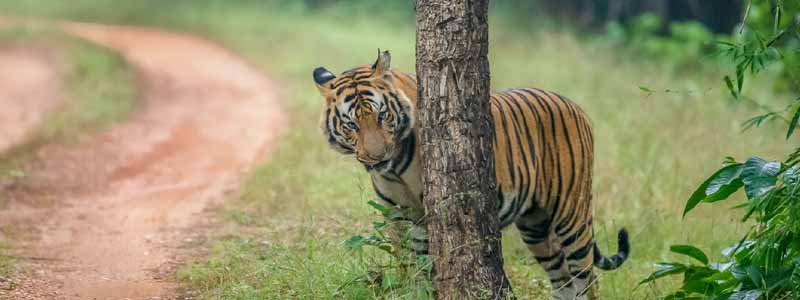
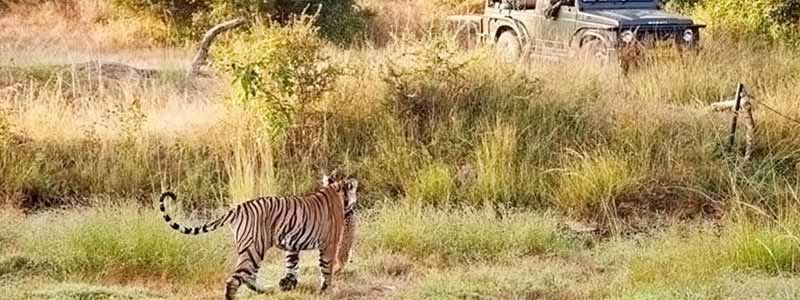
Ranthambore National Park is arguably the most famous, globally known for its high density of Bengal tigers. Situated near Sawai Madhopur, it offers some of the best opportunities to see the majestic big cats in their natural habitat, amidst ancient fort ruins.
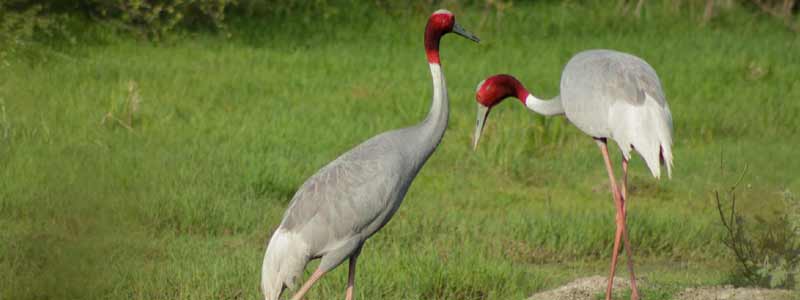
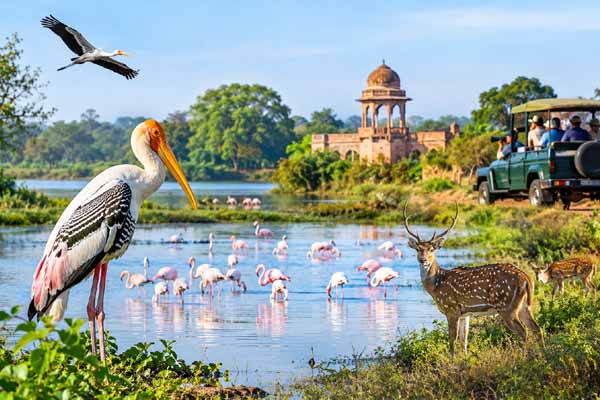
For birdwatchers, the UNESCO World Heritage site Keoladeo National Park (Bharatpur Bird Sanctuary) is a paradise. This man-made wetland is a haven for over 370 bird species, including thousands of migratory waterfowl like the rare Siberian crane.
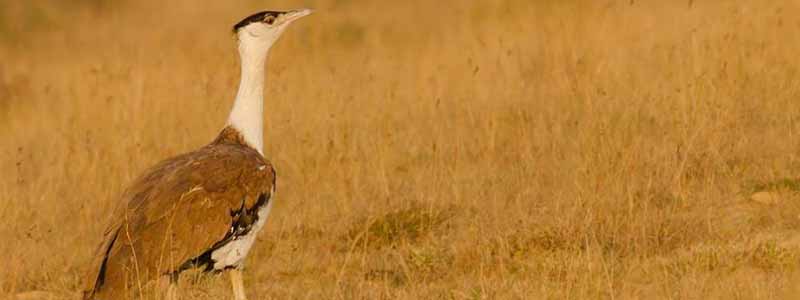
The Sariska Tiger Reserve in the Aravalli Hills is another key destination for tiger sightings.Desert National Park, one of the largest in India, provides a glimpse into the unique ecosystem of the Thar Desert, protecting species like the endangered Great Indian Bustard.
Other notable sanctuaries include Kumbhalgarh Wildlife Sanctuary, home to a large wolf population, and the Mount Abu Wildlife Sanctuary, the only hill station sanctuary in the state, offering rich biodiversity. The Jawai Leopard Conservation Reserve is celebrated for its leopard population that coexists with local communities. Sources
8 Best Wildlife Sanctuaries & National Parks in Rajasthan
1. Ranthambore National Park
It is one of the most known and the largest national park in Northern India. At a distance of 130 km from Jaipur the national park is situated in the Sawai Madhopur district in Rajasthan and covers an area of almost 342 sq. km. Ranthambore was once popular as a favorite hunting ground of various Maharajas of Jaipur which is now known for inviting millions of Indian as well as International tourists every year as it is considered as one of the best destinations to spot majestic predators in its natural habitat. Spending time on watching tigers running and hunting during the daytime and taking care of their young ones is a priceless experience and much worthy which everyone should explore at least once in your lifetime.
Highlights:
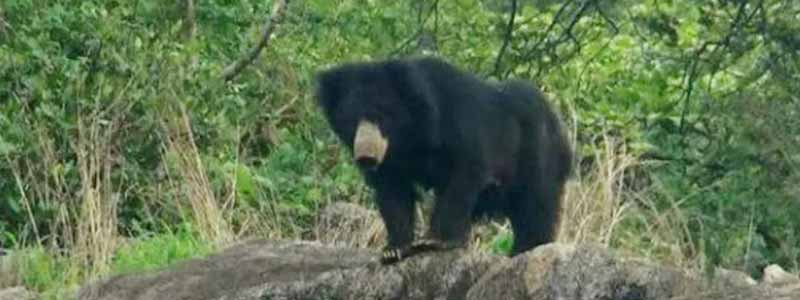
Royal Bengal Tigers, leopards, sloth bears Ranthambore Fort (UNESCO Heritage Site) Canters and jeep safaris (morning/evening) Best Time to Visit: October to April. Park remains closed during monsoon (July–September).
8 Best Wildlife Sanctuaries & National Parks in Rajasthan
2. Sariska Tiger Reserve
The National Park is situated in the Alwar district of Rajasthan which got announced as a tiger reserve in 1978. It is believed as the first reserve in the world which had successfully relocated The Royal Bengal Tigers which later on got disappeared. The landscape of this wetland is comprised of rocky landscapes, hilly cliffs, grasses, and dry forests. You can even witness the chirping of beautiful birds and you can even spot striped Hyenas, Chinkara, Jungle Cats, etc. Around 90% of the area is covered by Dhok Trees which is accommodating various wildlife species and is also popularly known as a sanctuary having the highest population of peafowl, sand grouse, golden-backed woodpeckers, crested serpent eagles, and many more.
Highlights:
Tigers, hyenas, jackals, and nilgai Ancient temples inside the reserve Sariska Palace nearby for heritage stays Best Time to Visit: October to March
8 Best Wildlife Sanctuaries & National Parks in Rajasthan
3. Desert National Park, Jaisalmer
Desert National Park is situated near the town of Jaisalmer and is also known as one of the most famous and one of the largest National Park in India. The beautiful landscape of this national park is 20% covered by sand dunes. You can see many local as well as migratory birds here including falcons, vultures, spotted eagles, and sand grouse etc. You can even get the chance to spot the endangered Great Indian Bustard in a good number. Being a military area, the roads are well-managed and are generally free of traffic which makes your visit smoother. Due to its harsh location, the weather is too humid during summer so the ideal time to visit this place is from October to February.
Highlights:
Great Indian Bustard (critically endangered) Foxes, desert cats, chinkara Sand dunes and fossil viewing Best Time to Visit: November to February
8 Best Wildlife Sanctuaries & National Parks in Rajasthan
4. Keoladeo Ghana Bird Sanctuary (Bharatpur)
The city is soaked by its way of life, valor, and sentiment which are woven into anthems and legends can be notified from miles away. Bharatpur National Park is called as Keoladeo National Park is a magnificent bird sanctuary. This National Park was established on 10th March 1982. The wetland was established to control the area from the frequent flood. The national park is declared as a World Heritage Site by UNESCO and holds around 230 species of birds, 200 species of amphibians and numerous reptiles including lizards, snakes, turtles etc. and around 350 floral species can be found here. The national park serves as a winter home to Siberian Cranes which is an endangered bird species.
Highlights:
Boating and cycle rickshaw tours Painted storks, pelicans, cranes Winter bird migration (Oct–Feb) Best Time to Visit: October to March for birdwatching
8 Best Wildlife Sanctuaries & National Parks in Rajasthan
5. Mount Abu Wildlife Sanctuary
This sanctuary is located in one of the oldest Himalayan ranges, Aravali is reckoned for holding a wide variety of flora and fauna species. It would be a great treat to visit this wildlife Sanctuary if you are spending your vacation in this desert state. It has around 112 plant families and even more than 250 species of birds. Besides Flora and birds, Mount Abu Wildlife Sanctuary is also known for holding a great number of animal species which include Indian Fox, Common Langur, Common Mongoose, Indian Hare Porcupine, and many more are there in the list. If you are in Mount Abu Wildlife Sanctuary then you may even visit Green Adavat which is rarely found.
Highlights:
Indian leopard, wild boar, sambar, and langur Over 250 species of birds Orchid-rich and subtropical forest vegetation Best Time to Visit: October to March
8 Best Wildlife Sanctuaries & National Parks in Rajasthan
6. Tal Chhapar Wildlife Sanctuary
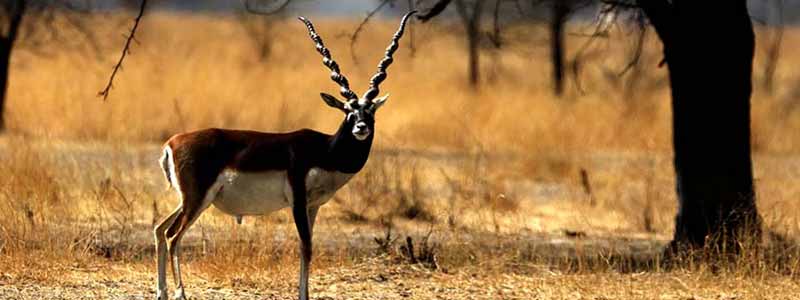
For the wildlife, lovers this is certainly the spot for your following visit. Tal Chhapar Sanctuary Shekhawati, Rajasthan is a standout amongst the most gone by haven in Rajasthan. Arranged in the Chiru area of the north-western piece of Rajasthan. Tal Chappar haven, arranged on the edges of the Thar Desert, is known as home to around 2,000 dark bucks. The closest Railway station is Chappar which lies on Degana – Churu – Rewari meter gage line of North Western Railways. The closest Airport is Sanganer (Jaipur) which is at a separation of 215 km from Chappar.
Highlights:
Blackbucks in large herds Raptors like harriers, eagles, and falcons Perfect for photographers and birders Best Time to Visit: September to March
8 Best Wildlife Sanctuaries & National Parks in Rajasthan
7. Kumbhalgarh Wildlife Sanctuary
One of the wonderful creation of nature which is best for treating your eyes. Bird lovers consider it as heaven and it is even an ideal for wildlife lovers too. The sanctuary is spread over an area of 578 sq. km and even encircles the famous Kumbhalgarh fort and is extended over an area of Aravali Ranges. If you roam around the borders of the sanctuary you can spot various animals like a jungle cat, jackal, Sloth Bear and among all Leopards and Panthers are the major attractions. Kumbhalgarh Fort and the lion Safari are the other attractions if you are visiting this place. You can even get an enthralling experience of the true spirit of nature by doing adventurous camping.
Highlights:
Leopards, wolves, hyenas, jungle cats Scenic jungle trails and jeep safaris Birdwatching near the lake areas Best Time to Visit: October to March
8. Sita Mata Wildlife Sanctuary
The Sita Mata Wildlife Sanctuary is another famous wildlife sanctuary in Rajasthan that is spread across 423 sq. km in the Pratapgarh district. It is one of the important protected areas in Rajasthan. Several rivers, such as Budho, Tankiya, Karmoi, Sita Mata, and Jakham, flow through its dense green forest. This sanctuary is also known as a Bird Paradise because people can find several bird species here. Some of the expected birds include the little egret, cattle egret, Indian darter, tawny eagle, little grebe, grey heron, white-eyed buzzard, little cormorant, and black-winged stilt. But the main attraction is the flying squirrel. It is a plant-eating mammal. People should definitely visit this place.
Highlights:
Flying squirrels, spotted deer, nilgai Riverine habitat with teak and bamboo Mythological connection to Sita from Ramayana Best Time to Visit: October to February