Top 20 Famous Historical Places In Rajasthan To Visit
rtp123
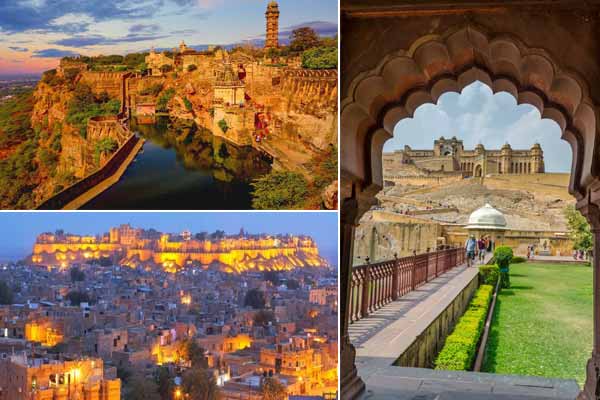
Top 20 Famous Historical Places In Rajasthan To Visitis a land of kings, forts, and magnificent palaces, offering a captivating journey through India’s rich history. The state’s historical sites are a testament to the valor and grandeur of the Rajput rulers.
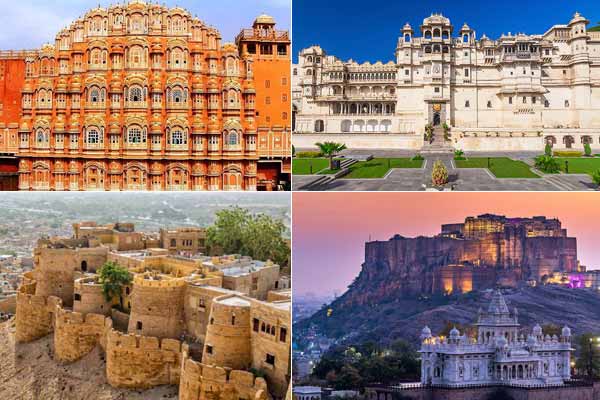
Jaipur, the “Pink City,” is home to the stunning Amber Fort, a UNESCO World Heritage site known for its blend of Hindu and Mughal architecture. The iconic Hawa Mahal, or “Palace of Winds,” is famous for its intricate facade with 953 small windows. Don’t miss the grandeur of the City Palace and the astronomical instruments at Jantar Mantar.
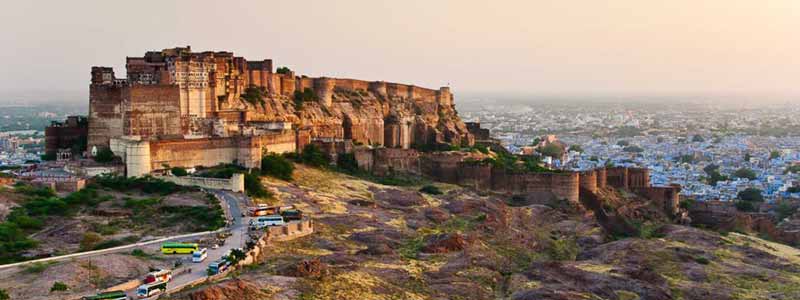
In Jodhpur, the “Blue City,” the imposing Mehrangarh Fort dominates the skyline. This colossal fort is one of the largest in India, with a museum showcasing royal artifacts.
Udaipur, the “City of Lakes,” features the breathtaking City Palace on the shores of Lake Pichola. The enchanting Lake Palace, now a luxury hotel, appears to float on the water.
Finally, the “Golden City” of Jaisalmer is famous for its “living fort,” where you can explore narrow lanes and beautiful havelis within the ancient fort walls. Other notable sites include the massive Chittorgarh Fort and the intricate stepwell of Chand Baori. Your historic adventure starts here!
The state of Rajasthan safeguards numerous treasures, yet its ten most renowned landmarks outshine all others. This section reveals the prominent historical places in Rajasthan, which range from magnificent forts and palaces to magical havelis and old temples.
Top 20 Famous Historical Places In Rajasthan To Visit
1. Amer Fort Jaipur : Architectural Marvel
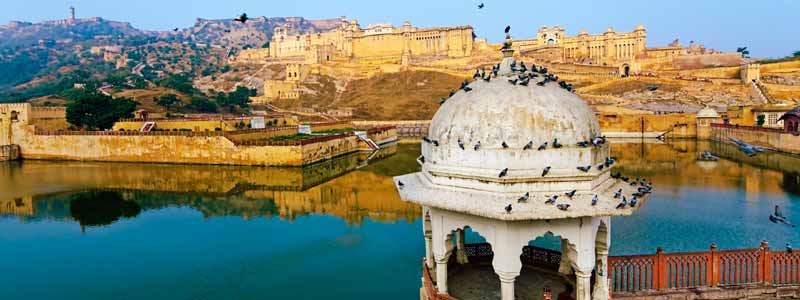
Amer Fort is a breathtaking architectural masterpiece, seamlessly blending Rajput and Mughal styles. Built primarily with red sandstone and white marble, the fort’s architecture is a testament to the artistic vision of its builders. The complex is divided into four main sections, each with a courtyard, showcasing a careful balance of functionality and aesthetics.
Key features include the stunning Sheesh Mahal (Mirror Palace), a hall adorned with thousands of tiny, convex mirrors that create a mesmerizing effect when lit. The Diwan-i-Aam (Hall of Public Audience) is an impressive space with twenty-seven ornate columns, where the king would address his subjects. The beautiful Ganesh Pol, the main gate to the private palaces, is decorated with intricate frescoes and carvings.
The fort’s strategic location on a hilltop overlooking Maota Lake adds to its grandeur. Water features and a sophisticated ventilation system in the Sukh Niwas (Hall of Pleasure) demonstrate the ingenious engineering of the era. The architecture of Amer Fort is not just about its structure, but also its beautiful details, from intricate carvings to the use of natural light and space.
Top 20 Famous Historical Places In Rajasthan To Visit
2. City Palace Udaipur : The Royal Abode
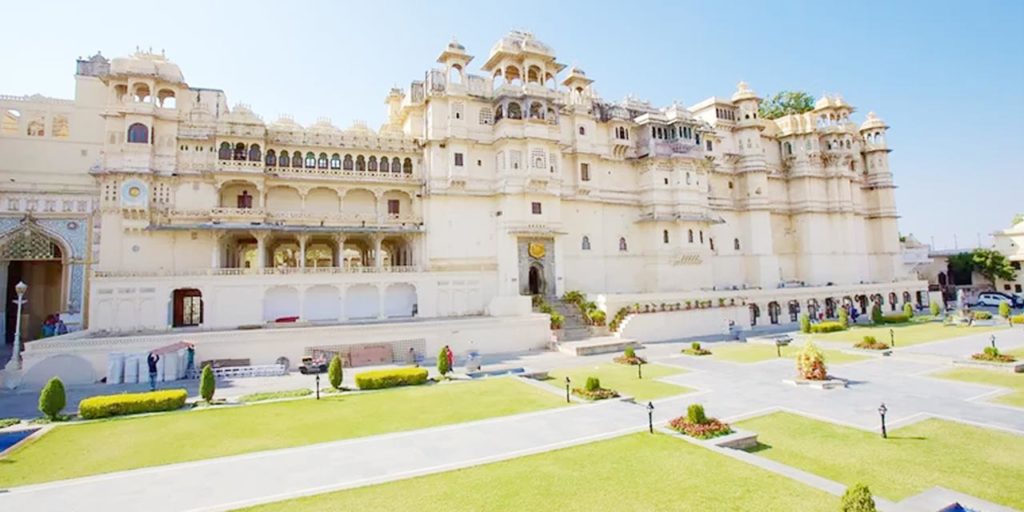
Perched on the banks of Lake Pichola, the City Palace in Udaipur is a magnificent complex that stands as a testament to the grandeur and rich history of the Mewar dynasty. Its construction began in 1559 by Maharana Udai Singh II and was expanded over nearly 400 years by subsequent rulers, resulting in a unique fusion of Rajasthani, Mughal, European, and Chinese architectural styles.
The palace is a sprawling complex of eleven smaller palaces, courtyards, and gardens, all built from granite and marble. Highlights include the stunning Mor Chowk (Peacock Courtyard), known for its intricate glass mosaic peacocks, and the Sheesh Mahal (Palace of Mirrors), which dazzles with its exquisite mirror work. The Zenana Mahal served as the royal women’s quarters, while the Badi Mahal is a garden palace offering spectacular views of the city.
Today, parts of the palace have been converted into a museum that showcases a vast collection of royal costumes, weapons, and artifacts, providing a fascinating glimpse into the royal lifestyle. The palace’s strategic location on a hilltop offers breathtaking panoramic views of Lake Pichola, the surrounding Aravalli Hills, and the city itself, making it a must-visit destination for anyone exploring Udaipur.
Top 20 Famous Historical Places In Rajasthan To Visit
3. Jaigarh Fort Jaipur : Glimpse Of Victorious Past
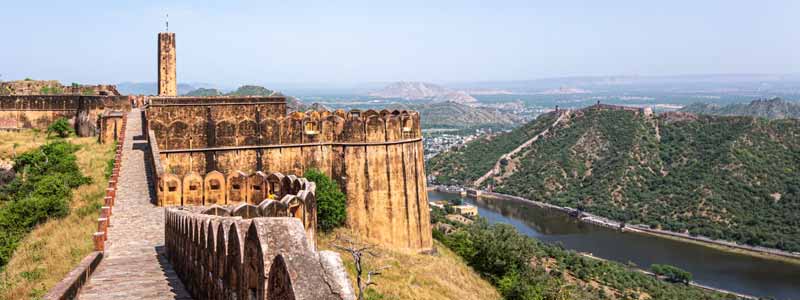
Built by Maharaja Sawai Jai Singh II in 1726, Jaigarh Fort is a formidable military stronghold located on a hilltop known as “Cheel ka Teela” (Hill of Eagles), overlooking the magnificent Amber Fort. Often referred to as the “Fort of Victory,” it was strategically designed to protect the Amber Fort and never faced any major resistance in battle, remaining unconquered throughout its history.
The fort’s architecture is a blend of Rajput and Mughal styles, with massive red sandstone walls that stretch for about three kilometers. Jaigarh Fort’s main attraction is the Jaivana Cannon, which was the world’s largest cannon on wheels at the time it was manufactured in the fort’s own foundry in 1720. Though it was test-fired only once, its immense size and craftsmanship are a testament to the military and technological prowess of the time.
Other features of the fort include a museum displaying ancient weapons, an armory, and a network of intricate underground passages, one of which is rumored to connect to the Amber Fort. The fort also has a remarkable water harvesting system with large underground tanks, which allowed it to withstand long sieges. From its central watchtower, you can enjoy stunning panoramic views of the Aravalli hills and the city of Jaipur.
Top 20 Famous Historical Places In Rajasthan To Visit
4. Nahargarh Fort Jaipur : Serene Ambiance
Nahargarh Fort, also known as the “Abode of Tigers,” is a majestic fortress perched on the Aravalli Hills, providing a stunning northern backdrop to the city of Jaipur. Built in 1734 by Maharaja Sawai Jai Singh II, it was initially a defensive outpost and a retreat for the royal family. Its walls once connected with those of Jaigarh Fort, forming a formidable defense for the city.
The fort’s most remarkable feature is the Madhavendra Bhawan, a two-story palace built by Sawai Madho Singh for himself and his nine queens. The suites are designed with a clever layout, allowing the king to visit any queen without the others’ knowledge. The fort’s Indo-European architectural style is evident in its beautiful frescoes, intricate carvings, and open courtyards.
While Nahargarh Fort was never directly attacked, it played a crucial role in historical events, including providing a safe haven for Europeans during the Sepoy Mutiny of 1857. Today, it is a popular tourist destination known for its breathtaking panoramic views of Jaipur, especially at sunset. The fort also houses a wax museum and offers a unique blend of history, architecture, and natural beauty.
Top 20 Famous Historical Places In Rajasthan To Visit
5. Chittorgarh Fort: Magnificent Architecture
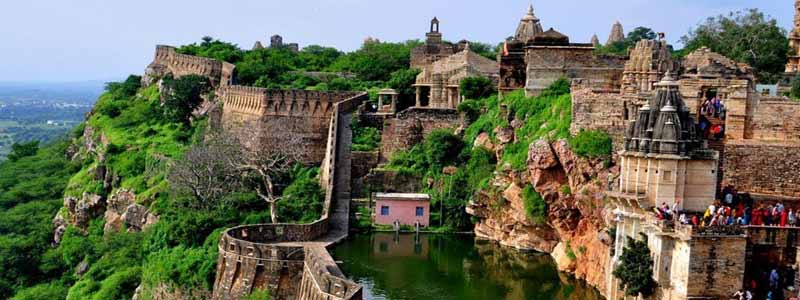
Chittorgarh Fort, a UNESCO World Heritage Site, is one of the largest and most historically significant forts in India. Sprawling over a 700-acre hill, it stands as a powerful symbol of Rajput valor, pride, and sacrifice. The fort’s history is marked by three major sieges, most famously by Alauddin Khilji in 1303, which led to the legendary jauhar (mass self-immolation) of Rani Padmini and other women to protect their honor.
The fort complex is a treasure trove of historical structures. The Vijay Stambh (Tower of Victory), a magnificent nine-story tower, was built by Maharana Kumbha in the 15th century to commemorate his victory over the combined armies of Malwa and Gujarat. Nearby stands the Kirti Stambh (Tower of Fame), a 12th-century tower dedicated to the first Jain Tirthankara, Adinath. Other notable sites include the Rana Kumbha Palace, the Padmini Palace, and numerous temples and reservoirs, all of which contribute to the fort’s rich legacy and architectural grandeur.
6. Junagarh Fort Bikaner : Thrilling High Wall
Located in the heart of Bikaner, Junagarh Fort stands as a remarkable testament to the city’s rich history. Unlike most forts in Rajasthan, it was not built on a hilltop but on the plains, making it a unique example of military architecture. The fort, originally named Chintamani, was constructed between 1588 and 1594 by Raja Rai Singh. Its formidable walls, adorned with 37 bastions, have never been conquered.
The fort’s interior is a stark contrast to its rugged exterior, showcasing a stunning array of palaces, temples, and courtyards that reflect a blend of Rajput, Mughal, and Gujarati architectural styles. Palaces like Anup Mahal, Karan Mahal, and Phool Mahal are famous for their intricate carvings, exquisite frescoes, and beautiful mirror work.
The Junagarh Fort also houses a museum with a fascinating collection of royal artifacts, including weapons, costumes, and historical manuscripts. The fort’s grandeur and its unconquered history make it a must-visit destination for anyone exploring the historical wonders of Rajasthan.
Top 20 Famous Historical Places In Rajasthan To Visit
7. Jaisalmer Fort: Sonar Quila
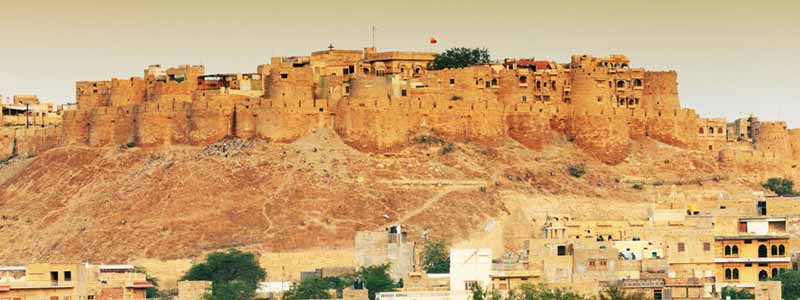
Jaisalmer Fort, a UNESCO World Heritage Site, stands as a golden sentinel in the heart of the Thar Desert. Often called Sonar Quila (Golden Fort), it earns its name from the yellowish sandstone used in its construction, which glows with a magical golden hue under the desert sun. Unlike most forts, Jaisalmer Fort is not just a historical monument; it’s a “living fort” where a significant portion of the city’s population still resides within its walls.
This massive citadel, built in 1156 by Rawal Jaisal, is a labyrinth of narrow lanes, intricately carved havelis (mansions), temples, and vibrant markets. Visitors can explore its winding alleys, discover hidden gems, and witness the unique culture that thrives within its ancient ramparts. The fort’s architecture is a stunning example of Rajasthani craftsmanship, with beautiful balconies and detailed facades. The fort’s elevated position also offers panoramic views of the entire Jaisalmer city and the vast desert landscape, making it a must-visit destination for anyone traveling to Rajasthan.
Top 20 Famous Historical Places In Rajasthan To Visit
8. Mehrangarh Fort Jodhpur : Historical Visits
Mehrangarh Fort, one of the largest and most well-preserved forts in India, is a magnificent spectacle that dominates the skyline of Jodhpur. Founded in 1459 by Rao Jodha, the fort is perched on a 400-foot-high rocky hill, its formidable walls rising from the landscape as if an extension of the cliff itself.
The fort’s architecture is a stunning blend of Rajput and Mughal styles, showcasing the artistic brilliance of the era. Within its imposing walls, a series of palaces, such as the Moti Mahal (Pearl Palace), Phool Mahal (Flower Palace), and Sheesh Mahal (Mirror Palace), are adorned with intricate carvings, latticework windows, and beautiful frescoes. The fort’s seven gates, including the famous Jai Pol and Fateh Pol, each have their own historical significance, commemorating victories of different rulers.
Mehrangarh Fort also houses a museum that provides a captivating glimpse into the royal lifestyle of the Rathore dynasty. Its extensive collection includes royal costumes, weaponry, palanquins, and paintings. A visit to the fort offers not only a journey through history but also breathtaking panoramic views of the “Blue City” of Jodhpur spread out below.
Top 20 Famous Historical Places In Rajasthan To Visit
9. Umaid Bhawan Palace Jodhpur: Largest Private Residential Properties
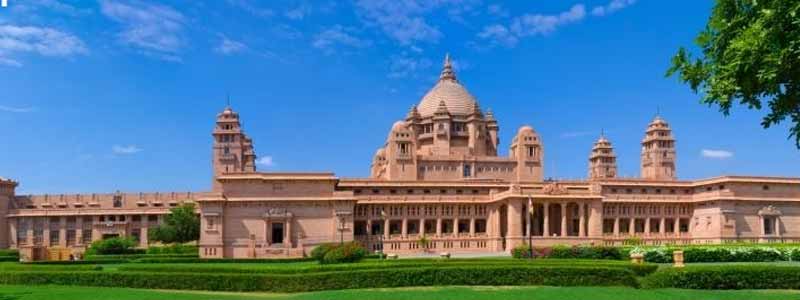
Umaid Bhawan Palace, a magnificent architectural marvel in Jodhpur, stands as a symbol of luxury and a bygone era of royalty. Commissioned by Maharaja Umaid Singh, its construction between 1928 and 1943 was a thoughtful initiative to provide employment to the drought-stricken farmers of the region. Designed by British architect Henry Vaughan Lanchester, the palace is a superb example of the Indo-Saracenic and Art Deco architectural styles.
Perched on Chittar Hill, the highest point in Jodhpur, the palace offers breathtaking views of the city, the Mehrangarh Fort, and the surrounding desert landscape. It is recognized as one of the world’s largest private residences. Today, the palace is divided into three functional parts: a royal residence, a luxury Taj Hotels-run hotel, and a museum that showcases the history of the Jodhpur royal family, along with a collection of classic cars and artifacts.
Guests at the palace can experience unparalleled luxury and hospitality, with access to world-class amenities, including a subterranean Zodiac Pool, exquisite dining options, and a spa. The palace’s grandeur, combined with its rich history and stunning design, makes it a truly unique and unforgettable destination.
10. Ranthambore Fort: Wonder Of Chauhan Dynasty
Ranthambore Fort is a UNESCO World Heritage Site located within the Ranthambore National Park in Rajasthan. This formidable fortress, believed to have been built by the Chauhan rulers in the 10th century, stands atop a hill and is a testament to the strategic genius of its builders. Its location, surrounded by dense forest, made it a formidable obstacle for invaders.
The fort has witnessed numerous battles and sieges, most famously the one in 1301 when Alauddin Khilji captured it, ending the Chauhan dynasty’s reign. Inside the fort, you’ll find a blend of Rajput and Mughal architecture, with massive gates, palaces, and a famous Trinetra Ganesh Temple. The temple, dedicated to Lord Ganesha, is a major pilgrimage site, and a unique tradition involves locals sending wedding invitations to the deity. From the fort’s ramparts, visitors can enjoy panoramic views of the surrounding national park, which is a haven for wildlife, including the majestic Bengal tiger. The fort’s historical significance and natural beauty make it a must-visit destination for history buffs and nature lovers alike.
11. Gadsisar Lake Jaialmer : Serene Ambiance
Gadsisar Lake in Jaisalmer is a beautiful man-made reservoir that reflects the golden hues of the surrounding desert city. It was originally built in the 14th century by Maharaja Gadsi Singh to serve as the sole source of water for Jaisalmer, a city located in the heart of the Thar Desert.
Surrounded by ghats, temples, and shrines, the lake is an oasis of tranquility and a perfect example of ancient water conservation techniques. Its main entrance, the Tilon Ki Pol, is a stunning archway built by a royal courtesan. Legend has it that she built a temple of Lord Krishna on top of the gate to prevent the king from demolishing it. The intricate carvings and architectural beauty around the lake are a photographer’s delight, especially during sunrise and sunset.
Today, Gadsisar Lake is a popular tourist spot where visitors can enjoy boating and admire the serene atmosphere. It also attracts various migratory birds during the winter months, making it a haven for birdwatchers.
12. Karni Mata Temple Bikaner : Religious Visit
The Karni Mata Temple in Deshnoke, near Bikaner, is a fascinating and unique pilgrimage site known for its thousands of resident rats. These rats, known as kabbas, are considered sacred and are believed to be the reincarnated descendants of Karni Mata and her followers.
The temple, dedicated to Karni Mata, a 14th-century Hindu sage believed to be an incarnation of Goddess Durga, attracts pilgrims and tourists from all over the world. Visitors remove their shoes and carefully walk among the more than 25,000 black rats that scurry freely across the temple floors. Eating food that the rats have nibbled on is considered a blessing, and spotting one of the rare white rats is especially auspicious.
The present-day temple was largely completed in the early 20th century by Maharaja Ganga Singh of Bikaner. Its beautiful marble facade, intricate carvings, and solid silver doors add to the temple’s unique and mystical atmosphere.
13. Kumbhalgarh Fort: Birth Place Of Maharana Pratap
Kumbhalgarh Fort is a UNESCO World Heritage Site in Rajasthan, renowned for its impressive architecture and historical significance. Located on the Aravalli Hills, this 15th-century fort was built by Rana Kumbha and is famous for its colossal wall, often referred to as the “Great Wall of India.” Stretching for 36 kilometers, it is the second-longest continuous wall in the world after the Great Wall of China.
The fort’s strategic location and strong defenses made it nearly impregnable. It was used as a refuge for the rulers of Mewar in times of strife, and it is also the birthplace of the legendary warrior king, Maharana Pratap. Inside the fort’s massive walls, you’ll find numerous palaces, temples, and stepwells, including the beautiful Badal Mahal, or “Palace of Clouds,” which offers a stunning panoramic view of the surrounding landscape. Kumbhalgarh Fort stands as a proud symbol of Rajput valor and a remarkable example of ancient Indian military architecture.
14. Jantar Mantar Jaipur : Celestial Observatory
Jantar Mantar in Jaipur is a UNESCO World Heritage Site and an impressive astronomical observatory built in the 18th century. Commissioned by Maharaja Sawai Jai Singh II, a scholar with a deep interest in astronomy, it is the largest and best-preserved of the five observatories he constructed across northern India.
The name “Jantar Mantar” literally means “instrument for calculation.” The complex features a collection of 19 large-scale instruments, each meticulously designed to measure time, predict eclipses, track celestial bodies, and determine various astronomical coordinates. The most famous instrument is the Vrihat Samrat Yantra, the world’s largest stone sundial, which can measure time with an astonishing accuracy of just two seconds. Other notable instruments include the Jai Prakash Yantra and the Rama Yantra, each serving a unique purpose.
This architectural marvel is a testament to the scientific and architectural ingenuity of its time, beautifully blending art, science, and religion. It continues to amaze visitors with its precision and scale, offering a glimpse into the sophisticated astronomical knowledge of ancient India.
15. Hawa Mahal Jaipur : Historical Gem
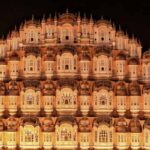
Hawa Mahal, or the “Palace of Winds,” is a quintessential landmark of Jaipur. Built in 1799 by Maharaja Sawai Pratap Singh, this five-story palace is an architectural marvel made of red and pink sandstone. Its most distinctive feature is its facade, resembling a honeycomb with 953 small windows, or jharokhas, each adorned with intricate lattice work.
The primary purpose of the Hawa Mahal was to allow the royal ladies, who observed strict purdah (the practice of secluding women), to watch the daily life and festive processions on the streets below without being seen. The ingenious design of the windows also ensured that cool air circulated throughout the palace, keeping it comfortable even during the hot summer months. The palace’s unique shape is said to be inspired by the crown of Lord Krishna, whom the maharaja was a devotee of. While its front facade is a breathtaking sight, the palace’s interior is more modest, featuring ramps instead of stairs to facilitate the easy movement of palanquins.
16. Ranakpur Jain Temple, Pali
The Ranakpur Jain Temple, located in the serene valley of Pali, is a masterpiece of Jain architecture and one of the most important pilgrimage sites for Jains in India. Constructed in the 15th century by a local Jain businessman named Dharna Shah under the patronage of Rana Kumbha, the ruler of Mewar, the temple is dedicated to Adinath, the first Tirthankara of Jainism.
What makes this temple truly extraordinary is its intricate design. Carved entirely from light-colored marble, the temple is a sprawling complex covering an area of 4,500 square yards. Its most famous feature is the Chaumukha Mandir, or “four-faced temple,” with four entrances leading to the central sanctum. This design symbolizes the Tirthankara’s conquest of the four cardinal directions and the cosmos. The temple is supported by a mind-boggling 1,444 pillars, and legend holds that no two pillars are alike, each one a unique work of art. The delicate carvings, beautiful domes, and an ethereal play of light and shadow make it a captivating and unforgettable sight Top 20 Famous Historical Places In Rajasthan To Visit.
Jal Mahal, or the “Water Palace,” is a stunning architectural marvel located in the middle of Man Sagar Lake in Jaipur. This beautiful palace, built with red sandstone, appears to float on the serene waters, creating a breathtaking and picturesque sight.
While its exact construction date is debated, it is widely believed that the palace and the lake were renovated and enlarged in the 18th century by Maharaja Jai Singh II. The palace is a beautiful blend of Rajput and Mughal architectural styles. A unique and fascinating aspect of the Jal Mahal is that it is a five-story building, with four floors submerged beneath the lake’s surface when the water is full, leaving only the top floor visible.
The palace was never intended to be a royal residence but was used by the Maharaja and his entourage as a lodge for duck hunting trips and as a place of leisure. Today, visitors can admire its beauty from the lake’s banks, and in the evening, the palace is beautifully illuminated, adding to its magical charm.
18. Albert Hall Jaipur : Exquisite Indo-Saracenic Architecture
The Albert Hall Museum, located in the Ram Niwas Garden of Jaipur, is a magnificent example of Indo-Saracenic architecture, blending Indian, Islamic, and European styles. It is the oldest museum in Rajasthan, with its foundation stone laid by the Prince of Wales, Albert Edward, in 1876. Initially, the building was intended to be a town hall, but it was later decided by Maharaja Sawai Madho Singh II to be converted into a museum to showcase the art and history of Jaipur.
The museum’s collections are vast and diverse, offering a rich glimpse into the state’s cultural heritage. Inside, visitors can explore 16 galleries showcasing artifacts like ancient coins, marble sculptures, miniature paintings, traditional Rajasthani pottery, and royal textiles. The most famous exhibit is a 2,300-year-old Egyptian mummy, which draws immense fascination. The building itself is a work of art, with intricate carvings, murals, and a beautiful exterior that glows with golden light in the evenings, making it a stunning sight for both history buffs and photographers.
19. Abhaneri Stepwells: Rare Sites
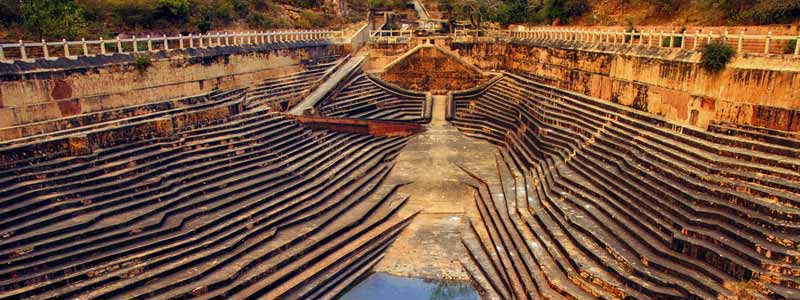
The Chand Baori in the village of Abhaneri is one of India’s most remarkable and visually stunning stepwells. Dating back to the 9th century, this architectural marvel was built by King Chanda of the Nikumbha dynasty to serve as a reliable source of water for the arid region.
What makes Chand Baori a rare site is its extraordinary geometric precision and scale. It plunges 13 stories deep into the earth, with over 3,500 narrow, symmetrical steps that create a breathtaking, maze-like pattern. This ingenious design not only allowed for year-round access to water but also created a cool microclimate at the bottom, providing a natural escape from the scorching Rajasthani heat.
Adjacent to the stepwell are the ruins of the Harshat Mata Temple, adding to the site’s historical and cultural significance. The combination of the temple’s intricate carvings and the stepwell’s hypnotic symmetry makes Abhaneri a truly unique and captivating destination, a testament to ancient Indian engineering and artistry. Top 20 Famous Historical Places In Rajasthan To Visit
20. Bundi’s Stepwells and Palaces
Bundi, often called the “City of Stepwells,” is a hidden gem in Rajasthan, known for its intricate stepwells, or baoris, and beautiful palaces. The town boasts over 50 stepwells, which were built over centuries to conserve rainwater and provide a reliable water source for the arid region. The most famous is Rani Ji Ki Baori, a magnificent 17th-century stepwell built by a queen. Its ornate carvings, arches, and sculptures of elephants make it a striking example of Rajput architecture and a testament to the ingenuity of ancient water management.
Complementing the stepwells are Bundi’s historic palaces, which offer a glimpse into a bygone royal era. The Bundi Palace, built adjacent to the Taragarh Fort, features beautiful murals and frescoes that depict Rajput lore and scenes from the life of Lord Krishna. Nearby, the Sukh Mahal is a beautiful palace by the Jait Sagar Lake, known for its peaceful atmosphere. The palaces and stepwells together tell a captivating story of art, history, and survival in the heart of Rajasthan.