


Ghat ki Guni Tunnel Jaipur is a significant engineering marvel in Jaipur, Rajasthan, revolutionizing connectivity between the city and Agra. Inaugurated on January 19, 2013, by then Prime Minister Manmohan Singh and UPA chairperson Sonia Gandhi, this twin-tube tunnel was constructed through the Jhalana Hills.
With a combined length of approximately 2.8 kilometers (each tube around 1.4 km), the tunnel has dramatically reduced travel time and distance on National Highway 21 (formerly NH-11), easing traffic congestion on the previously accident-prone and narrow Ghat ki Guni passage. This old passage, established by Maharaja Sawai Jai Singh II in 1739, held historical significance as a gateway to the Dhoondhar kingdom and was adorned with heritage structures. However, it struggled with the increasing vehicular load.
The new tunnel is well-lit, equipped with CCTV surveillance, and notably, it’s considered India’s first pollution-free tunnel, thanks to its design and traffic management. Its construction, costing around Rs. 150 crore, has not only improved infrastructure but also helped preserve the historical character of the old Ghat ki Guni area by diverting heavy and commercial traffic. The tunnel plays a vital role in facilitating smoother and safer travel, contributing to Jaipur’s urban development and connecting it efficiently to other major cities.
A Gateway to Jaipur: Historical Context and Necessity
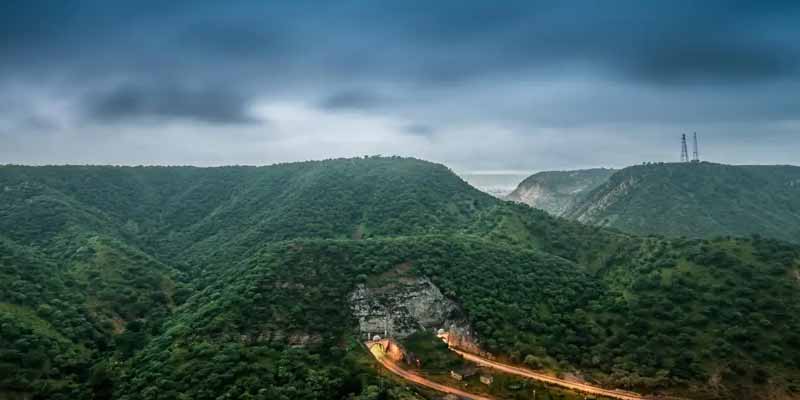
Before the tunnel’s construction, vehicles traversing between Jaipur and Agra had to navigate a narrow, serpentine, and often accident-prone passage through the historic Ghat ki Guni valley. This area, nestled amidst the picturesque Aravalli hills, holds immense historical and cultural significance. Since the tenth century, it served as a traditional gateway to the Dhoondhar Kingdom, with a conglomeration of terraced gardens, temples, and havelis. While historically significant, the old road was ill-equipped to handle the burgeoning traffic of a modern city. The need for a safer, more efficient bypass became paramount to ease congestion, reduce accidents, and protect the heritage structures of Ghat ki Guni.
Construction and Engineering Prowess
The project to construct the Ghat ki Guni Tunnel was ambitious, involving the boring of twin tunnels through the Jhalana Hills. Initiated in 2002, with the blueprint finalized in 2005, the tunnel was officially inaugurated on January 19, 2013, by then Prime Minister Manmohan Singh and UPA chairperson Sonia Gandhi. The total length of the twin-tube tunnel is approximately 2,800 meters (2.8 km), with individual tunnel lengths varying slightly (e.g., 1042 meters for the Agra-bound tunnel and 900 meters for the Jaipur-bound tunnel according to some sources, while Rohan Builders mentions 858-meter twin tubes).
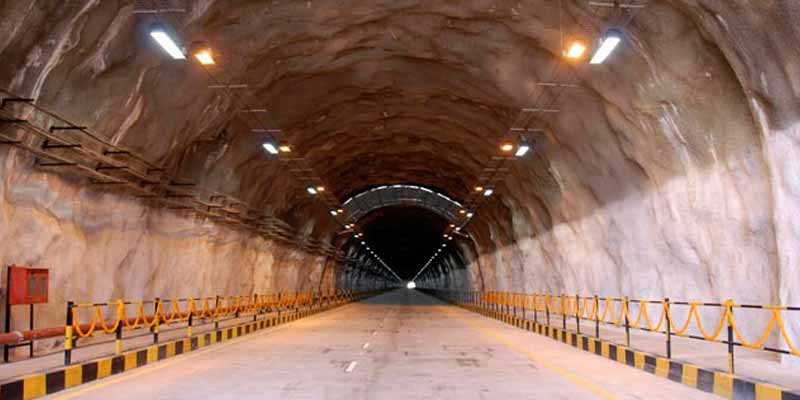
The tunnels are interconnected at two locations for emergency purposes, ensuring safety and allowing for quick rerouting if needed. A key focus during construction was to make it India’s first pollution-free tunnel. This was achieved through the installation of 9 jet fans for ventilation and sophisticated sensor systems to control air pollution inside. Furthermore, the tunnels are well-lit throughout, equipped with CCTV surveillance for enhanced safety and monitoring, and feature pedestrian footpaths. The project, costing around Rs. 150 crore, significantly contributed to the growth and development of Jaipur’s southern extension.
Impact on Traffic and Connectivity
The most immediate and profound impact of the Ghat ki Guni Tunnel has been the dramatic improvement in traffic flow and reduction in travel time on NH 21. It has halved the travel distance and significantly cut down the time it takes to travel between Jaipur and Agra. This has not only benefited commercial transport but also made inter-city travel more convenient for individuals.
However, the tunnel has also presented new challenges. Despite clear signage and speed limits (40 km/h for cars/jeeps, 30 km/h for heavy vehicles), issues like overspeeding, reckless driving, and unauthorized entry of two-wheelers and cyclists have been reported. While two-wheelers are officially prohibited to ensure safety, their occasional entry has led to accidents and concerns for authorities. The lack of strict enforcement and self-discipline among some drivers remains a challenge for the traffic department. CCTV cameras are installed to monitor traffic, and there’s a push for stricter challans for rule-breakers.
Beyond Infrastructure: Tourism and Urban Development
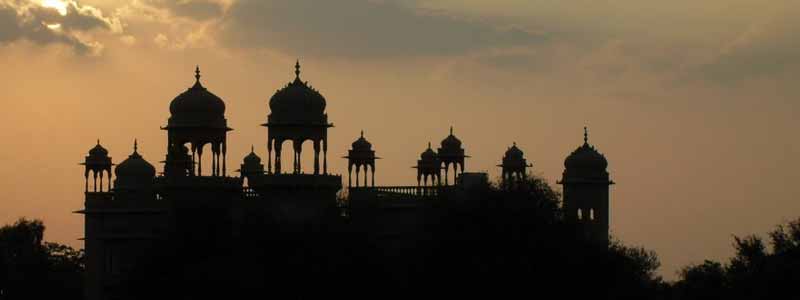
The Ghat ki Guni Tunnel is not just a functional bypass; it has also subtly influenced the tourism landscape of Jaipur. For those entering the city via NH 21, the tunnel offers a modern, efficient, and aesthetically pleasing entry point. The symmetrical architecture and captivating façade, adorned with traditional Rajasthani elements like Chhatris and Jharokhas, provide an initial glimpse of Jaipur’s rich architectural heritage.
Furthermore, the diversion of heavy traffic from the historic Ghat ki Guni valley has opened up opportunities for the area’s revitalization. There are plans to develop the surrounding region for religious and ecological tourism, along with hospitality ventures, without negatively impacting its heritage. Restoration work in the historic Ghat ki Guni complex aims to conserve its 52 unique properties and promote the area’s cultural and natural heritage.
In conclusion, the Ghat ki Guni Tunnel stands as a testament to modern engineering in the context of historical preservation. While addressing crucial traffic challenges and fostering regional connectivity, it has also paved the way for the enhanced appreciation and development of the culturally rich Ghat ki Guni area, marking a significant milestone in Jaipur’s urban evolution.