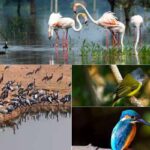
12 Famous Bird Sanctuaries in Rajasthan, a land of vibrant culture and diverse landscapes, is also a haven for avian life, boasting several famous bird sanctuaries.
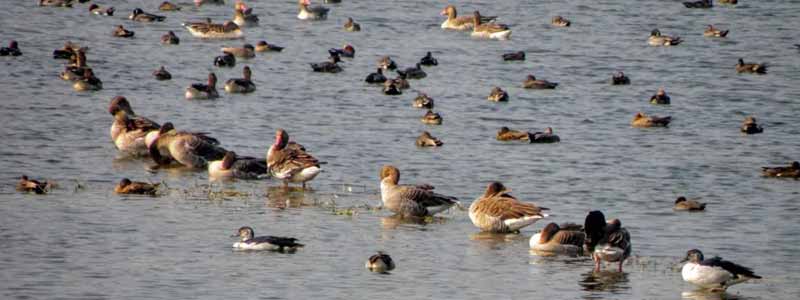
Keoladeo National Park, formerly known as Bharatpur Bird Sanctuary, is a UNESCO World Heritage Site and arguably the most renowned. This wetland paradise attracts thousands of migratory birds, including various species of cranes, ducks, geese, and pelicans, especially during the winter months, making it a dream destination for ornithologists and nature enthusiasts.
Another significant sanctuary is Tal Chhapar Sanctuary in Churu district. While famous for its blackbucks, it also provides a crucial habitat for various bird species, including harriers, eagles, and demoiselle cranes, particularly during migration.
Desert National Park in Jaisalmer, despite its arid environment, is surprisingly rich in avian diversity. It is a vital refuge for desert-dwelling birds and a critical habitat for the critically endangered Great Indian Bustard, along with various raptors and migratory species in winter.
12 Famous Bird Sanctuaries in Rajasthan
Kumbhalgarh Wildlife Sanctuary, nestled in the Aravalli hills, is home to over 200 bird species, including the grey junglefowl and Indian eagle-owl, offering a different ecological setting for birdwatching. Here is a list of top sanctuaries in Rajasthan that are considered paradises for bird lovers:
If you love spotting exquisite birds then there are numerous places for you to plan a getaway. From passerines to migratory birds, you will find many! These are some of the best bird sanctuaries of Rajasthan which one must visit to witness the beauty of the varied species of birds who migrate from corners of the world.
12 Famous Bird Sanctuaries in Rajasthan
1. Bharatpur Bird Sanctuary
Bharatpur Bird Sanctuary, officially known as Keoladeo National Park, is a world-renowned avifauna sanctuary located in Bharatpur, Rajasthan, India. This UNESCO World Heritage Site is a crucial wintering ground for Palaearctic migratory waterfowl and a breeding ground for various resident bird species.
It was formerly a duck-hunting reserve for the Maharajas of Bharatpur and was designated a protected bird sanctuary in 1976, eventually becoming a National Park in 1982. The park’s wetland ecosystem, developed from a natural depression and managed by a system of canals, attracts over 370 species of birds, including large congregations of ducks, geese, pelicans, and waders. While “Shreenagar” appears in some search results as a village near the park’s northern boundary, it is not a distinct bird sanctuary itself, but rather a geographical reference in relation to Keoladeo National Park.
Location: Keoloadev National Park, Keoloadev National Park, Road, Bharatpur, Rajasthan Best Time To Visit: August, October, November and February Ticket Price: INR 50 per person for Indians | INR 400 per person for foreigners | INR 100 for rickshaw rides Timings: 8 am – 5 pm Birds Found: Various species of cranes, pelicans, geese, ducks, eagles, hawks, shanks, stints, wagtails, warblers, wheatears, flycatchers, buntings, larks, and pipits
12 Famous Bird Sanctuaries in Rajasthan
2. Ranthambore National Park, Sawai Madhopur
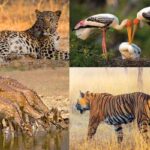
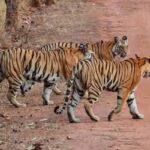
Ranthambore National Park is primarily famous for its tigers, it’s also a fantastic destination for birdwatching, home to over 330 bird species. Though not designated as separate “bird sanctuaries” within the park, several areas offer exceptional birding opportunities.
Within the park, key spots include the tranquil Malik Talao, Padam Talao, and Rajbagh Talao, the three large lakes that attract a diverse range of resident and migratory waterfowl like storks, kingfishers, herons, pelicans, and geese. The Ranthambore Fort and Jhalra area are also good for spotting various avian species.
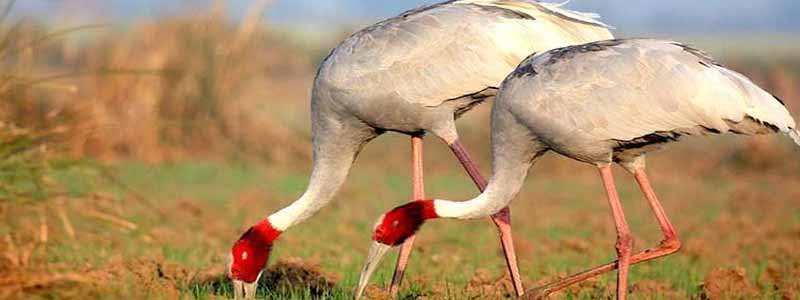
Outside the core park, excellent birding can be found at Soorwal Lake, a seasonal lake known for painted storks, flamingos, and sarus cranes during winter (November to March). Mansarovar Lake also draws numerous migratory birds. Amli Deh, located on the Banas River, is noted for Indian skimmers and river lapwings.
The best time for birdwatching is from October to March, when migratory birds arrive, making the park particularly vibrant for avian enthusiasts.
Area Covered: 1334 square kilometres Best Time to Visit: November to March Average Time to Spend: 3 to 4 hours Operational Hours: 6 AM to 7 PM Distance from the Airport: 180 Km How to Reach: The easiest and fastest way to reach the spot is through a train to Sawai Madhopur railway station.
12 Famous Bird Sanctuaries in Rajasthan
3. Mount Abu Wildlife Sanctuary, Mount Abu
Mount Abu Wildlife Sanctuary, established in 1960, is a significant haven for birdwatchers in Rajasthan. Spanning approximately 288 sq km across the ancient Aravalli Range, it boasts diverse habitats, from thorny dry deciduous forests to relict patches of semi-evergreen forests, supporting a rich avian population.
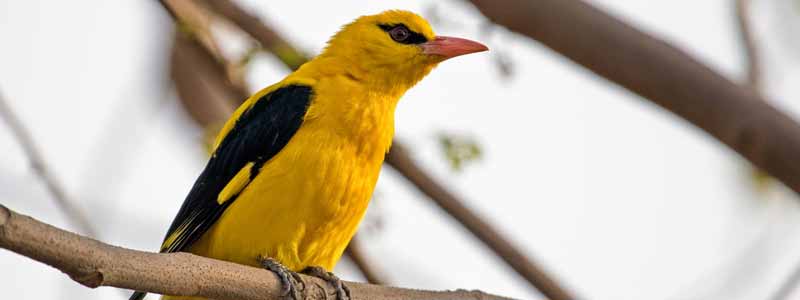
Over 250 bird species have been recorded here, making it a true paradise for bird enthusiasts. A highlight is the critically endangered Green Avadavat (Munia), which is commonly found and a prized sighting for many. Other notable species include the Grey Jungle Fowl, Indian Peafowl, Indian Golden Oriole, Indian Blackbird, and various raptors like the Common Buzzard and Crested Serpent-Eagle. The sanctuary also hosts migratory birds during winter months, adding to its avian diversity. Areas like Trevor’s Tank and Oriya village are particularly known for bird sightings.
Area Covered: 288 square kilometres Best Time to Visit: October to June Average Time to Spend: 4 to 5 hours Operational Hours: 9 AM to 5:30 PM Distance from the Airport: 108 Km How to Reach: The best way to reach the destination is by hiring a cab or taxi.
12 Famous Bird Sanctuaries in Rajasthan
4. Kumbhalgarh Wildlife Sanctuary, Rajsamand
Kumbhalgarh Wildlife Sanctuary, nestled in the Aravalli ranges of Rajsamand, is a significant bird sanctuary home to over 200 avian species. It’s a paradise for birdwatchers, offering sightings of both resident and migratory birds.
Notable species include the elusive Grey Jungle Fowl, Peacocks, and Doves. Bird enthusiasts can also spot Red Spur Owls, Parakeets, Golden Orioles, Bulbuls, Grey Pigeons, and White-breasted Kingfishers, often congregating near waterholes. The sanctuary’s diverse topography, with hills, plains, and perennial streams, provides varied habitats for this rich avian life. The best time for birdwatching is typically from October to March, when the weather is pleasant. Visitors are advised to carry binoculars for optimal viewing and maintain silence to increase their chances of spotting these beautiful creatures.
Area Covered: 578 square kilometres Best Time to Visit: March to December Average Time to Spend: 3 to 4 hours Operational Hours: 7 AM to 6 PM Distance from the Airport: 64 Km How to Reach: As the sanctuary is situated 3 Km away from the Kumbhalgarh Fort and 98 Km away from Udaipur city, hiring a cab and reaching via roadways will be ideal.
5. Sariska National Park, Alwar
Sariska National Park, nestled in the Aravalli Hills of Alwar, Rajasthan, is not just a tiger reserve but also a significant bird sanctuary. It boasts over 200 resident and migratory bird species, making it a birdwatcher’s paradise.
The diverse landscape, including dry deciduous forests, grasslands, rocky outcrops, and water bodies like Siliserh Lake and Pandupol, provides varied habitats. Common sightings include the vibrant Indian Peafowl, Grey Francolin, Indian Roller, White-throated Kingfisher, and various raptors like the Crested Serpent Eagle. During winter months (November to March), migratory birds like Imperial Eagles, Booted Eagles, and various warblers and wagtails flock to the park, adding to its rich avifauna. Key birding spots within Sariska include Pandupol, Siliserh Lake, and Talvriksh.
Area Covered: 866 square kilometres Best Time to Visit: October to June Average Time to Spend: 2 to 3 hours Operational Hours: 10 AM to 5 PM Distance from the Airport: 40 Km How to Reach: As Jaisalmer is just 40 Km away from this national park, travelling via road in a cab or other vehicles will be the easiest to reach the place.
6. Desert National Sanctuary, Barmer
The Desert National Park, though primarily located near Jaisalmer, extends into the Barmer district of Rajasthan, covering an area of 1,262 sq km within Barmer’s boundaries. Established to protect the fragile ecosystem of the Thar Desert, it’s a critical habitat for diverse wildlife, especially birds.
Despite the arid conditions, the park boasts an abundance of avian life, including both resident and migratory species. It is famously a stronghold for the critically endangered Great Indian Bustard, India’s state bird. Other notable bird sightings include various raptors like short-toed eagles, tawny eagles, spotted eagles, laggar falcons, and kestrels. Sandgrouse, partridges, bee-eaters, larks, and shrikes are year-round residents, while winter brings migratory birds such as demoiselle cranes and MacQueen’s bustards. The park’s distinct landscape of sand dunes, craggy rocks, and sparse vegetation offers a unique birdwatching experience.
Area Covered: 3162 square kilometres Best Time to Visit: November to March Average Time to Spend: Around 3 hours Operational Hours: 10 AM to 5 PM Distance from the Airport: 40 Km Note: Additional charges will be required for jeep safari and photography How to Reach: By hiring a cab or other vehicle from the nearest airport or city area
7. Gajner Wildlife Sanctuary, Bikaner
Gajner Wildlife Sanctuary, located near Bikaner, Rajasthan, is a significant haven for diverse flora and fauna, especially birds. Once a hunting ground for the Maharajas of Bikaner, it’s now a protected area encompassing Gajner Lake. This natural oasis in the heart of the desert attracts a myriad of avian species, particularly during winter.
Birdwatchers delight in spotting a variety of resident and migratory birds, including Imperial Sand Grouse, Indian Houbara Bustards, Demoiselle Cranes, and various waterfowl. The lake serves as a vital water source, drawing thousands of birds and animals. Besides birds, the sanctuary is also home to blackbucks, chinkaras, nilgai, wild boars, and desert foxes. Gajner Wildlife Sanctuary offers an exceptional experience for nature lovers and ornithologists.
Area Covered: 19.20 square kilometres Best Time to Visit: November to February Average Time to Spend: 1 to 2 hours Operational Hours: 10 AM to 5 PM Distance from the Airport: 23 Km How to Reach: One can reach the spot by vehicle or cab from the city centre area.
8. Khichan Bird Sanctuary, Phalodi
Khichan Bird Sanctuary, located in Phalodi, Rajasthan, is renowned globally for its annual spectacle of Demoiselle Cranes. Each winter, thousands of these elegant migratory birds, locally known as “Kurja,” flock to this desert village from Central Asia, making it a crucial stopover on their long journey.
The sanctuary’s origins trace back to the 1970s when a local resident began feeding grains, a tradition that grew into a community-led effort to sustain the increasing crane population. This remarkable human-wildlife coexistence has transformed Khichan into a haven for birdwatchers and a designated Ramsar site. Beyond the captivating cranes, the arid landscape also attracts other avian species, contributing to the sanctuary’s diverse ecosystem. The best time to visit is typically from October to March, when the cranes are present in large numbers, offering an unforgettable experience.
Area Covered: NA Best Time to Visit: October to March Average Time to Spend: 1 to 2 hours Operational Hours: Open 24*7 Distance from the Airport: 150 Km Entry Fee: Free of cost How to Reach: Taking a bus or taxi from Jodhpur will be the fastest to reach the sanctuary.
9. Sajjangarh Wildlife Sanctuary, Udaipur
Sajjangarh Wildlife Sanctuary, located near Udaipur in Rajasthan, is a significant haven for birdwatchers despite its relatively smaller size (5.19 sq km). While not solely a “bird sanctuary,” it boasts a rich avian diversity, with around 129 different bird species recorded, including both resident and migratory birds.
Visitors can spot a variety of terrestrial and aquatic birds within the sanctuary’s diverse habitats, which range from dense forests to rocky outcrops and the nearby Tiger Lake (Jiyan Lake). Common sightings include Indian Peafowl, Black Drongo, Red-vented Bulbul, Jungle Babbler, Indian Roller, Grey Hornbill, Kingfishers, Parakeets, and various species of babblers, quails, barbets, and shrikes. During the winter months, migratory birds further enhance the birdwatching experience.
The sanctuary offers activities like nature walks and birdwatching, with early mornings being ideal for observing the most lively bird activity. It’s a key component of Udaipur’s ecological conservation efforts, providing a protected environment for its varied flora and fauna, including its significant bird population.
Area Covered: 5.19 square kilometres Best Time to Visit: August to October Average Time to Spend: 3 to 4 hours Operational Hours: 10 AM to 6 PM Distance from the Airport: 31.3 Km Note: Additional costs for carrying cameras or taking a car will be applicable. How to Reach: As the sanctuary is located just 10 Km from Udaipur city, taking roadways by a local cab, taxi, bus or auto-rickshaw to reach this place will be easiest.
10. Baretha Wildlife Sanctuary, Mahmadpura
Band Baretha Wildlife Sanctuary, located in Mahmadpura, Bharatpur district, Rajasthan, is a significant bird sanctuary and a haven for nature enthusiasts. Established in 1985, this former royal hunting ground spans approximately 368.5 sq km and is managed by the Rajasthan Forest Department.
The sanctuary is renowned as a birdwatcher’s paradise, boasting over 200 avian species, including resident and migratory birds. Notable sightings include the elusive Black Bittern, Greylag Geese, Painted Storks, and various water birds. Its diverse habitats, encompassing marshes, woodlands, grasslands, and the Baretha reservoir, attract a wide array of feathered visitors, especially during winter. The historic Band Baretha Dam on the Kakund River, completed in 1897, enhances the ecosystem, providing crucial water resources for the thriving bird population..
Area Covered: 200 square kilometres Best Time to Visit: November to February Average Time to Spend: 2 to 3 hours Operational Hours: 6 AM to 6 PM Distance from the Airport: 180 Km Entry Fee: NA How to Reach: The sanctuary can be visited via roads from Bharatpur by hiring a cab or public transport.
11. Ramgarh Vishdhari Sanctuary, Bundi
Ramgarh Vishdhari Sanctuary, located in Bundi district, Rajasthan, is a significant wildlife haven, now recognized as a Tiger Reserve. While primarily known for its burgeoning tiger population and other large mammals like leopards, sloth bears, and various deer species, it also serves as a crucial habitat for a diverse array of birdlife.
The sanctuary’s varied terrain, including rocky cliffs, lush forests, and the meandering Mej River (a Chambal tributary), creates ideal conditions for resident and migratory birds. Birdwatchers can spot numerous species, including the vibrant white-throated kingfisher, the elegant Asian paradise flycatcher, and the distinctive Indian pitta, among over 200 recorded bird species. This rich avifauna adds another layer of biodiversity to this increasingly important protected area.
Area Covered: 1505 square kilometres Best Time to Visit: May to September Average Time to Spend: 2 to 3 hours Operational Hours: 7 AM to 6 PM Distance from the Airport: 192 Km Entry Fee: NA How to Reach: One can reach the spot via roadways and railways. The nearest railway stations are Bundi, Srinagar Rajasthan and Thalera, and the nearest city area is Kota.
12. Machia Biological Park, Jodhpur
Machia Biological Park in Jodhpur is not solely a bird sanctuary, but it is a significant attraction for birdwatchers. Situated near Kaylana Lake, this biological park, spread over 41 hectares, offers a diverse habitat supporting numerous bird species, both resident and migratory.
Visitors can find a dedicated birdwatching point within the park, providing excellent opportunities to observe the avian residents. While Machia is also home to various animals like lions, tigers, deer, and desert foxes, its natural vegetation, including dry thorn-scrub and surrounding water bodies, creates an appealing environment for birds. Over 140 bird species have been documented here, making it a valuable spot for bird enthusiasts. The park emphasizes conservation and education, providing a naturalistic setting for wildlife observation..
Area Covered: 0.39 square kilometres Best Time to Visit: October to March Average Time to Spend: 1 to 2 hours Operational Hours: 8:30 AM to 5:00 PM; Closed on Tuesday Distance from the Airport: 11 Km How to Reach: The park is located 13 Km from the city, which makes taxis or auto-rickshaws a primary mode of transportation. In addition, you can board a bus to reach the spot.